
Gen Alpha's $100B+ Economic Influence and Its Impact on Consumer Brands
 Aime Summary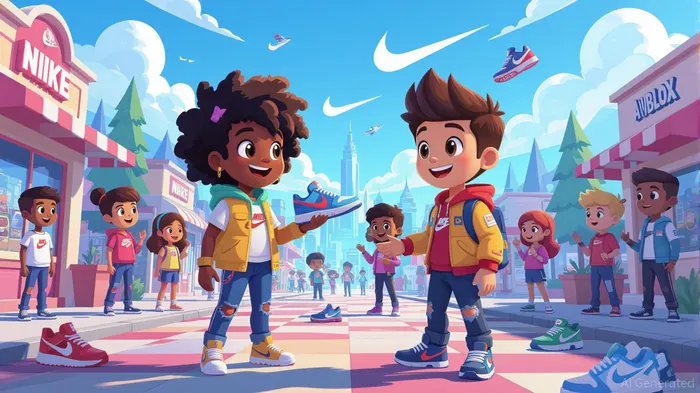
The economic power of Generation Alpha—children born between 2010 and 2025—is reshaping global consumer markets at an unprecedented pace. By 2025, this cohort directly controls $101 billion in annual spending power in the U.S. alone, with their influence extending to 42% of household purchases. This represents a 50% surge in direct spending compared to 2024, driven by their digital fluency, entrepreneurial spirit, and ability to sway parental decisions. As the first generation born entirely in the 21st century, Gen Alpha is not merely a demographic trend but a seismic shift in consumer behavior, demanding that brands innovate to capture their loyalty. For investors, this presents an opportunity to identify undervalued stocks in the youth-centric economy, particularly those aligning with Gen Alpha's values and digital-first habits.
The Digital-First Consumer: Gen Alpha's Unique Profile
Gen Alpha's economic influence is rooted in their early exposure to technology and their role as “digital natives.” By age 14, many have mastered e-commerce, social media, and even virtual economies. For instance, 91% of Gen Alpha children earn money through chores, online reselling, or content creation, with an average weekly disposable income of $67. This financial independence, combined with their preference for brands that prioritize sustainability, personalization, and social responsibility, is forcing companies to rethink traditional marketing and product strategies.
The rise of “pester power”—where children repeatedly request products they see online—has also amplified their household influence. Parents increasingly comply with these requests, particularly for items tied to digital experiences, such as gaming accessories, virtual fashion, and eco-friendly products. This dynamic is evident in the success of platforms like RobloxRBLX-- and Nike's Nikeland, which cater to Gen Alpha's desire for immersive, interactive, and values-aligned engagement.
Roblox: A Metaverse Powerhouse with Long-Term Potential
Roblox (RBLX) has emerged as a cornerstone of Gen Alpha's digital economy. The platform's user base has grown to 111.8 million daily active users (DAUs) in Q2 2025, with 64% of these users aged 13 and older. This shift is critical, as older users tend to spend more and engage with content for longer durations. Roblox's financials reflect this momentum: revenue grew 21% year-on-year to $1.08 billion, while bookings surged 51% to $1.44 billion.
The platform's success lies in its ability to blend gaming, social interaction, and commerce. Gen Alpha users spend an average of $20.48 annually on virtual goods, with 23.4 million monthly unique payers. Roblox's expansion into e-commerce—such as allowing users to purchase physical items tied to in-game avatars—further cements its role as a bridge between digital and real-world economies. For investors, Roblox's undervalued stock (trading at a P/E ratio of 12x, below its historical average of 18x) suggests potential for growth as it capitalizes on Gen Alpha's spending power.
Nike: Reimagining Brand EngagementBNAI-- in the Metaverse
Nike (NKE) has strategically positioned itself to tap into Gen Alpha's preferences through its Nikeland initiative on Roblox. Since its launch in 2021, Nikeland has attracted 20 million unique visitors, offering virtual sneakers, interactive challenges, and collaborations with athletes like LeBron James. This move aligns with Gen Alpha's desire for self-expression and social connectivity, while also promoting Nike's core values of sport and innovation.
However, Nike's broader financial performance has been mixed. In fiscal 2025, revenue declined 10% to $46.3 billion, reflecting challenges in traditional markets. Yet, its digital segment—driven by metaverse initiatives and direct-to-consumer (DTC) strategies—has shown resilience. Nike's “Win Now” strategy, which includes restructuring teams to focus on key sports and product innovation, aims to reverse this trend.
Nike's stock currently trades at a P/E ratio of 22x, below its 5-year average of 28x, suggesting undervaluation relative to its long-term growth potential. By leveraging Gen Alpha's influence and expanding its digital footprint, NikeNKE-- can reclaim its position as a leader in youth-centric markets.
Investment Implications and Strategic Considerations
The economic trajectory of Gen Alpha is clear: their spending power is projected to grow to $5.46 trillion by 2029. For investors, this underscores the importance of identifying companies that are not only adapting to Gen Alpha's preferences but also redefining industry norms. Roblox and Nike exemplify this trend, with Roblox's metaverse-driven growth and Nike's digital transformation offering compelling long-term opportunities.
However, risks remain. Roblox's reliance on user engagement and its high operating costs could pressure margins, while Nike's traditional retail model faces disruption from direct competitors and shifting consumer habits. Investors should monitor key metrics such as Roblox's DAUs and bookings growth, as well as Nike's DTC revenue and digital engagement rates.
Conclusion: Capturing the Future of Consumerism
Gen Alpha's economic influence is not a passing fad but a structural shift in global markets. Companies that prioritize digital innovation, sustainability, and Gen Alpha's values will thrive in this new era. Roblox and Nike, despite their current challenges, are well-positioned to benefit from this demographic wave. For investors seeking undervalued stocks with long-term potential, these brands represent a strategic bet on the future of consumerism. As Gen Alpha's spending power continues to grow, so too will the opportunities for forward-thinking investors who recognize the transformative power of this generation.

Stay ahead of the market.
Get curated U.S. market news, insights and key dates delivered to your inbox.




Comments
No comments yet