
Gemini's XRP Mastercard and the Reshaping of Crypto Competition: How Consumer Product Innovation Is Outpacing Traditional Trading Volume as a Key Growth Metric in Crypto Exchanges


 Aime Summary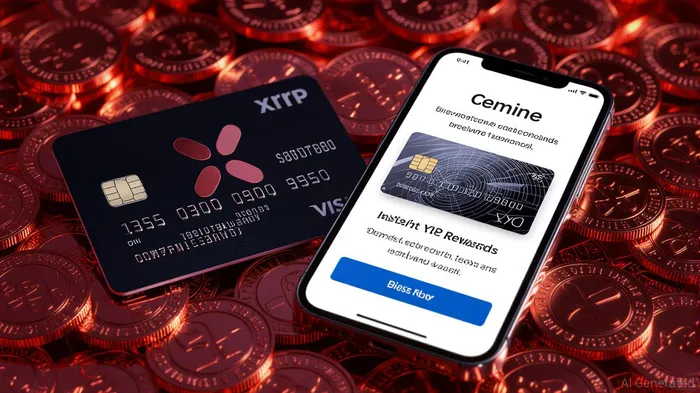
The crypto landscape is evolving rapidly, but one truth has become increasingly clear: consumer product innovation is now outpacing traditional trading volume as the primary driver of growth for crypto exchanges. While platforms like CoinbaseCOIN-- and Binance have long relied on metrics such as daily trading volume and market share, Gemini's recent launch of the XRP Mastercard—in partnership with Ripple and WebBank—demonstrates how novel financial tools can redefine user engagement, institutional trust, and market dynamics.
The XRPXRP-- Mastercard: A Case Study in Utility-Driven Adoption
Launched on August 25, 2025, the Gemini XRP MastercardMA-- is more than a payment card; it's a strategic bridge between traditional finance and the crypto ecosystem. By offering XRP cashback rewards on everyday purchases, the card transforms a volatile asset into a tangible utility. Users earn 4% XRP on gas, EV charging, and transit, 3% on dining, and 2% on groceries, with rewards delivered instantly to their Gemini accounts. This model not only incentivizes spending but also reduces the friction often associated with crypto adoption.
The card's success is underscored by its real-world returns. For example, users who earned XRP rewards between October 2021 and July 2024 and held the tokens for a year saw a 453% increase in value by July 2025. A $73,700 reward pool from 2021 ballooned to over $407,000 by mid-2025, illustrating how strategic product design can align user behavior with long-term value creation.
Why Product Innovation Trumps Trading Volume
Traditional exchanges have long prioritized trading volume as a proxy for success. However, the XRP Mastercard's impact on Gemini's user base and market position reveals a shift in priorities: engagement through utility now matters more than sheer transactional throughput.
Consider the following:
- Gemini overtook Coinbase in U.S. iOS App Store rankings in early August 2025, climbing from 95th to 11th place while Coinbase dropped to 26th.
- The card's $75 million investment from Ripple and Mastercard, alongside a potential $150 million credit line, signals institutional confidence in product-driven growth.
- Ripple's RLUSD stablecoin, now integrated into Gemini's platform, has surged to a $640 million market cap, ranking among the top six USD stablecoins globally.
These metrics highlight a broader trend: users are no longer satisfied with mere access to crypto markets. They demand tools that integrate seamlessly into their daily lives, offering tangible rewards and real-time value.
The Ripple Effect: Strategic Partnerships and Regulatory Tailwinds
The XRP Mastercard's success is also tied to Ripple's 2025 legal victory over the SEC, which cleared the way for XRP's re-listing and broader financial product integration. This regulatory clarity, combined with Gemini's IPO filing under the ticker “GEMI,” has created a virtuous cycle of innovation and capital inflow.
Moreover, the card's institutional-grade security and $0.0004 per transaction cost have attracted interest from major banks like abrdn, Braza Bank, and Société Générale–Forge. These partnerships suggest that the future of crypto competition will hinge on scalable, user-centric products rather than speculative trading volumes.
Investment Implications: Where to Focus in 2025
For investors, the XRP Mastercard underscores a critical insight: crypto platforms that prioritize consumer utility will outperform those focused solely on trading metrics. Here's how to position your portfolio:
- Track Product-Driven Metrics: Monitor user growth, reward redemption rates, and stablecoin adoption (e.g., RLUSD's market cap) as leading indicators of platform health.
- Invest in Strategic Partnerships: Platforms with institutional backing (e.g., Gemini-Ripple-Mastercard) are better positioned to scale and navigate regulatory challenges.
- Leverage Regulatory Tailwinds: Post-SEC clarity for XRP and similar assets could drive long-term value, as seen in the 453% return on XRP rewards.
Conclusion: The New Frontier of Crypto Growth
Gemini's XRP Mastercard is a harbinger of a new era in crypto: one where product innovation, user experience, and real-world utility take center stage. As traditional exchanges grapple with stagnant trading volumes and regulatory uncertainty, platforms that build bridges between crypto and everyday finance—like Gemini—are setting the pace.
For investors, the lesson is clear: the future belongs to the innovators. Those who recognize the shift from speculative trading to utility-driven adoption will be best positioned to capitalize on the next wave of crypto growth.

Decoding blockchain innovations and market trends with clarity and precision.
Latest Articles
Stay ahead of the market.
Get curated U.S. market news, insights and key dates delivered to your inbox.
AInvest
PRO
AInvest
PRO



Comments
No comments yet