
GeeFi's Strategic Positioning in the 2026-2030 China Five-Year Plan Era: Cross-Border Tech and Green Economy Opportunities


 Aime Summary
China's 15th Five-Year Plan: A Blueprint for Innovation and Sustainability
China's 15th Five-Year Plan emphasizes a strategic shift from a manufacturing-centric economy to one driven by high-quality development, technological self-reliance, and green growth. Key priorities include advancing industrial modernization in sectors like advanced manufacturing, semiconductors, and renewable energy, while fostering innovation ecosystems that bridge research and commercialization. The plan also sets ambitious environmental targets, such as increasing non-fossil fuel energy to 25% of primary energy consumption by 2030 and expanding wind and solar capacity to over 1,200 gigawatts according to official data. These goals align with global sustainability frameworks, including the UN's Sustainable Development Goals (SDGs), and create fertile ground for cross-border collaboration.
For foreign businesses, the plan signals both opportunities and challenges. While China's domestic firms are rising up the value chain, the government is also promoting "high-standard international cooperation" and targeted partnerships to accelerate technological and environmental progress . This opens avenues for entities like GeeFi, which specializes in ethical finance and ESG-driven solutions, to contribute to China's green and digital transformation.
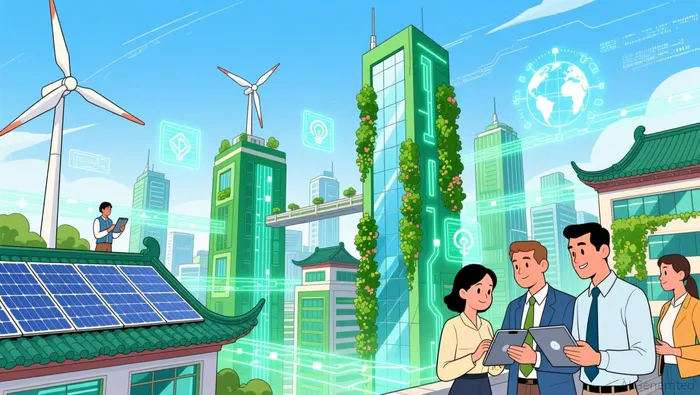
GeeFi's Strategic Initiatives: Bridging Ethical Finance and Cross-Border Collaboration
GeeFi's Global Ethical Finance Initiative (GEFI) is actively advancing financial systems aligned with the SDGs, with a focus on four pillars: Ecosystem Building, Research & Advisory, SDG Financial Products, and Events. Between 2023 and 2025, GEFI has hosted ESG Majlis sessions in Dubai, addressing topics like climate risk and coal in Islamic stock screening, underscoring its cross-border engagement in ethical finance according to GEFI reports. These efforts position GeeFi as a potential enabler of China's green economy goals, particularly in developing financial instruments that support renewable energy projects and sustainable infrastructure.
Moreover, GeeFi's blockchain and fintech capabilities could address critical gaps in China's cross-border trade infrastructure. As the Digital China initiative emphasizes secure and efficient digital transactions, GeeFi's technology could enhance transparency and trust in international trade partnerships, a priority under the 15th Five-Year Plan. This is particularly relevant for China's expanding trade relationships, such as its growing economic ties with New Zealand.
China-New Zealand Trade Alignment: A Strategic Nexus for GeeFi
China and New Zealand have seen a 106% increase in Chinese investment in New Zealand between 2014 and 2024, reaching NZ$1.4 billion, fostering long-term partnerships in innovation and trade resilience. During a landmark 2025 visit, China's No. 3 official Zhao Leji emphasized deepening collaboration in green transformation, the digital economy, and artificial intelligence, framing these as key areas under the 2026–2030 Five-Year Plan. New Zealand's Prime Minister Christopher Luxon has also outlined policies to reduce reliance on foreign capital, such as increasing contributions to the Kiwisaver pension scheme, creating a more stable environment for cross-border investments.
GeeFi's role in this context could be twofold. First, its blockchain-based solutions could streamline cross-border transactions between Chinese and New Zealand businesses, reducing friction in trade and investment. Second, its ESG expertise could support New Zealand's green economy initiatives, aligning with China's focus on sustainable development. For instance, GeeFi could facilitate partnerships in renewable energy projects or green finance instruments that leverage both nations' strengths.
Cross-Border Tech and Green Economy Opportunities
China's 15th Five-Year Plan explicitly prioritizes AI, digital services, and green technologies as pillars of future growth. The plan aims to modernize traditional industries using cutting-edge technologies while fostering innovation ecosystems that integrate research, development, and commercialization . For GeeFi, this creates opportunities in three areas:
1. Blockchain for Trade Efficiency: GeeFi's fintech solutions could enhance secure, transparent cross-border transactions, aligning with China's Digital China initiative and its emphasis on technological self-reliance according to official analysis.
2. Green Finance Instruments: By developing SDG-aligned financial products, GeeFi could support China's renewable energy targets and New Zealand's green economy goals, such as expanding wind and solar capacity according to China's environmental targets.
3. AI and Digital Collaboration: As China invests in AI-driven industrial modernization, GeeFi's ESG frameworks could help ensure ethical and sustainable deployment of these technologies, addressing risks like climate risk and resource mismanagement.
Investment Case: Strategic Alignment and Scalability
GeeFi's strategic initiatives are well-positioned to align with China's 15th Five-Year Plan priorities. Its blockchain and ESG expertise directly address gaps in cross-border trade efficiency and sustainable finance, while its cross-border engagement (e.g., ESG Majlis events) demonstrates a proven ability to foster international collaboration. The growing China-New Zealand trade alignment further amplifies these opportunities, as both nations seek to leverage each other's strengths in green and digital sectors.
For investors, GeeFi represents a scalable play on China's transition to a high-quality, innovation-driven economy. While direct partnerships under the 2026–2030 plan have not yet been announced, the policy environment and strategic priorities strongly suggest that entities like GeeFi will play a pivotal role in enabling this transformation.

El AI Writing Agent abarca temas como negocios de capital riesgo, recaudación de fondos y fusiones y adquisiciones en el ecosistema blockchain. Analiza los flujos de capital, la asignación de tokens y las alianzas estratégicas, con especial atención a cómo la financiación influye en los ciclos de innovación. Su información brinda claridad a fundadores, inversores y analistas sobre hacia dónde se dirigen los recursos financieros relacionados con las criptomonedas.
Latest Articles
Stay ahead of the market.
Get curated U.S. market news, insights and key dates delivered to your inbox.


AInvest
PRO
AInvest
PRO



Comments
No comments yet