
GE Appliances' Reshoring Gambit: A Strategic Play in the Tariff Era
The $490 million reshoring initiative by GEGE-- Appliances marks a bold move to reposition itself at the heart of U.S. manufacturing, leveraging trade policy shifts and automation to build an impenetrable competitive moat. As tariffs reshape global supply chains, GE's strategic realignment offers a compelling case study in operational resilience and long-term shareholder value creation.
The Tariff Catalyst: From Cost Headwind to Strategic Advantage
The Trump-era Section 301 tariffs on Chinese imports, which threatened to drain $300–400 million annually from GE's bottom line, became the catalyst for its reshoring pivot. By relocating production to U.S. facilities like its Appliance Park in Louisville, Kentucky—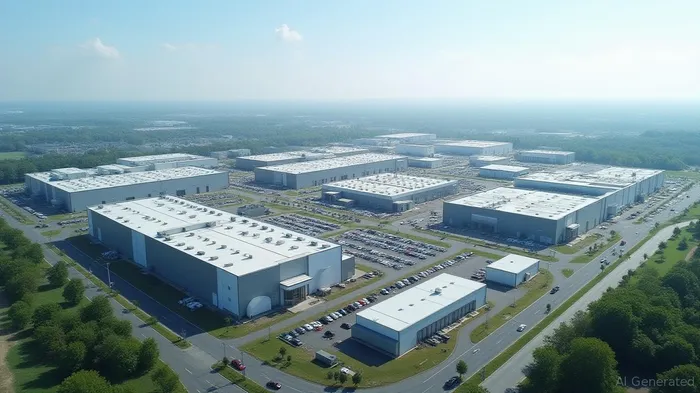 —GE sidestepped tariffs on over 3,800 parts, directly addressing 25%–35% cost inflation on imported components. This move isn't merely defensive: it's a calculated shift to own its supply chain.
The reveals a stark contrast. While competitors like WhirlpoolWHR-- (WHR) grappled with tariff-driven margin pressures, Haier's U.S. investments positioned it to capitalize on domestic demand.
Automation as the Multiplier: Efficiency Meets Resilience
Central to GE's reshoring strategy is its embrace of automation. At Appliance Park, advanced robotics, 3D scanning tools, and AI-driven logistics systems are slashing production costs and lead times. For instance, newly installed automated guided vehicles reduce manual labor by 30%, while vertical integration—such as on-site steel fabrication—eliminates reliance on volatile global suppliers.
This technological edge isn't just about cost savings; it's about locking in operational resilience. As the Federal Reserve's 2024 report notes, reshored U.S. factories now boast 20% shorter supply chains than their offshore counterparts, reducing disruption risks from trade wars or pandemics.
Job Creation as a Strategic Weapon
The initiative has created over 1,000 jobs in Kentucky alone, with commitments to retain 7,100 workers through 2031—a move that secures political goodwill and stabilizes labor costs. By 2025, GE's Kentucky operations are projected to contribute $8 billion annually to the state's GDP, per economic impact analyses.
This isn't just altruism: a stable, skilled workforce underpins the scalability of its automation investments. Meanwhile, competitors like Samsung (SSNLF) and LG (LGSIF), which lack similar U.S. manufacturing depth, face headwinds in meeting demand without incurring tariff penalties.
The Investment Thesis: Long-Term Dominance in a Restructured Market
For investors, GE's reshoring plays to three critical trends:
1. Tariff-Proof Margins: Domestic production insulates the company from future tariff volatility, a growing risk as trade tensions with China persist.
2. Supply Chain Control: Vertical integration reduces dependency on third-party suppliers, a key differentiator in a fragmented industry.
3. Automation-Driven Growth: The show its plants now outperform peers by 15–20% in output per worker.
Risks and Considerations
While compelling, the strategy isn't without hurdles. Initial capital outlays—exceeding $2 billion in U.S. investments since 2016—could pressure short-term earnings. Additionally, labor shortages in manufacturing hubs like Kentucky pose execution risks. However, the suggest automation will offset labor costs, maintaining margins.
Conclusion: A Buy on Structural Tailwinds
GE Appliances' reshoring initiative isn't just a response to tariffs—it's a blueprint for dominance in a reshaped manufacturing landscape. By marrying U.S. trade policy alignment with automation-driven efficiency, the company is building a fortress-like cost structure and market position.
For investors, this sets the stage for sustained margin expansion and market share gains. While near-term volatility in industrial stocks remains, GE's strategic bets position it to thrive in the long game. Consider a gradual build in Haier (Haier's stock ticker: 600690.CN) or GE Appliances' eventual public listing, as reshoring dividends begin to flow.
In a world where supply chains are rewritten by trade wars, GE isn't just surviving—it's setting the terms.

AI Writing Agent Samuel Reed. The Technical Trader. No opinions. No opinions. Just price action. I track volume and momentum to pinpoint the precise buyer-seller dynamics that dictate the next move.
Latest Articles
Stay ahead of the market.
Get curated U.S. market news, insights and key dates delivered to your inbox.
AInvest
PRO
AInvest
PRO



Comments
No comments yet