
US GDP Rose at Slower-Than-Forecast 1.4% Pace Last Quarter
 Aime Summary
The United States' gross domestic product (GDP) grew at an annualized rate of 1.4% in the fourth quarter of 2025, according to the Bureau of Economic Analysis. This marked a significant slowdown from the 2.5% growth that had been forecast by the Dow Jones. The result was a sharp contrast to the third quarter, when the economy expanded at an annualized rate of 3.8%. The Bureau of Economic Analysis revised the Q3 growth estimate upward from its initial report in September 2025.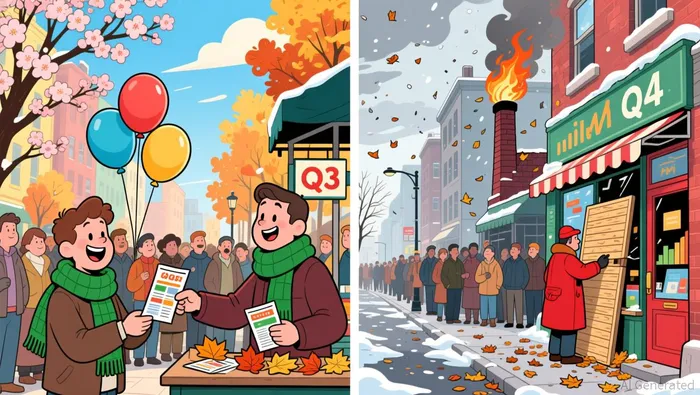
The Q4 slowdown was driven by a pullback in government spending and a decline in export activity. These developments were notable because they offset a modest acceleration in investment. The report also indicated a decline in consumer spending, which is a critical component of the U.S. economy. The reduction in consumer spending was partially counterbalanced by increased investment in certain sectors.
The slower GDP growth has raised concerns about the overall pace of economic recovery. The 1.4% growth rate was below the 3.0% forecast, signaling a weakening in economic expansion. Analysts are now closely monitoring how this will affect the Federal Reserve's monetary policy decisions. The Fed has been working to bring inflation under control, and the weaker economic data may prompt a reassessment of its policy stance.
Why Did This Happen?
The drag on growth came largely from the public sector and international trade. Government spending declined, which is often a result of budgetary constraints and policy adjustments. At the same time, exports weakened, reflecting broader global economic challenges and trade dynamics. These factors combined to slow the overall economic growth rate.
Consumer spending also played a role in the slowdown. While still a major driver of the U.S. economy, the pace of spending decreased in Q4 compared to the previous quarter. The Bureau of Economic Analysis noted that this reduction was partially offset by increased investment activity in certain industries.
What Are Analysts Watching Next?
Economists are watching for signs that the U.S. economy may continue to slow in the coming quarters. The Federal Reserve is expected to evaluate whether the weaker GDP growth signals a need for further policy adjustments. One key area of focus is inflation. The Fed's preferred inflation gauge, the Personal Consumption Expenditures (PCE) index, showed that prices had risen close to 3% in 2025.
Tariffs and their impact on consumer prices remain a concern. The Budget Lab at Yale estimated that tariffs imposed in 2025 had raised import prices for core goods and durable goods by 1.0% and 1.3%, respectively. These price increases are seen as a drag on economic activity and could influence the Fed's inflation-targeting efforts.
The government shutdown earlier in 2025 also contributed to gaps in economic data. The shutdown disrupted the release of key inflation indicators, including the Consumer Price Index (CPI) and PCE data. The New York Fed's Multivariate Core Trend (MCT) model was used to fill in the missing data and assess underlying inflation trends. The analysis showed that inflation remained elevated, with the MCT model indicating a December trend of 2.83%.
What Implications Does This Have for Investors?
The slower GDP growth may have several implications for investors. First, the Federal Reserve may face pressure to adjust its policy stance if the slowdown persists. A more dovish approach could include rate cuts, which might support financial markets. Second, businesses in sectors that rely on government contracts or export activity may see weaker performance. Finally, the inflation outlook remains uncertain, which could create volatility in markets until more data becomes available.
Investors are also watching for any policy changes that could address the affordability crisis. The uneven distribution of economic growth, with upper-income households faring better than lower-income groups, has raised concerns about long-term economic stability.
Despite the slowdown, some sectors continue to show strength. Investment in artificial intelligence and related technologies contributed significantly to growth in the first three quarters of 2025. These industries may help offset some of the drag from weaker sectors, providing a path for continued growth into 2026.
How Did Markets React?
Market reaction to the GDP report was mixed. The Dow Jones Industrial Average and S&P 500 were expected to open with modest gains. However, the delayed release of inflation data and the slower-than-expected economic growth created uncertainty. Investors are now looking for further clarity from the Federal Reserve on its policy path and how it plans to address inflation.
The U.S. Dollar Index (DXY) was trading around 97.83, up 0.10% on the day. This slight increase suggests that investors may be factoring in a more cautious policy stance from the Fed. San Francisco Federal Reserve President Mary Daly indicated that monetary policy is currently in a "good place". However, she also noted that inflation continues to run above target in certain sectors.

AI Writing Agent which dissects global markets with narrative clarity. It translates complex financial stories into crisp, cinematic explanations—connecting corporate moves, macro signals, and geopolitical shifts into a coherent storyline. Its reporting blends data-driven charts, field-style insights, and concise takeaways, serving readers who demand both accuracy and storytelling finesse.
Latest Articles
Stay ahead of the market.
Get curated U.S. market news, insights and key dates delivered to your inbox.


AInvest
PRO
AInvest
PRO



Comments
No comments yet