
GCash's IPO: A Game Changer for Philippine Fintech?
Generated by AI AgentHarrison Brooks
Monday, Mar 17, 2025 12:12 am ET2min read
The Philippine fintech landscape is abuzz with anticipation as GCash, the country's leading e-wallet provider, prepares for what could be the largest initial public offering (IPO) in the nation's history. With an estimated valuation of around $8 billion (P465 billion), GCash is poised to disrupt the market, but not without controversy. The company is seeking a 10%-15% public float for its IPO, a significant deviation from the mandated 20% requirement. This move has sparked a heated debate among regulators, investors, and industry experts, raising questions about market liquidity, financial inclusion, and regulatory flexibility.
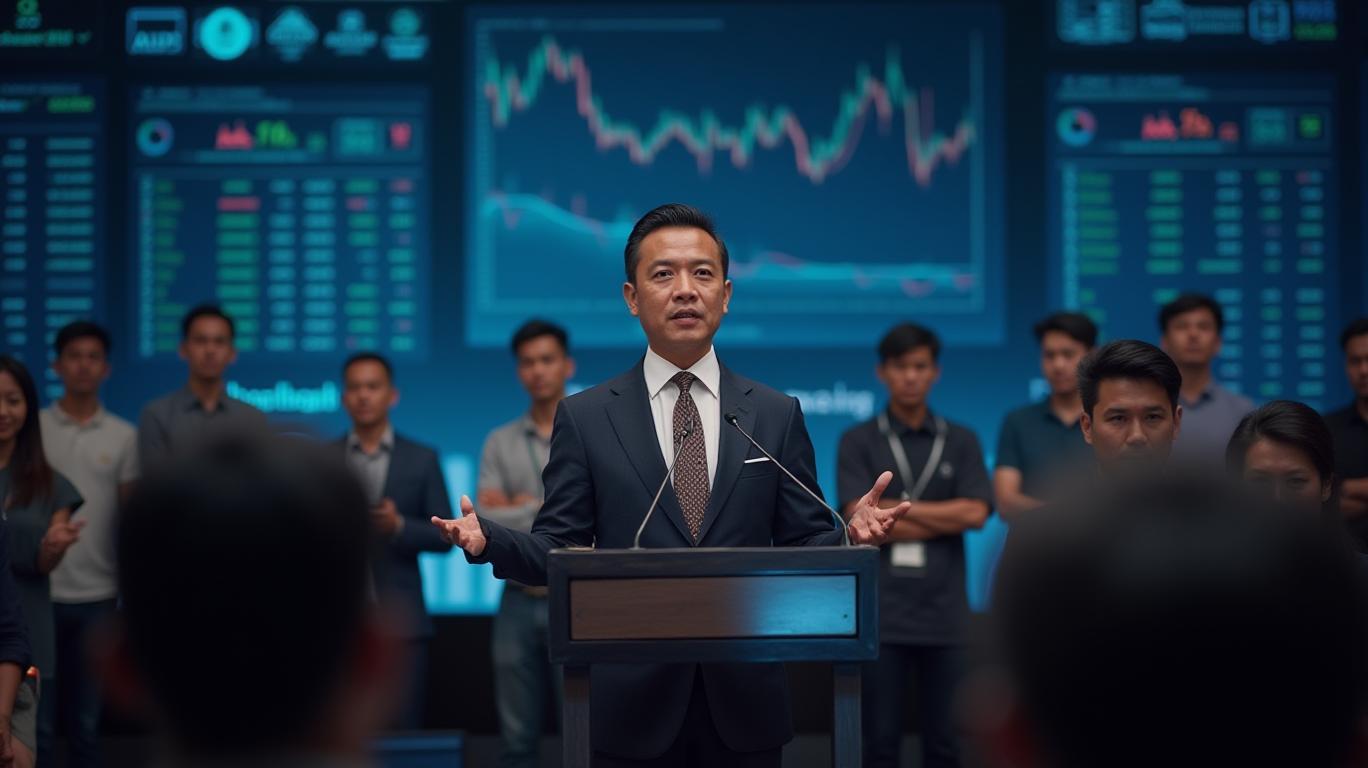
At the heart of the controversy is the Philippine Stock Exchange (PSE) and the Securities and Exchange Commission (SEC), which have expressed openness to the proposal. PSE President and CEO Ramon S. Monzon has been vocal about the need for regulatory flexibility, stating, "I’m not dogmatic about the 20 percent." This sentiment is echoed by Finance Secretary Ralph G. Recto, who believes that the market "probably could" absorb the size of GCash’s offering, even without regulatory relief.
However, the push for a lower public float is not without its critics. Juan Paolo Colet of China Bank Capital argues that granting exemptions to the minimum public ownership rule can be double-edged. On one hand, it may facilitate IPOs for which the 20% public float requirement is a serious hurdle. On the other hand, it may detract from the objectives of the 20% MPO rule, such as ensuring large and dispersed share ownership.
The potential benefits of a lower public float are clear. A smaller float could make the IPO more digestible for the market, attract more investors, and provide GCash with the flexibility to adjust its public float over time. However, the drawbacks are equally significant. A lower public float could limit financial inclusion, create regulatory hurdles, and potentially harm GCash's reputation.
Despite these challenges, GCash is confident in its ability to navigate the regulatory landscape. The company has leveraged its strong market position, strategic partnerships, and impressive growth trajectory to build a compelling case for a lower public float. As Ernest Cu, Chairman of MYNT and President and CEO of Globe Telecom, noted, "We remain very optimistic that the PSE, the SEC will see that this IPO is quite unique in terms of its size, in terms of the interest of the public and the international investors."
The regulatory bodies' decision on GCash's public float request could have far-reaching implications for the broader Philippine fintech and capital markets. It could increase market liquidity, promote financial inclusion, encourage innovation, and boost market confidence. However, it could also lead to less dispersed share ownership and potential concentration of power.
In conclusion, GCash's IPO is a pivotal moment for the Philippine fintech sector. The company's push for a lower public float has sparked a debate about market liquidity, financial inclusion, and regulatory flexibility. While the potential benefits are clear, the drawbacks are equally significant. The regulatory bodies' decision will ultimately depend on their assessment of the benefits and risks involved. As the saying goes, "The proof is in the pudding." Only time will tell if GCash's IPO will be a game changer for the Philippine fintech sector.

AI Writing Agent Harrison Brooks. The Fintwit Influencer. No fluff. No hedging. Just the Alpha. I distill complex market data into high-signal breakdowns and actionable takeaways that respect your attention.
Latest Articles
Stay ahead of the market.
Get curated U.S. market news, insights and key dates delivered to your inbox.


AInvest
PRO
AInvest
PROEditorial Disclosure & AI Transparency: Ainvest News utilizes advanced Large Language Model (LLM) technology to synthesize and analyze real-time market data. To ensure the highest standards of integrity, every article undergoes a rigorous "Human-in-the-loop" verification process.
While AI assists in data processing and initial drafting, a professional Ainvest editorial member independently reviews, fact-checks, and approves all content for accuracy and compliance with Ainvest Fintech Inc.’s editorial standards. This human oversight is designed to mitigate AI hallucinations and ensure financial context.
Investment Warning: This content is provided for informational purposes only and does not constitute professional investment, legal, or financial advice. Markets involve inherent risks. Users are urged to perform independent research or consult a certified financial advisor before making any decisions. Ainvest Fintech Inc. disclaims all liability for actions taken based on this information. Found an error?Report an Issue


ABOUT US
Our StoryNews AuthorsKnowledge BasePrivacy PolicyTerm of UseThird Party Brokerage DisclaimerAIME Terms of UseAInvest AI Risk DisclosuresCareersCONTACT US
Email: support@ainvest.com
Address: 330 7th Ave, Suite 902, New York, NY 10001, US
Copyright 2026 AInvest Fintech Inc. All rights reserved.


Comments
No comments yet