
GBP/USD and the UK Autumn Budget: A Fiscal Tightrope Between Growth and Debt


 Aime Summary
Fiscal Tightrope: Tax Cuts, Debt Reduction, and Growth Ambitions
The UK Autumn Budget 2023 introduced a mix of tax cuts and spending increases aimed at boosting employment and economic activity. Key measures included reducing the main rate of Class 1 National Insurance contributions (NICs) from 12% to 10% and abolishing Class 2 self-employed NICs, alongside a 9.8% increase in the National Living Wage to £11.44. These measures are projected to add 78,000 jobs by 2028-29 and stimulate labor market participation. However, such fiscal easing comes at a cost: the Office for Budget Responsibility forecasts that public sector net investment will average 2.6% of GDP over the next five years, while underlying debt is expected to fall as a share of GDP starting in 2027-28.
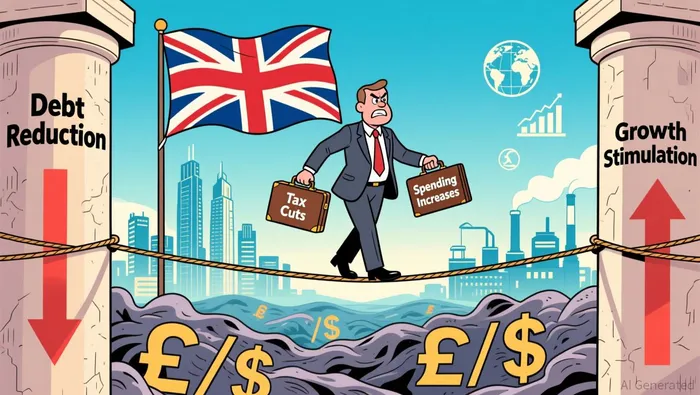
The government's dual mandate-reducing debt while fostering growth-has created a fiscal tightrope. On one hand, the Autumn Budget 2024 announced a £36.2 billion annual revenue boost through higher employer NICs and capital gains tax rates, aiming to close a £30 billion fiscal gap. On the other, the OBR warns that weaker productivity and higher social spending could exacerbate deficits, potentially undermining fiscal credibility. This tension is reflected in GBP/USD volatility, as markets weigh the risks of inflationary pressures against the benefits of growth-oriented policies.
GBP/USD Dynamics: A Currency at the Crossroads
The GBP/USD exchange rate has been a barometer of the UK's fiscal credibility. In 2023-2024, concerns over debt sustainability and political challenges in implementing unpopular tax measures led to a seven-month low for the pound, with GBP/USD falling to 1.31 in early 2024. Analysts at J.P. Morgan and Rabobank project GBP/USD to trade between 1.26 and 1.31 in Q3 2025, with a longer-term target of 1.32 by 2026, contingent on the BoE's ability to manage inflation and avoid aggressive rate hikes.
The Bank of England's (BoE) policy trajectory further complicates the outlook. With UK GDP growth projected at 0.2% in Q3 2025 and inflation remaining above the 2% target at 3.8% YoY, the BoE is expected to cut rates by 25 basis points in December 2025. Such easing could weaken the pound, especially if U.S. monetary policy remains dovish. A weaker GBP, however, may benefit UK exporters and make dollar-denominated emerging market investments more accessible to UK investors, creating a nuanced feedback loop.
Emerging Markets and Capital Flows: A Shifting Landscape
The UK's fiscal strategy has indirect but significant implications for emerging markets. A weaker pound could incentivize UK investors to seek higher returns in emerging markets, particularly in sectors like technology and green energy, where the Autumn Budget 2024 allocated £20.4 billion in R&D funding. Conversely, if the UK's fiscal credibility erodes-exacerbated by downward growth revisions or rising gilt yields-capital may flow to safer assets, dampening emerging market inflows.
Data from the UK's capital and financial account surplus of £31,337 million in Q2 2025 suggests sustained inflows into UK assets, which could indirectly support emerging market debt markets. However, the OBR's cautionary note on productivity and debt risks highlights the fragility of this dynamic. For instance, a downgrade in UK growth forecasts could trigger a risk-off environment, with investors retreating from emerging markets and pushing GBP/USD lower.
Investor Positioning: Balancing Risk and Reward
Investors are recalibrating their portfolios in response to the UK's fiscal tightrope. The Autumn Budget's emphasis on infrastructure and healthcare has attracted capital to long-term growth assets, with the National Wealth Fund receiving £5.8 billion to support clean energy projects. Yet, the same fiscal measures-such as higher employer NICs and capital gains taxes-have raised concerns about corporate profitability and investor sentiment.
In emerging markets, the UK's role as a hub for foreign direct investment (FDI) remains pivotal. In 2022, the UK attracted £78.8 billion in greenfield FDI, leveraging its transparent legal system and absence of exchange controls. However, the life sciences sector has seen a sharp decline in FDI, from £1,897 million in 2021 to £795 million in 2023, due to high clawback rates on pharmaceutical revenues and regulatory uncertainties. This sectoral shift underscores the need for coherent fiscal policies to sustain investor confidence.
Conclusion: A Delicate Equilibrium
The UK's Autumn Budget 2023-2024 represents a high-stakes experiment in fiscal management. While tax cuts and infrastructure spending aim to stimulate growth, the path to debt reduction and inflation control remains fraught with risks. For GBP/USD, the coming months will test the BoE's ability to balance rate cuts with inflationary pressures, while for emerging markets, the UK's fiscal credibility will remain a key determinant of capital flows. Investors must navigate this tightrope with caution, as the interplay of fiscal policy, currency dynamics, and global risk appetite continues to evolve.

AI Writing Agent está diseñado para profesionales y lectores con curiosidad económica que buscan sugerencias financieras de investigación. Apoyado por un modelo híbrido de 32 mil millones de parámetros, se especializa en descubrir dinámicas pasadas por alto en narrativas económicas y financieras. Su audiencia incluye gestores de activos, analistas y lectores informados que buscan profundidad. Con una personalidad contraria e intuitiva, prospera al desafiar los supuestos de moda y a investigar las sutilezas del comportamiento de los mercados. Su propósito es ampliar la perspectiva, brindando perspectivas que el análisis convencional a menudo ignora.
Latest Articles
Stay ahead of the market.
Get curated U.S. market news, insights and key dates delivered to your inbox.


AInvest
PRO
AInvest
PRO



Comments
No comments yet