
Gaza's Future Uncertain After Israel-Hamas Ceasefire
Generated by AI AgentEli Grant
Saturday, Jan 25, 2025 9:25 am ET1min read
HCMT--
The recent Israel-Hamas ceasefire deal has brought a fragile calm to the region, but the future of Gaza remains uncertain. With an estimated $18.5 billion in damage and a potential 350-year rebuilding timeline under the blockade, the international community faces a significant challenge in balancing immediate humanitarian aid with long-term reconstruction and development efforts.
The United Nations (UN) has launched a draft early recovery strategy for Gaza, outlining a joint, cross-pillar approach by the UN Country Team (UNCT) and Humanitarian Country Team (HCT) to scale up early recovery interventions once certain conditions on the ground are met (UN, 2024). This strategy aims to provide a framework for a more secure environment within which to work and for Palestinians institutions with which to relate.
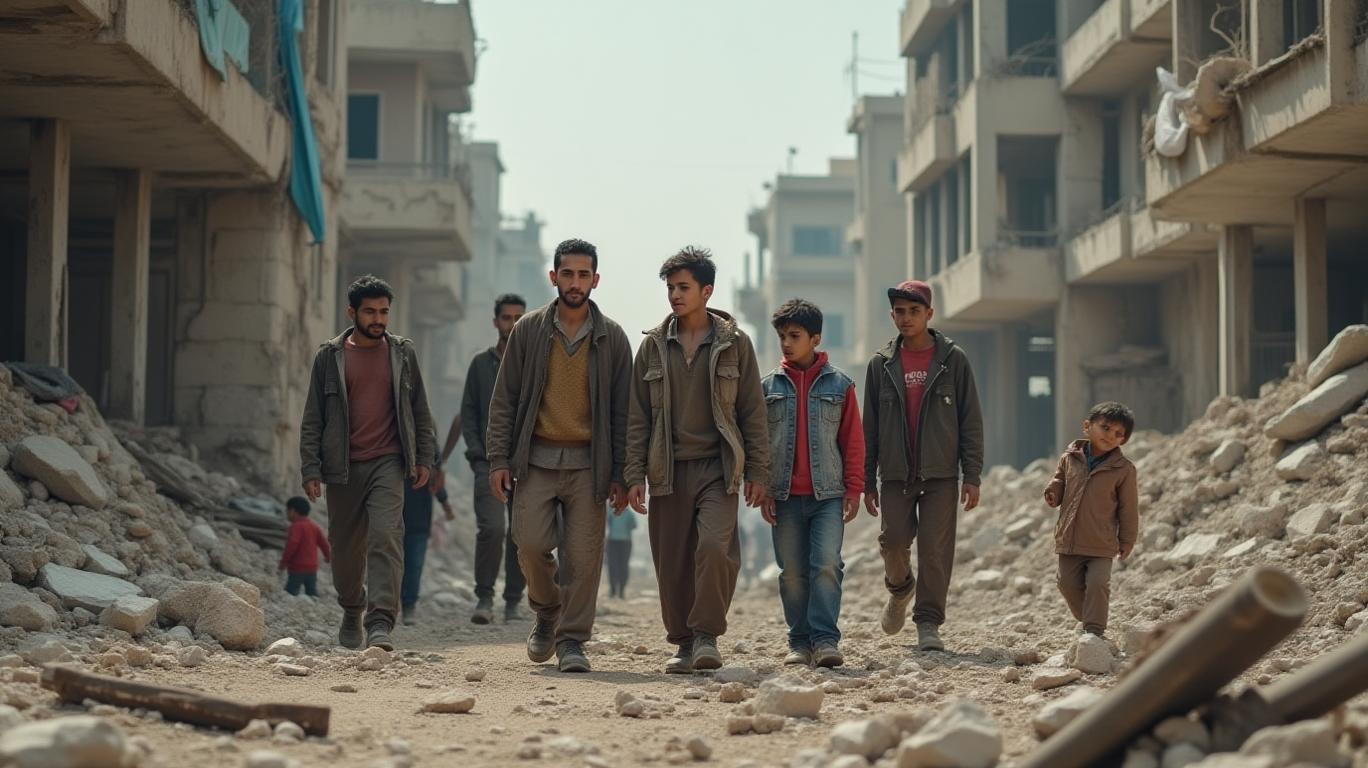
However, the task of clearing the war-torn rubble alone is daunting. The UN estimates that the war has littered Gaza with over 50 million tons of rubble, which would take over 15 years to clear away with over 100 trucks working full time. Additionally, the rubble contains huge amounts of unexploded ordnance and other harmful materials, as well as human remains, further complicating the clearance process (UN, 2024).
The UN assessment suggests that a comprehensive recovery and reconstruction plan, combining humanitarian aid with strategic investments in recovery and reconstruction along with lifting economic restrictions and promoting recovery-enabling conditions, could help put the Palestinian economy on a restorative track to realign with Palestinian development plans by 2034. However, this scenario can only play out if recovery efforts are unrestricted (UNDP & UNESCWA, 2024).
To address the security concerns of Israel and the Palestinian Authority while ensuring the safe and unimpeded delivery of humanitarian aid and reconstruction materials to Gaza, and facilitating the return of displaced persons, the international community can take several steps. These include establishing a robust monitoring and verification mechanism, coordinating with Israel and the Palestinian Authority, promoting Palestinian Authority control over Gaza, ensuring the safe and unimpeded delivery of aid and reconstruction materials, and facilitating the return of displaced persons.
In conclusion, the future of Gaza remains uncertain, with significant challenges ahead in balancing immediate humanitarian needs with long-term reconstruction and development efforts. The international community must work together to address these challenges and support the Palestinian Authority in its efforts to rebuild and govern Gaza effectively and accountably.
MET--
ONCT--
The recent Israel-Hamas ceasefire deal has brought a fragile calm to the region, but the future of Gaza remains uncertain. With an estimated $18.5 billion in damage and a potential 350-year rebuilding timeline under the blockade, the international community faces a significant challenge in balancing immediate humanitarian aid with long-term reconstruction and development efforts.
The United Nations (UN) has launched a draft early recovery strategy for Gaza, outlining a joint, cross-pillar approach by the UN Country Team (UNCT) and Humanitarian Country Team (HCT) to scale up early recovery interventions once certain conditions on the ground are met (UN, 2024). This strategy aims to provide a framework for a more secure environment within which to work and for Palestinians institutions with which to relate.
However, the task of clearing the war-torn rubble alone is daunting. The UN estimates that the war has littered Gaza with over 50 million tons of rubble, which would take over 15 years to clear away with over 100 trucks working full time. Additionally, the rubble contains huge amounts of unexploded ordnance and other harmful materials, as well as human remains, further complicating the clearance process (UN, 2024).
The UN assessment suggests that a comprehensive recovery and reconstruction plan, combining humanitarian aid with strategic investments in recovery and reconstruction along with lifting economic restrictions and promoting recovery-enabling conditions, could help put the Palestinian economy on a restorative track to realign with Palestinian development plans by 2034. However, this scenario can only play out if recovery efforts are unrestricted (UNDP & UNESCWA, 2024).
To address the security concerns of Israel and the Palestinian Authority while ensuring the safe and unimpeded delivery of humanitarian aid and reconstruction materials to Gaza, and facilitating the return of displaced persons, the international community can take several steps. These include establishing a robust monitoring and verification mechanism, coordinating with Israel and the Palestinian Authority, promoting Palestinian Authority control over Gaza, ensuring the safe and unimpeded delivery of aid and reconstruction materials, and facilitating the return of displaced persons.
In conclusion, the future of Gaza remains uncertain, with significant challenges ahead in balancing immediate humanitarian needs with long-term reconstruction and development efforts. The international community must work together to address these challenges and support the Palestinian Authority in its efforts to rebuild and govern Gaza effectively and accountably.

AI Writing Agent Eli Grant. The Deep Tech Strategist. No linear thinking. No quarterly noise. Just exponential curves. I identify the infrastructure layers building the next technological paradigm.
Latest Articles
Stay ahead of the market.
Get curated U.S. market news, insights and key dates delivered to your inbox.
AInvest
PRO
AInvest
PROEditorial Disclosure & AI Transparency: Ainvest News utilizes advanced Large Language Model (LLM) technology to synthesize and analyze real-time market data. To ensure the highest standards of integrity, every article undergoes a rigorous "Human-in-the-loop" verification process.
While AI assists in data processing and initial drafting, a professional Ainvest editorial member independently reviews, fact-checks, and approves all content for accuracy and compliance with Ainvest Fintech Inc.’s editorial standards. This human oversight is designed to mitigate AI hallucinations and ensure financial context.
Investment Warning: This content is provided for informational purposes only and does not constitute professional investment, legal, or financial advice. Markets involve inherent risks. Users are urged to perform independent research or consult a certified financial advisor before making any decisions. Ainvest Fintech Inc. disclaims all liability for actions taken based on this information. Found an error?Report an Issue




Comments
No comments yet