

Gasoline Production Falls Short, Signals Energy Shift
 Aime Summary
The U.S. Energy Information Administration () has confirmed a widening gap between projected and actual gasoline production, . This divergence signals a structural shift in energy markets, creating clear winners and losers across industries. For investors, the implications are profound: strategic reallocation toward energy infrastructure and away from fuel-dependent sectors is now critical.
The Production Shortfall: A Structural Shift
The EIA's October 2025 data reveals a persistent underperformance in gasoline production, with output declining despite earlier forecasts of stabilization. While the EIA's Short-Term Energy Outlook () had projected a 0.5% annual growth in production, actual figures suggest a sharper decline. This shortfall is driven by a combination of factors: refining capacity constraints, reduced crude oil inputs, and a shift in consumer behavior toward electric vehicles (EVs).
BMI's November 2025 report underscores the gravity of the situation, noting that U.S. gasoline demand has peaked, . Meanwhile, global gasoline supply remains undersupplied, . This imbalance is tightening margins for refiners and creating upward pressure on prices, but the long-term trend remains bearish for traditional fuel-dependent sectors.
Winners and Losers in the Energy Transition
Energy Equipment and Services (EES):
The production shortfall is a tailwind for EES firms, which are essential to maintaining and upgrading aging refining infrastructure. Companies specializing in modular refining technology, , and hydrogen production are particularly well-positioned. For example, firms like Schlumberger (SLB) and Halliburton (HAL) are seeing increased demand for retrofitting legacy facilities to meet cleaner fuel standards.
Fuel-Dependent Sectors:
Automakers reliant on internal combustion engines (ICEs) face mounting headwinds. FordF-- (F) and General MotorsGM-- (GM) have already announced production cuts for ICE models, but their stock valuations remain vulnerable to further declines in gasoline demand. Meanwhile, EV manufacturers like TeslaTSLA-- (TSLA) and RivianRIVN-- (RIVN) are gaining market share, though their growth is now more dependent on battery supply chain stability than gasoline price dynamics.
Strategic Reallocation: A Data-Driven Approach
Investors should prioritize exposure to EES firms while reducing holdings in ICE-dependent automakers. Here's how to act:
- Energy Equipment and Services:
- Long-Term Holdings: Allocate to EES ETFs like the Energy Select Sector SPDR Fund (XLE) or individual stocks with strong R&D pipelines in hydrogen and carbon management.
Short-Term Plays: Target companies benefiting from near-term refining upgrades, such as Baker Hughes (BKR) or TechnipFMC (FTI).
Fuel-Dependent Sectors:
- Divest Gradually: Reduce exposure to automakers with high ICE exposure. Use trailing stops to lock in gains as gasoline demand trends weaken.
Hedge Against Volatility: Consider short positions in ICE automaker futures or long positions in EV-focused ETFs like the iShares EV and Battery Innovation ETF (IBEV).
Cross-Sector Opportunities:
- Invest in companies bridging the gap between legacy and emerging energy systems, such as Plug Power (PLUG) for hydrogen infrastructure or Enphase Energy (ENPH) for solar .
The Road Ahead: Balancing Risk and Reward
, . While this may temporarily stabilize refiner margins, the long-term outlook remains bearish. Investors must act now to realign portfolios with the new energy paradigm.
In conclusion, the gasoline production shortfall is not a temporary blip but a signal of deeper structural change. By doubling down on EES and exiting fuel-dependent sectors, investors can position themselves to thrive in an energy landscape defined by innovation and sustainability. The time to act is now—before the market fully prices in the scale of this transition.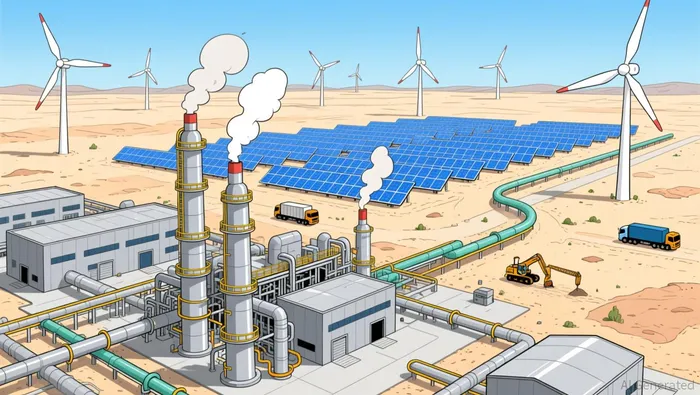

Stay ahead of the market.
Get curated U.S. market news, insights and key dates delivered to your inbox.




Comments
No comments yet