
Gas Prices at Four-Year Lows: A Catalyst for Strategic Investment in Energy Efficiency and Alternative Fuels
The U.S. national average gas price has dipped to its lowest level in four years, settling near $2.62 per gallon by mid-2025—marking a stark contrast to the $5.03/gallon peak of June 2022. This prolonged decline, driven by stabilized global supply chains, reduced geopolitical tensions, and improved refining capacity, presents a unique opportunity for investors to pivot toward decarbonization plays. While low gas prices might seem counterintuitive to demand for alternatives, the structural shift toward energy efficiency and sustainable fuels is now irreversible. This article explores how investors can capitalize on this trend by reallocating capital to sectors poised to thrive in both stable and volatile energy markets.
The Paradox of Low Gas Prices and Green Investment
At first glance, falling gas prices could dampen near-term demand for electric vehicles (EVs) and alternative fuels. However, three factors make this environment ripe for strategic investments in energy transition sectors:
Cost Competitiveness of Clean Tech: Renewable energy and EV technologies have reached price parity with fossil fuel alternatives in many markets. Solar and wind energy are now the cheapest forms of new power generation in most regions, while EVs are projected to account for 35% of global vehicle sales by 2030, per BloombergNEF. Even at $2.62/gallon, EVs offer long-term savings on fuel and maintenance, making them a compelling choice for cost-conscious consumers.
Regulatory and Policy Momentum: Governments worldwide are tightening emissions standards and offering subsidies for clean energy adoption. The U.S. Inflation Reduction Act (IRA), for instance, provides tax credits for EV purchases, home solar installations, and battery storage systems. These policies ensure demand for green tech remains robust, even if gas prices stabilize at current lows.
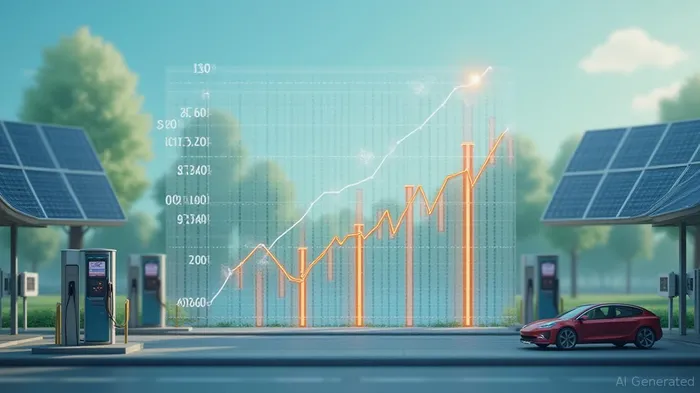
Institutional Demand for Resilience: Institutional investors are increasingly prioritizing decarbonization to mitigate climate-related risks. A chart reveals the volatility of fossil fuel markets, with prices swinging between $2.42 and $5.03/gallon in four years. In contrast, renewable energy and energy efficiency assets offer predictable cash flows and hedge against future supply shocks.
Key Investment Themes to Exploit This Trend
1. EV Infrastructure: The Silent Growth Engine
The EV market's expansion hinges on widespread charging infrastructure. With the U.S. aiming to install 500,000 EV chargers by 2030, companies involved in smart charging networks, battery swapping, and DC fast-charger manufacturing are primed for growth. For example, EVgo (NASDAQ: EVGO), a leading public charging network, has seen its revenue grow by 67% YoY in 2024 despite macroeconomic headwinds. Investors should also consider microgrid developers and smart grid technologies, which ensure grid stability as EV adoption strains traditional infrastructure.
2. Renewable Energy Storage: The Missing Link to Grid Reliability
Solar and wind energy's intermittency creates a critical need for storage solutions. Lithium-ion batteries dominate the market today, but innovations in solid-state batteries, hydrogen storage, and flow batteries are unlocking new efficiencies. projections suggest this sector could hit $120 billion by 2030, up from $30 billion in 2023. Firms like Tesla (NASDAQ: TSLA) and Northvolt (private) are leaders here, but smaller players in novel storage tech could offer asymmetric returns.
3. Green Tech Startups: The Next Wave of Disruption
Startups focused on carbon capture, hydrogen production, and AI-driven energy efficiency are redefining the energy landscape. For instance, CarbonCure (a carbon capture innovator) and Hydrogenious LOHC Technologies (a hydrogen storage pioneer) have secured significant venture capital backing, even in 2024's funding-constrained environment. Investors with a high-risk tolerance should explore venture capital funds or SPACs targeting these niches, which could become the next NVIDIA or Sundrop Fuels of the energy sector.
Risk Considerations and Portfolio Allocation
While the long-term thesis is strong, investors must acknowledge near-term risks:- Policy Reversals: Federal incentives like the IRA could face political pushback, though bipartisan support for energy security remains high.- Commodity Volatility: Lithium and cobalt prices could pressure margins for battery manufacturers if they spike again.- Technological Obsolescence: Rapid innovation in storage and fuel techFTEK-- demands active portfolio management to avoid stranded assets.
A prudent strategy involves:- Allocating 10–15% of a diversified portfolio to energy transition ETFs like Invesco Solar ETF (TAN) or iShares Global Clean Energy ETF (ICLN).- Targeting undervalued mid-cap firms in EV infrastructure and storage, which offer higher growth potential than large caps.- Hedging with commodities like copper (critical for EVs) via ETFs such as Copper Miners ETF (COPX).
Conclusion: Positioning for the Energy Transition's Inflection Point
The current gas price slump is not a setback for decarbonization—it's a strategic opportunity. Investors who pivot toward energy efficiency, alternative fuels, and storage technologies now will secure positions in industries that will dominate the next economic cycle. As the EIA's data underscores, fossil fuel markets remain inherently volatile, while clean energy's fundamentals are only strengthening. The time to act is now, before these sectors become consensus plays and valuations rise accordingly.
JR Research advises investors to consult with a financial advisor before making any investment decisions.

Stay ahead of the market.
Get curated U.S. market news, insights and key dates delivered to your inbox.
AInvest
PRO
AInvest
PRO



Comments
No comments yet