
Garma 2025 Live: Indigenous Festival Marks 25 Years in Remote Australia
ByAinvest
Thursday, Jul 31, 2025 7:23 pm ET2min read
FRO--
The report highlights that of the 19 targets set, four have worsened, including adult imprisonment, children in out-of-home care, suicide, and children developmentally on track. While there have been some successes, such as improvements in preschool enrolment, employment, and land and water rights, the progress is insufficient and inconsistent across states and territories [1].
The Garma festival has seen prominent figures like Pat Anderson and Megan Davis, drafters of the Uluru Statement and Voice to Parliament backers, express their discontent with government talking points. They emphasize that meaningful progress will only be achieved if governments involve Indigenous people in decision-making [2].
To address these issues, three potential solutions have been proposed:
1. A National Action Plan Driven by Human Rights: Australia lacks a comprehensive Indigenous rights framework. Adopting a rights-based approach to the Closing the Gap framework could provide a way forward. The United Nations Declaration on the Rights of Indigenous Peoples (UNDRIP) outlines minimum standards of human rights relating to Indigenous peoples. A national action plan to implement UNDRIP could empower Indigenous communities and drive community-led solutions [1].
2. An Independent Oversight Body: An independent representative body at the national level could provide strategic oversight and accountability for the implementation of the Closing the Gap policy. This body could also advocate for policies consistent with the National Agreement on Closing the Gap [1].
3. A Bigger Role for Local Government: Local governments, as frontline service providers, can engage with communities on a daily basis and implement policies that shape outcomes on the ground. Tamworth Aboriginal Community Controlled Organisations and Tamworth Regional Council have pioneered a local approach to Closing the Gap [1].
These solutions aim to address the systemic issues that hinder progress and ensure that Indigenous Australians are actively involved in decision-making processes. The Garma festival serves as a reminder that meaningful change requires sustained effort and genuine engagement with Indigenous communities.
References:
[1] The Conversation. (2023). Progress on closing the gap is stagnant or going backwards. Here are 3 things to help fix it. Retrieved from https://theconversation.com/progress-on-closing-the-gap-is-stagnant-or-going-backwards-here-are-3-things-to-help-fix-it-262042
[2] Garma Festival. (2025). Statement from Pat Anderson and Megan Davis. Retrieved from https://garmafestival.com/statements
GAP--
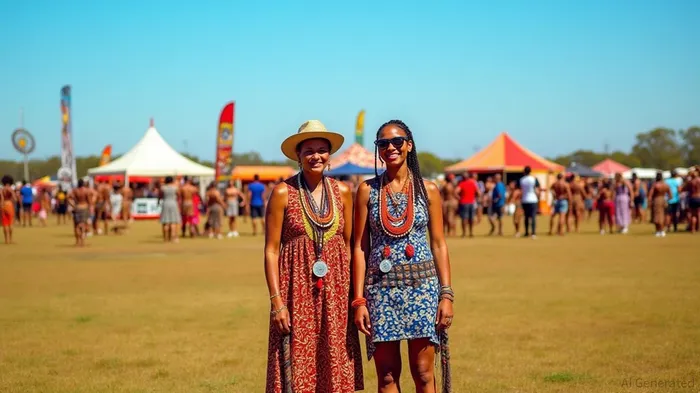
The Garma festival, Australia's largest Indigenous gathering, has begun its 25th year in the Northern Territory. The event features cultural displays, dance, and music, as well as discussions on the latest Closing the Gap report and poor outcomes for Indigenous Australians. Uluru statement drafters and Voice to parliament backers Pat Anderson and Megan Davis have declared that Indigenous Australians will not "lap up" government talking points, and that progress will only be made if governments involve Indigenous people in decision-making.
The 25th Garma festival, Australia's largest Indigenous gathering, has begun in the Northern Territory, with discussions centering around the latest Closing the Gap report and its disheartening findings. The Productivity Commission's data reveals that despite 17 years of the Closing the Gap policy, significant socioeconomic disadvantages persist among Aboriginal and Torres Strait Islander peoples [1].The report highlights that of the 19 targets set, four have worsened, including adult imprisonment, children in out-of-home care, suicide, and children developmentally on track. While there have been some successes, such as improvements in preschool enrolment, employment, and land and water rights, the progress is insufficient and inconsistent across states and territories [1].
The Garma festival has seen prominent figures like Pat Anderson and Megan Davis, drafters of the Uluru Statement and Voice to Parliament backers, express their discontent with government talking points. They emphasize that meaningful progress will only be achieved if governments involve Indigenous people in decision-making [2].
To address these issues, three potential solutions have been proposed:
1. A National Action Plan Driven by Human Rights: Australia lacks a comprehensive Indigenous rights framework. Adopting a rights-based approach to the Closing the Gap framework could provide a way forward. The United Nations Declaration on the Rights of Indigenous Peoples (UNDRIP) outlines minimum standards of human rights relating to Indigenous peoples. A national action plan to implement UNDRIP could empower Indigenous communities and drive community-led solutions [1].
2. An Independent Oversight Body: An independent representative body at the national level could provide strategic oversight and accountability for the implementation of the Closing the Gap policy. This body could also advocate for policies consistent with the National Agreement on Closing the Gap [1].
3. A Bigger Role for Local Government: Local governments, as frontline service providers, can engage with communities on a daily basis and implement policies that shape outcomes on the ground. Tamworth Aboriginal Community Controlled Organisations and Tamworth Regional Council have pioneered a local approach to Closing the Gap [1].
These solutions aim to address the systemic issues that hinder progress and ensure that Indigenous Australians are actively involved in decision-making processes. The Garma festival serves as a reminder that meaningful change requires sustained effort and genuine engagement with Indigenous communities.
References:
[1] The Conversation. (2023). Progress on closing the gap is stagnant or going backwards. Here are 3 things to help fix it. Retrieved from https://theconversation.com/progress-on-closing-the-gap-is-stagnant-or-going-backwards-here-are-3-things-to-help-fix-it-262042
[2] Garma Festival. (2025). Statement from Pat Anderson and Megan Davis. Retrieved from https://garmafestival.com/statements
Stay ahead of the market.
Get curated U.S. market news, insights and key dates delivered to your inbox.
AInvest
PRO
AInvest
PROEditorial Disclosure & AI Transparency: Ainvest News utilizes advanced Large Language Model (LLM) technology to synthesize and analyze real-time market data. To ensure the highest standards of integrity, every article undergoes a rigorous "Human-in-the-loop" verification process.
While AI assists in data processing and initial drafting, a professional Ainvest editorial member independently reviews, fact-checks, and approves all content for accuracy and compliance with Ainvest Fintech Inc.’s editorial standards. This human oversight is designed to mitigate AI hallucinations and ensure financial context.
Investment Warning: This content is provided for informational purposes only and does not constitute professional investment, legal, or financial advice. Markets involve inherent risks. Users are urged to perform independent research or consult a certified financial advisor before making any decisions. Ainvest Fintech Inc. disclaims all liability for actions taken based on this information. Found an error?Report an Issue


ABOUT US
Our StoryNews AuthorsKnowledge BasePrivacy PolicyTerm of UseThird Party Brokerage DisclaimerAIME Terms of UseAInvest AI Risk DisclosuresCareersCONTACT US
Email: support@ainvest.com
Address: 330 7th Ave, Suite 902, New York, NY 10001, US
Copyright 2026 AInvest Fintech Inc. All rights reserved.


Comments
No comments yet