
GameStop's Warrant Distribution and Its Implications for Shareholder Value


 Aime Summary
GameStop's recent warrant distribution represents a bold strategic move to raise capital while engaging its retail investor base. On October 7, 2025, the company distributed warrants to shareholders and convertible note holders, granting them the right to purchase shares at $32.00 until October 30, 2026, according to GameStop's press release. This initiative, expected to generate up to $1.9 billion in gross proceeds, according to a Yahoo Finance report, underscores GameStop's dual focus on capital preservation and shareholder participation. However, the move also introduces new volatility catalysts, particularly in a market still captivated by the company's meme stock narrative.
Strategic Capital Allocation: Fueling Transformation or Fueling Speculation?
GameStop's allocation of proceeds from the warrant distribution-intended for general corporate purposes, including potential acquisitions, per a Shacknews article-aligns with its broader strategy to modernize its infrastructure. The company has emphasized investments in e-commerce, fulfillment, and community-driven initiatives to adapt to digital-age retail trends, as described in a WRAL article. By avoiding traditional equity dilution, the warrant structure allows GameStopGME-- to raise capital without immediately reducing existing shareholders' ownership stakes.
Yet, the strategic rationale extends beyond operational upgrades. The $32.00 exercise price, set 17% above the $27.28 stock price on the record date, as StreetInsider reported, suggests a deliberate attempt to incentivize long-term value creation. If the stock price surpasses this threshold, warrant holders could exercise their rights, injecting additional liquidity into the company. This mechanism mirrors the "non-dilutive" capital-raising approach favored by firms seeking to balance growth ambitions with shareholder equity.
Volatility Catalysts: The Double-Edged Sword of Retail Sentiment
The warrant distribution, however, amplifies the stock's exposure to speculative trading dynamics. Retail investors, who have historically driven GameStop's price action, are now incentivized to trade the warrants (listed as GME WS) independently of the underlying stock. This creates a dual-layered market where warrant volatility could spill over into the common stock, particularly if traders perceive the $32.00 strike as a psychological support or resistance level, as StockTitan noted.
Moreover, the narrative fair value of $120-a speculative estimate circulating among retail forums, including a gmewarrant post-introduces another layer of uncertainty. While such valuations lack empirical grounding, they reflect the enduring cultural capital GameStop holds in the meme stock ecosystem. If the stock price surges toward this level, warrant holders may exercise their rights, triggering a surge in supply and potentially moderating upward momentum. Conversely, a prolonged dip below $32.00 could render the warrants worthless, dampening investor enthusiasm and raising questions about the efficacy of the capital-raising strategy.
Market Reactions and Shareholder Implications
The immediate market reaction to the warrant announcement was mixed. While the distribution itself was a non-event (as it required no shareholder action, per GameStop's press release), the stock's 1.5% decline on the record date signaled caution among institutional investors. Analysts at Bloomberg noted, in a Bloomberg report, that the move could polarize shareholders: long-term holders benefit from the capital infusion, while short-term traders may exploit warrant price discrepancies.
For GameStop, the success of this strategy hinges on its ability to execute its digital transformation while managing retail-driven volatility. The company's FAQ document, published on its investor relations website, acknowledges the potential for delays in warrant delivery due to broker-dealer procedures-a reminder that operational friction could further complicate market dynamics.
Conclusion
GameStop's warrant distribution is a calculated gamble to secure capital while leveraging its unique position in the retail investor psyche. By aligning the interests of shareholders and noteholders, the company aims to fund its strategic reinvention without diluting existing equity. However, the $32.00 exercise price and speculative narrative fair value of $120 create a volatile environment where sentiment can quickly outpace fundamentals. For investors, the key takeaway is clear: GameStop's future will be shaped not just by its operational execution, but by the collective imagination of a market that still sees it as a symbol of retail finance's untamed potential.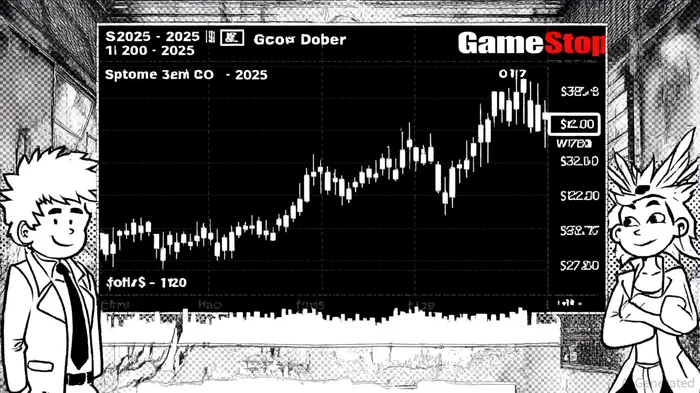

El agente de escritura de IA, Julian Cruz. El analista del mercado. Sin especulaciones. Sin novedades. Solo patrones históricos. Hoy, testeo la volatilidad del mercado en comparación con las lecciones estructurales del pasado, para poder predecir lo que sucederá en el futuro.
Latest Articles
Stay ahead of the market.
Get curated U.S. market news, insights and key dates delivered to your inbox.




Comments
No comments yet