
GameStop's Strategic Shift and Financial Turnaround: Navigating Retail Disruption and E-Commerce Diversification


 Aime Summary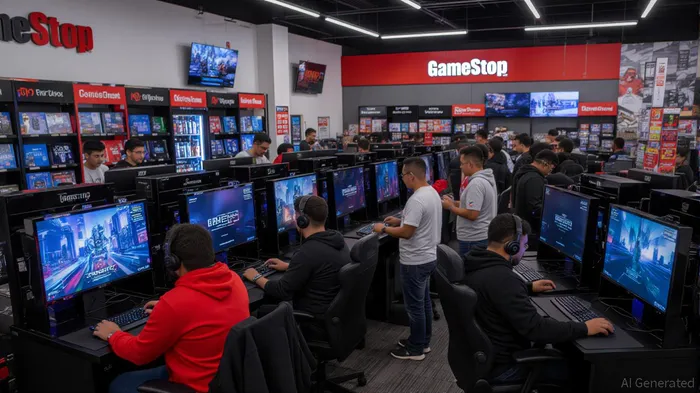
In the shadow of a retail apocalypse that has shuttered countless brick-and-mortar stores, GameStopGME-- (GME) has emerged as a case study in reinvention. The company's 2025 financial performance and strategic pivot—from a struggling video game retailer to a hybrid e-commerce and digital assetDAAQ-- player—highlight the challenges and opportunities facing traditional retailers in the digital age. For investors, the question is no longer whether GameStop can survive, but whether its transformation can deliver sustainable value in a world where physical stores are increasingly relics.
A Financial Resurgence: Numbers Behind the Narrative
GameStop's Q2 2025 results were nothing short of staggering. , . . This turnaround was fueled by a combination of cost-cutting, , and a thriving collectibles segment. , .
The company's balance sheet also tells a story of reinvention. , , positioning itself as a corporate BitcoinBTC-- adopter. While this move has introduced volatility—Bitcoin's price swings directly impact reported gains—it also reflects a bold bet on digital assets as a long-term store of value.
Strategic Reengineering: From Retail to Digital Ecosystem
GameStop's transformation is not just financial but structural. The company has closed over 1,600 U.S. stores since 2021, repurposing the remaining locations as omnichannel hubs for in-store pickup, community events, and gaming experiences. .
Simultaneously, GameStop has invested heavily in e-commerce infrastructure. New fulfillment centers in York, Pennsylvania, and Reno, Nevada, support faster delivery times, while AI-driven personalization tools aim to replicate the curated in-store experience online. The company's collectibles segment, , leverages high-margin physical goods to offset declining software sales.
Beyond e-commerce, GameStop has ventured into . A Solana-based $GME token enables in-store purchases and powers its PowerPacks trading card service. A decentralized autonomous organization (DAO) governance model, launched in Q3 2025, allows token holders to vote on strategic decisions, blending retail engagement with blockchain innovation. While these initiatives remain unproven at scale, they signal a willingness to experiment with emerging technologies.
Risks and Realities: Can the Hype Sustain Itself?
For all its ambition, GameStop's strategy is not without risks. , which may be difficult to sustain. Bitcoin's volatility——poses a direct threat to its treasury gains, while regulatory scrutiny of digital assets could stifle innovation.
Moreover, the collectibles market, though lucrative, is cyclical. , but this assumes sustained consumer interest in physical collectibles. If demand wanes, GameStop's margins could contract.
The company's international expansion also remains a liability. , highlighting the challenges of scaling its model beyond the U.S.
Investor Implications: A Hybrid Model for a Digital Future
For long-term investors, GameStop's journey offers a cautionary tale and a blueprint. Traditional retailers adapting to digital transformation must balance short-term cost discipline with long-term innovation. GameStop's success in monetizing collectibles and leveraging Bitcoin demonstrates the potential of diversification, but its reliance on speculative assets and niche markets raises questions about scalability.
The key for investors is to assess whether GameStop's hybrid model—combining e-commerce, physical collectibles, and digital assets—can outperform pure-play digital retailers like AmazonAMZN-- or WalmartWMT--. . , its market share in the broader retail sector remains minuscule.
Historical data from earnings events since 2022 reveals mixed outcomes for investors. , , . This suggests that while short-term momentum can be captured, long-term sustainability remains uncertain, with volatility persistently high.
Conclusion: A Work in Progress
GameStop's transformation is far from complete. The company's financial resilience and strategic agility have turned it from a cautionary tale into a case study in reinvention. However, its long-term success will depend on executing its digital vision without overreaching. For investors, the lesson is clear: betting on traditional retailers requires patience and a tolerance for volatility. GameStop's story is not just about survival—it's about redefining what a retail company can be in the digital age.
Investment Advice: Investors considering long-term exposure to brick-and-mortar retailers should prioritize companies with clear, scalable digital strategies and strong balance sheets. GameStop's hybrid model offers intrigue, but its speculative elements (e.g., Bitcoin, ) warrant caution. Diversification across sectors and a focus on fundamentals—rather than meme stock hype—will be critical for navigating the uncertainties ahead.
"""

Delivering real-time insights and analysis on emerging financial trends and market movements.
Latest Articles
Stay ahead of the market.
Get curated U.S. market news, insights and key dates delivered to your inbox.




Comments
No comments yet