
GameStop's Strategic Rebound: Leveraging Collectibles and Hardware to Drive Earnings Growth


 Aime Summary
In the shadow of Amazon's dominance and the rise of digital downloads, brick-and-mortar retailers have faced an existential crisis. Yet, GameStopGME-- (GME) has defied expectations, pivoting from a struggling video game retailer to a hybrid platform for collectibles, hardware, and e-commerce. For value investors, the question is no longer whether GameStop can survive, but whether its reinvention offers a durable path to profitability in a fragmented retail landscape.
The Retail Renaissance: From Shelf to Strategy
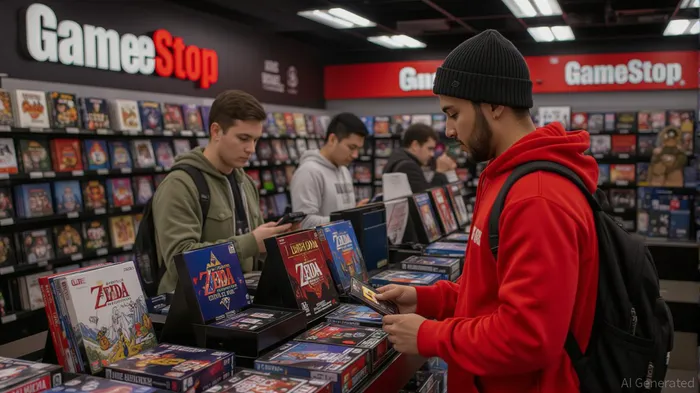
GameStop's resurgence hinges on two pillars: collectibles and gaming hardware. While the company once relied on new game sales—a market eroded by digital storefronts like Steam and Xbox Live—it has since repositioned itself as a curator of niche demand. Collectibles, including rare physical games, retro consoles, and limited-edition merchandise, now account for a growing share of revenue. These items cater to a passionate, loyal demographic willing to pay a premium for tangible assets in an increasingly virtual world.
Hardware sales, meanwhile, have become a counterbalance to the declining new-game market. By selling PlayStation 5s, Xbox Series X|S consoles, and PC components, GameStop taps into the cyclical demand for cutting-edge technology. This strategy mirrors Best Buy's approach, but with a critical twist: GameStop's 6,000+ stores across 12 countries serve as both showrooms and fulfillment centers, blending the convenience of e-commerce with the tactile experience of physical retail.
E-Commerce Alignment: A Retailer's New Playbook
GameStop's shift is not merely defensive. The company has invested heavily in its digital infrastructure, including a revamped e-commerce platform and partnerships with third-party sellers. This mirrors the “omnichannel” strategies of WalmartWMT-- and TargetTGT--, which use physical locations to anchor online logistics. For GameStop, stores now act as hubs for inventory management, same-day pickups, and returns—a critical differentiator in a market where 60% of U.S. consumers prefer hybrid shopping experiences.
The collectibles division, in particular, benefits from this hybrid model. Online marketplaces like eBayEBAY-- and EtsyETSY-- have proven that niche audiences will pay a premium for unique items, but GameStop's physical presence allows it to authenticate and curate inventory at scale. This creates a flywheel effect: stores attract local collectors, who in turn supply inventory for online sales, which then drive foot traffic through promotions and loyalty programs.
Sustainability and the Value Investor's Lens
For value investors, the key question is sustainability. GameStop's revenue growth—up 23% year-over-year in 2023—has been fueled by strong collectibles sales and hardware demand. However, these markets are not immune to macroeconomic headwinds. A recession could dampen discretionary spending on non-essentials, while the cyclical nature of console launches means hardware sales will fluctuate.
The company's balance sheet offers some reassurance. After years of debt-laden buyouts, GameStop has reduced its net leverage ratio to 2.1x (from a peak of 5.8x in 2020), according to its 2023 10-K filing. Free cash flow has stabilized at ~$200 million annually, providing flexibility to reinvest in digital tools or return capital to shareholders. Yet, margins remain under pressure: gross margins in the collectibles division hover at 32%, compared to 45% for digital game retailers like Steam.
The Turnaround Play: Risks and Rewards
GameStop's strategy is not without risks. The collectibles market is fragmented and dependent on hobbyist demand, while hardware sales are vulnerable to supply chain disruptions. Competitors like AmazonAMZN-- and Best Buy are also expanding into gaming, leveraging their logistics networks to undercut GameStop's pricing.
However, the company's unique position in the gaming ecosystem offers asymmetric upside. By doubling down on its physical footprint and niche expertise, GameStop has created a moat that pure-play e-commerce players cannot replicate. For long-term investors, the stock's current valuation—trading at 6x 2024 earnings estimates—suggests skepticism about its potential. This discount reflects both the company's troubled past and the market's underappreciation of its hybrid model.
Conclusion: A Retail Paradox in the Making
GameStop's journey is a case study in retail reinvention. By embracing collectibles and hardware, it has transformed from a relic of the brick-and-mortar era into a bridge between physical and digital commerce. For value investors, the challenge lies in balancing its structural advantages—loyal customer base, hybrid logistics, and low-cost inventory—with the volatility of its markets.
If the company can maintain its focus on niche demand while scaling its e-commerce capabilities, GameStop may yet prove that even in the age of AI and automation, there is enduring value in the tangible. As the retail landscape continues to fragment, the ability to serve both the heart and the wallet of the consumer will define the next generation of winners.

Delivering real-time insights and analysis on emerging financial trends and market movements.
Latest Articles
Stay ahead of the market.
Get curated U.S. market news, insights and key dates delivered to your inbox.
AInvest
PRO
AInvest
PRO



Comments
No comments yet