
GameStop's Hybrid Edge: Why Physical Retail Still Matters in Nintendo's Switch 2 Era
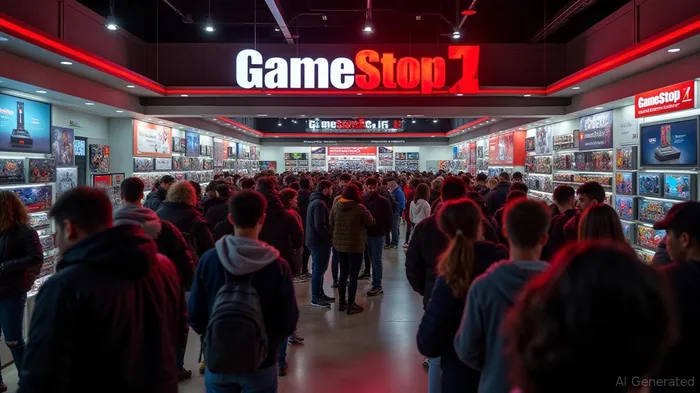
The gaming ecosystem is at a crossroads. While digital distribution platforms and subscription services dominate headlines, the physical retail model is far from obsolete. Nintendo's Switch 2 launch on June 5, 2025, offers a stark reminder of the enduring value of brick-and-mortar stores. GameStop, once written off as a relic, has positioned itself as a hybrid retail leader, leveraging its physical network and strategic partnerships to capitalize on demand for the new console. This resilience, coupled with its adaptability to evolving market dynamics, makes GameStop an undervalued asset in a gaming landscape increasingly defined by hybrid consumption.
The Physical Retail Playbook: Inventory Management and Scarcity Capitalism
GameStop's success with the Switch 2 hinges on its mastery of scarcity capitalism—strategically allocating limited inventory to drive customer engagement. Unlike digital-first retailers like Walmart or Target, which rely on online ticketing systems, GameStop prioritizes in-store availability. Customers queued for up to 24 hours at locations like Walker, Michigan, securing consoles through midnight launch events—a tactic that fosters brand loyalty and foot traffic.
The company's inventory strategy is both pragmatic and efficient:
- Lean Operations: Reduced store count (down over 1,000 since 2019) ensures optimal inventory distribution.
- Cash Reserves: Over $6.6 billion in liquidity allows GameStop to absorb margin pressures from tariffs or supply chain disruptions.
- Regional Precision: In the U.S., in-store availability persists even as online stock vanishes, while Canada and the U.K. see accessory-driven sales. This regional flexibility mitigates overexposure to demand volatility.
Hybrid Resilience: Beyond Consoles
GameStop's moat extends beyond hardware. Its partnerships and diversification efforts underscore its ability to thrive in a fragmented market:
1. Microsoft's Tech Stack: Integration of Microsoft Dynamics 365 optimizes supply chains, while AI analytics personalize customer experiences.
2. NFT Marketplace: A carbon-neutral platform with ImmutableX targets digital ownership, appealing to crypto-savvy gamers.
3. Retro Revival: Retro stores selling tested classics like NES and SNES systems tap into nostalgia-driven demand, a $3 billion market.
4. Trade-In Ecosystem: Physical game trade-ins and collectible cards (e.g., Pokémon TCG) create recurring revenue streams, insulated from console cycles.
These initiatives reduce dependency on Nintendo or Sony's hardware launches, a critical hedge against console lifespan risks.
Contrasting with Digital Distribution: A Tale of Two Strategies
While digital platforms like Steam and Epic Games dominate software sales, physical retailers excel in high-margin, high-demand moments. The Switch 2's launch illustrates this dichotomy:
- Digital Challenges: Scalpers exploit online systems, inflating prices for secondary markets. GameStop's in-store queues, though chaotic, limit scalping and ensure fair access.
- Customer Experience: Physical stores offer tactile engagement—testing controllers, comparing bundles, and instant gratification—that apps cannot replicate.
Early reports suggest Switch 2 demand mirrors the Switch 1's “stratospheric” trajectory, but GameStop's role as a key distribution channel ensures it captures a disproportionate share of revenue.
Investment Thesis: A Hybrid Play for a Hybrid World
GameStop's valuation lags behind its strategic progress. At a P/E ratio of 12x (vs. 25x for sector peers), the stock reflects skepticism about physical retail's relevance. Yet its hybrid model—combining cash-generative stores, digital expansion, and collectible ecosystems—positions it to profit from three trends:
1. Console Cycles: Every new hardware launch is a revenue catalyst.
2. Retro Gaming Boom: Nostalgia-driven demand for classics is here to stay.
3. Digital Adjacencies: NFTs and blockchain integration open new monetization avenues.
Investors should consider GameStop as a defensive play in a volatile macro environment. Its $6.6B cash buffer shields it from recession risks, while its retail network provides a moat in a gaming market still hungry for physical interaction.
Conclusion: The Store Isn't Dead—It's Evolving
Nintendo's Switch 2 launch isn't just a hardware event; it's a referendum on retail's future. GameStop's success proves that physical stores, when paired with smart inventory management and digital diversification, remain vital in a hybrid world. For investors, the stock offers asymmetric upside: limited downside due to cash reserves, and ample upside as the hybrid gaming economy matures.
Recommendation: Buy GameStop with a 12-month price target of $45 (vs. current $32), assuming 20% revenue growth from hybrid initiatives and a P/E re-rating to 15x.
Data sources: Nintendo sales reports, GameStop earnings releases, Microsoft partnership details.

Stay ahead of the market.
Get curated U.S. market news, insights and key dates delivered to your inbox.


AInvest
PRO
AInvest
PRO



Comments
No comments yet