
GameStop's Gamble: Can Collectibles and Bitcoin Revive a Retail Giant?
GameStop's Q1 2025 financials reveal a stark reality: its traditional video game retail business is in freefall. Net sales fell 16.9% year-over-year, with hardware and software sales plummeting as digital platforms and streaming dominate consumer spending. Yet, amidst the decline, a new narrative is emerging—one of reinvention. The company's pivot to collectibles and its bold Bitcoin bet could redefine its future. But is this a winning hand, or a risky gamble?
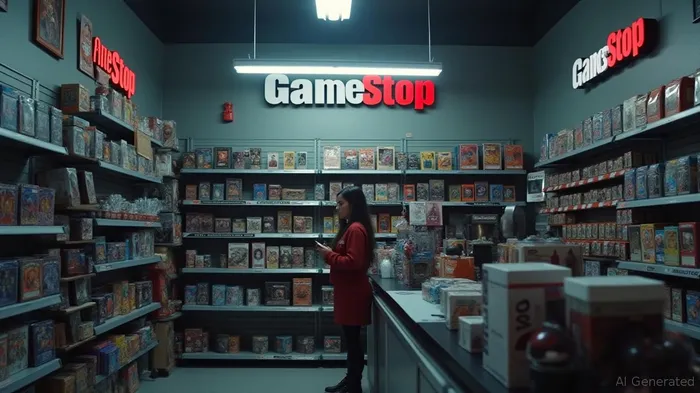
The Decline of the Retail Empire
GameStop's struggles are clear in the numbers. Hardware and accessories sales dropped 31.5% to $345.3 million in Q1 2025, while software sales fell 26.7% to $175.6 million. These declines reflect an irreversible shift: physical gaming is dying. Even in its core U.S. market, sales dropped 12.8%, underscoring the urgency of its pivot.
The company has responded with drastic measures: closing stores in Europe, selling its Canadian operations, and cutting costs. Operating losses narrowed to $10.8 million, but the real story lies in its new bets.
Collectibles: A Growth Engine?
The bright spot in GameStop's Q1 results was collectibles, which soared to $211.5 million in sales—a 54.7% jump from 2024. This segment now accounts for nearly 29% of total revenue, up from 15.5% a year ago. The surge includes trading cards, action figures, and pop-culture memorabilia, tapping into a $232 billion global collectibles market projected to grow at 6.2% annually through 2034.
The opportunity here is clear. Nostalgia-driven demand for retro toys (e.g., vintage Star Wars figures) and high-margin products like limited-edition trading cards aligns with a cultural shift toward physical “tangible” assets. GameStop's physical stores could become hubs for this market, leveraging its brand equity among younger, tech-savvy shoppers.
However, risks loom. The collectibles space is crowded, with competitors like Hasbro, Funko, and online platforms like eBay already entrenched. Sustaining growth will require aggressive merchandising and partnerships—something GameStopGME-- has not historically excelled at.
Bitcoin: A Double-Edged Sword
GameStop's boldest move is its $515 million Bitcoin investment, acquired using proceeds from a $1.3 billion convertible bond offering. CEO Ryan Cohen has framed this as a “diversification” strategy, but the implications are profound.
The bet's upside is staggering: Bitcoin's price volatility could amplify returns. If the crypto rallies, GameStop's stock—now correlated with Bitcoin's moves—could surge. However, the risks are equally stark:
- Volatility Risk: Bitcoin's price dropped 10.9% in a single day in June 2025, dragging GameStop's stock down 22%.
- Balance Sheet Pressure: The convertible bonds come with dilution risks, and interest payments could strain margins if sales stagnate.
- Regulatory Uncertainty: Crypto's legal landscape is still evolving, with potential crackdowns or taxes looming.
Critics argue this is a distraction. “GameStop is now a Bitcoin proxy with a retail business attached,” said one analyst. The company's core business remains in decline, and its Bitcoin holdings—while large—are still a fraction of its $6.4 billion cash pile.
The Bottom Line: A Risky, Yet Calculated Bet
GameStop's pivot is a high-stakes gamble, but it's not without merit. The collectibles market offers a path to stabilize revenue, while Bitcoin adds a speculative catalyst for investor interest. However, success hinges on three factors:
- Execution in Collectibles: Can GameStop build a compelling product lineup and logistics network to compete with e-commerce giants?
- Bitcoin's Price Stability: Will the crypto's volatility remain manageable, or will it overshadow the company's fundamentals?
- Cost Discipline: Margins improved in Q1, but sustaining profitability requires avoiding new debt traps.
For investors, this is a high-risk, high-reward scenario. The stock's 22% drop in June 2025 after the Bitcoin announcement shows how sensitive it is to crypto swings. Those willing to bet on Bitcoin's long-term ascent and GameStop's collectibles potential might consider a small position.
Historical data reinforces the risk: a strategy buying GME 5 days before earnings and holding for 20 days since 2020 would have produced a -8.28% average return, with a maximum drawdown of -70.68%. Such volatility underscores the need for caution—even around earnings events, the stock's performance has been unpredictable and fraught with downside.
Final Takeaway
GameStop's reinvention is a bold experiment. While its traditional retail model is fading, its pivot to collectibles and crypto offers a lifeline—if it can execute flawlessly. Investors should monitor Bitcoin's price trends and GameStop's collectibles sales growth closely. For now, this is a play for risk-tolerant investors with a long-term horizon—and a tolerance for volatility.
Disclosure: This analysis is for informational purposes only and should not be considered investment advice.

Delivering real-time insights and analysis on emerging financial trends and market movements.
Latest Articles
Stay ahead of the market.
Get curated U.S. market news, insights and key dates delivered to your inbox.
AInvest
PRO
AInvest
PRO



Comments
No comments yet