
Galp Energia's Mopane Oil Discovery: A Strategic Bet on Africa's Emerging Energy Frontier
 Aime Summary
In the heart of the Orange Basin off Namibia's coast, Galp Energia is orchestrating a bold move that could redefine the global energy map. The Mopane Oil Discovery, estimated to hold 10 billion barrels of oil equivalent, is not just a geological marvel—it's a geopolitical and economic catalyst. For investors, the project's strategic partnerships and exploration potential in Africa's emerging oil markets present a compelling case for long-term value creation.
Strategic Partnerships: The Key to Unlocking Mopane's Potential
Galp Energia, a Portuguese integrated energy firm, holds an 80% stake in the PEL 83 license covering the Mopane field. However, the company is actively seeking to sell 40% of its interest, including operatorship, to a major international oil company. This move is not merely about raising capital—it's a calculated risk mitigation strategy. By partnering with a player like PetrobrasPBR.A--, ShellSHEL--, ExxonMobil, or TotalEnergiesTTE--, Galp aims to accelerate development timelines and leverage technical expertise.
The race for a stake in Mopane has drawn heavyweights. Petrobras, for instance, touts its deepwater experience, arguing it could fast-track first production by 2029. Shell and ExxonMobil, meanwhile, see the project as a hedge against OPEC+ volatility. The winner will not only gain access to a world-class asset but also a foothold in a region where Namibia aims to become a top-10 global oil producer by 2035.
Exploration Progress and Geopolitical Allure
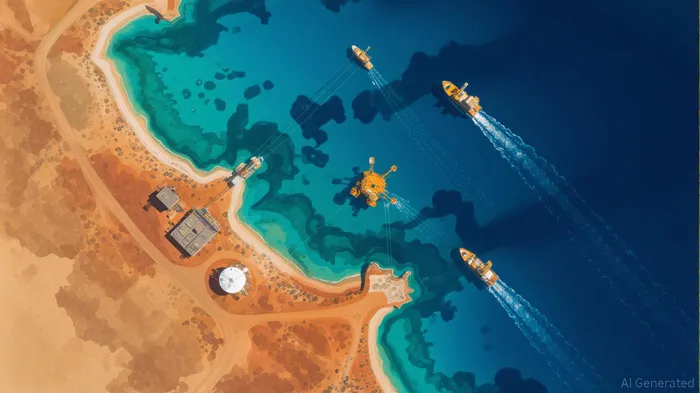
Galp's exploration efforts have already paid off. Drilling campaigns, including the Mopane-1X and Mopane-2A wells, confirmed a “quality light oil discovery” with high-reservoir quality sands. The company plans to drill 10 appraisal wells over three years, supported by a high-density 3D seismic campaign. These activities are critical for delineating the field's full potential and attracting partners.
The geopolitical implications are equally significant. Namibia's government has mandated 40% local content, ensuring regional economic benefits. While this could increase costs, it also creates opportunities for infrastructure providers like HalliburtonHAL-- and Baker HughesBKR--. Additionally, the Namibian government's push for first oil by 2029—backed by local and international support—positions the country as a key player in Africa's energy renaissance.
Financial and ESG Alignment: A Dual-Track Strategy
Galp's Mopane project isn't just a traditional hydrocarbon play. The field's 50% lower carbon intensity than industry averages aligns with ESG mandates, a critical factor for institutional investors. The company plans to reinvest projected €400 million in annual operating cash flow (by 2025) into renewable hydrogen, biofuels, and carbon capture technologies. This dual-track approach—leveraging oil profits to fund green innovation—resonates with ESG-focused capital.
Financially, Galp is in a strong position. Its Q2 2025 earnings highlighted a €840 million adjusted EBITDA, surpassing expectations, with full-year guidance raised to €2.7 billion. This robust performance, coupled with Mopane's potential to generate €4 billion in valuation, underscores the company's ability to execute on its strategic vision.
Risks and Rewards: A Calculated Gamble
While the project's scale is enticing, risks remain. Petrobras's bid, for example, faces regulatory hurdles in Brazil. Meanwhile, Namibia's local content requirements could strain supply chains. However, these challenges also present opportunities. For instance, the 40% domestic sourcing mandate could spur infrastructure development in the region, benefiting local firms and creating a more resilient ecosystem.
Investment Implications: Positioning for Africa's Energy Future
For investors, the Mopane project represents a unique confluence of factors:
1. Strategic Partnerships: A competitive bidding process among global majors ensures optimal value extraction.
2. Exploration Upside: Further appraisal drilling could increase resource estimates, enhancing the asset's valuation.
3. ESG Compatibility: The project's low-carbon profile aligns with global decarbonization trends.
4. Geopolitical Resilience: Namibia's transparent regulatory environment and strategic location offer a hedge against traditional energy corridors.
Actionable Advice: Investors seeking exposure to Africa's emerging oil markets should consider Galp Energia's stock, which offers a direct link to the Mopane project. Additionally, infrastructure providers and regional E&P firms with ties to Namibia could benefit from the project's local content requirements. For those with a longer-term horizon, the project's alignment with energy transition goals makes it a rare asset that bridges traditional and green energy.
In conclusion, Galp Energia's Mopane Oil Discovery is more than a geological find—it's a strategic bet on Africa's energy future. By securing a partner and accelerating development, Galp is not only positioning itself as a key player in the global oil market but also setting a precedent for sustainable resource development in emerging economies. For investors, this is a rare opportunity to participate in a project that could reshape energy dynamics for decades to come.

Delivering real-time insights and analysis on emerging financial trends and market movements.
Latest Articles
Stay ahead of the market.
Get curated U.S. market news, insights and key dates delivered to your inbox.
AInvest
PRO
AInvest
PRO



Comments
No comments yet