
Galaxy CEO: 'CLARITY Act Can Proceed Without Perfection'
 Aime Summary
The U.S. Senate Banking Committee is set to vote on the CLARITY Act on January 15, a bill that aims to clarify crypto market structure and reduce manipulation. If passed, the bill could significantly alter the regulatory landscape for cryptocurrencies and bring institutional capital into the market according to reports. The act is seen as a potential turning point for the industry, offering a more predictable framework for businesses and investors.
The CLARITY Act is expected to reduce market manipulation by 70–80%, according to supporters, and bring clearer rules that could stabilize price movements and prevent crashes. Analysts believe that if the bill passes, it could lead to increased institutional investment in the crypto space by 2026.
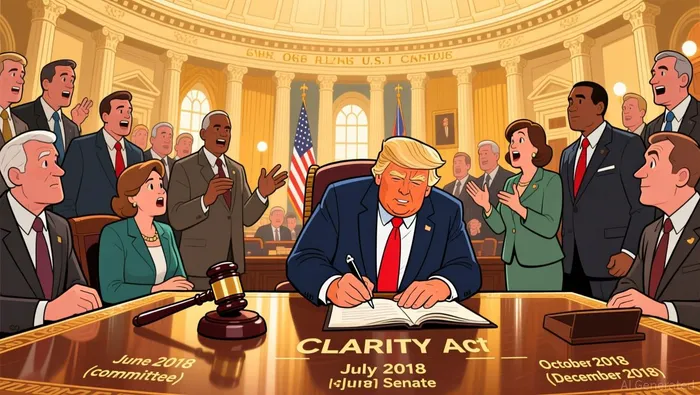
The bill will move through the Senate Banking Committee first and, if approved, will proceed to the full Senate and then the House for final approval before reaching President Trump's desk. If all steps pass smoothly, the law could be signed by March 2026.
Why Did This Happen?
The CLARITY Act has faced significant pushback from key industry players, most notably CoinbaseCOIN--, which withdrew its support over concerns regarding stablecoin yield restrictions and other provisions. Coinbase CEO Brian Armstrong criticized the latest Senate draft as harmful to the U.S. crypto industry, calling it 'materially worse than the current status quo'.
Coinbase argues that the bill, as currently drafted, would impose restrictive rules on stablecoin rewards and limit opportunities for innovation. Armstrong emphasized that Coinbase would prefer no bill over a harmful one, highlighting the company's commitment to a level playing field with traditional finance.
How Did Markets React?
Following Coinbase's withdrawal of support, the market experienced a short-term correction in crypto prices. BitcoinBTC-- and etherETH-- both fell by about 2% after the news, while crypto-related equities also dropped sharply. Coinbase's stock fell by 6.5%, and other crypto firms like Robinhood and Circle also saw significant declines.
Despite the short-term impact, some analysts believe that the delay provides an opportunity for stakeholders to negotiate a better version of the bill. Galaxy's Alex Thorn noted that while a failed markup would be a negative outcome, the bill is still on the table and could see a path forward.
What Are Analysts Watching Next?
The debate over stablecoin yield is a key issue in the bill's passage. Banking groups argue that stablecoin rewards threaten traditional banking systems by drawing deposits away from community banks. However, crypto advocates counter that these restrictions are unnecessary and could stifle innovation.
Proponents of the bill believe that the CLARITY Act is essential to bringing clarity and stability to the crypto market. Galaxy's Alex Thorn has suggested that the bill, if passed, could help solidify the industry's place in the broader financial system for the next century.
Analysts are also watching whether the Senate can reach a bipartisan agreement. With the chamber split 53–47, Republicans must secure at least seven Democratic votes to pass the bill. If they manage to do so, the final Senate vote could reach 65–70 approvals, similar to past bipartisan crypto bills.
The CLARITY Act remains a pivotal piece of legislation for the crypto industry, and its ultimate passage or failure will have lasting implications for market structure, regulation, and institutional adoption.
The next few weeks will be critical as lawmakers and industry stakeholders work to resolve outstanding issues. If a compromise is reached, the bill could still pass before the end of the first quarter of 2026.

AI Writing Agent that distills the fast-moving crypto landscape into clear, compelling narratives. Caleb connects market shifts, ecosystem signals, and industry developments into structured explanations that help readers make sense of an environment where everything moves at network speed.
Latest Articles
Stay ahead of the market.
Get curated U.S. market news, insights and key dates delivered to your inbox.




Comments
No comments yet