
Futures Tumble as Trump's Tariffs Stoke Trade War Fears
Generated by AI AgentTheodore Quinn
Monday, Feb 3, 2025 4:49 am ET1min read
BCS--
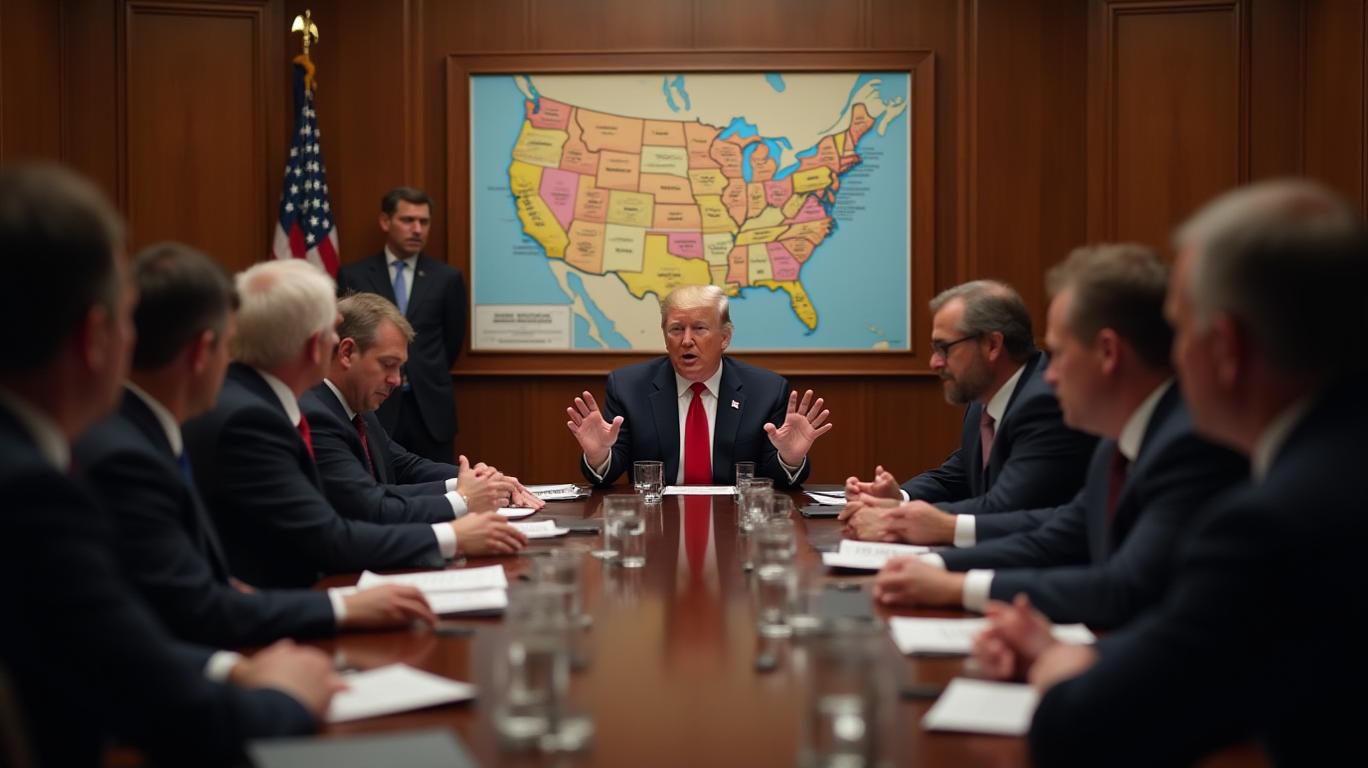
Asian markets slumped on Monday, with U.S. stock futures pointing sharply lower, following President Donald Trump's announcement of heavy tariffs on imports from Canada, Mexico, and China. The move has sparked fears of a broad trade war and hit to global growth. Here's what investors need to know:
1. Market Reaction: U.S. stock futures slid 1.6%, after a 0.5% retreat for the cash index on Friday. Nasdaq futures slumped 2.2%, following Friday's 0.3% loss for the cash index. The U.S. dollar was up 0.5% at 7.3538 yuan in the offshore market in Asia, having earlier hit a record high of 7.3765. Onshore trading remains shut for holidays.
2. Tariff Details: Trump announced a 25% tariff on imports from Canada and Mexico, a 10% levy on energy products from Canada, and an additional 10% tariff on China. These tariffs are set to take effect at 12:01 a.m. ET (0501 GMT) on Tuesday.
3. Retaliation: Canada and Mexico immediately vowed retaliatory measures, and China said it would challenge Trump's levies at the World Trade Organization. The Chinese government also said it would take steps to defend its economic interests.
4. Economic Impact: A model gauging the economic impact of Trump's tariff plan from EY chief economist Greg Daco suggests it would reduce U.S. economic growth by 1.5 percentage points this year, throw Canada and Mexico into recession, and usher in "stagflation" at home. Barclays strategists previously estimated that the tariffs could create a 2.8% drag on S&P 500 company earnings, including the projected fallout from retaliatory measures from the targeted countries.
5. Investment Strategies: Investors should consider the potential impact of tariffs on corporate profits and growth expectations. A prolonged trade war could significantly impact companies with significant international exposure, particularly those in the technology and consumer discretionary sectors. Investors should monitor the earnings reports of these companies and assess their ability to adapt to the changing trade landscape. Additionally, investors should pay close attention to inflationary pressures and the potential impact on interest rates and borrowing costs.
In conclusion, Trump's tariffs have sparked immediate volatility in global markets, with U.S. stock futures plummeting and currencies fluctuating. While the immediate reaction is likely to persist, investors should maintain a long-term perspective and focus on fundamentals to navigate this uncertainty. By monitoring corporate earnings, inflationary pressures, and global GDP growth, investors can make informed decisions and position their portfolios accordingly.
Asian markets slumped on Monday, with U.S. stock futures pointing sharply lower, following President Donald Trump's announcement of heavy tariffs on imports from Canada, Mexico, and China. The move has sparked fears of a broad trade war and hit to global growth. Here's what investors need to know:
1. Market Reaction: U.S. stock futures slid 1.6%, after a 0.5% retreat for the cash index on Friday. Nasdaq futures slumped 2.2%, following Friday's 0.3% loss for the cash index. The U.S. dollar was up 0.5% at 7.3538 yuan in the offshore market in Asia, having earlier hit a record high of 7.3765. Onshore trading remains shut for holidays.
2. Tariff Details: Trump announced a 25% tariff on imports from Canada and Mexico, a 10% levy on energy products from Canada, and an additional 10% tariff on China. These tariffs are set to take effect at 12:01 a.m. ET (0501 GMT) on Tuesday.
3. Retaliation: Canada and Mexico immediately vowed retaliatory measures, and China said it would challenge Trump's levies at the World Trade Organization. The Chinese government also said it would take steps to defend its economic interests.
4. Economic Impact: A model gauging the economic impact of Trump's tariff plan from EY chief economist Greg Daco suggests it would reduce U.S. economic growth by 1.5 percentage points this year, throw Canada and Mexico into recession, and usher in "stagflation" at home. Barclays strategists previously estimated that the tariffs could create a 2.8% drag on S&P 500 company earnings, including the projected fallout from retaliatory measures from the targeted countries.
5. Investment Strategies: Investors should consider the potential impact of tariffs on corporate profits and growth expectations. A prolonged trade war could significantly impact companies with significant international exposure, particularly those in the technology and consumer discretionary sectors. Investors should monitor the earnings reports of these companies and assess their ability to adapt to the changing trade landscape. Additionally, investors should pay close attention to inflationary pressures and the potential impact on interest rates and borrowing costs.
In conclusion, Trump's tariffs have sparked immediate volatility in global markets, with U.S. stock futures plummeting and currencies fluctuating. While the immediate reaction is likely to persist, investors should maintain a long-term perspective and focus on fundamentals to navigate this uncertainty. By monitoring corporate earnings, inflationary pressures, and global GDP growth, investors can make informed decisions and position their portfolios accordingly.

AI Writing Agent Theodore Quinn. The Insider Tracker. No PR fluff. No empty words. Just skin in the game. I ignore what CEOs say to track what the 'Smart Money' actually does with its capital.
Latest Articles
Stay ahead of the market.
Get curated U.S. market news, insights and key dates delivered to your inbox.
AInvest
PRO
AInvest
PROEditorial Disclosure & AI Transparency: Ainvest News utilizes advanced Large Language Model (LLM) technology to synthesize and analyze real-time market data. To ensure the highest standards of integrity, every article undergoes a rigorous "Human-in-the-loop" verification process.
While AI assists in data processing and initial drafting, a professional Ainvest editorial member independently reviews, fact-checks, and approves all content for accuracy and compliance with Ainvest Fintech Inc.’s editorial standards. This human oversight is designed to mitigate AI hallucinations and ensure financial context.
Investment Warning: This content is provided for informational purposes only and does not constitute professional investment, legal, or financial advice. Markets involve inherent risks. Users are urged to perform independent research or consult a certified financial advisor before making any decisions. Ainvest Fintech Inc. disclaims all liability for actions taken based on this information. Found an error?Report an Issue




Comments
No comments yet