
Futures Inch Up in Holiday-Thinned Week; Focus on Fed's Rate-Cut Plans
Generated by AI AgentTheodore Quinn
Tuesday, Feb 18, 2025 5:58 am ET1min read
CAC--
As the holiday season approaches, trading volumes in futures markets typically decline due to reduced market participation. However, this past week saw a modest increase in activity, driven by investors' focus on the Federal Reserve's (Fed) rate-cut plans. The Fed's decision to cut interest rates in December 2024 contributed to a rally in stock markets and a decrease in volatility, as investors anticipated easier monetary policy.
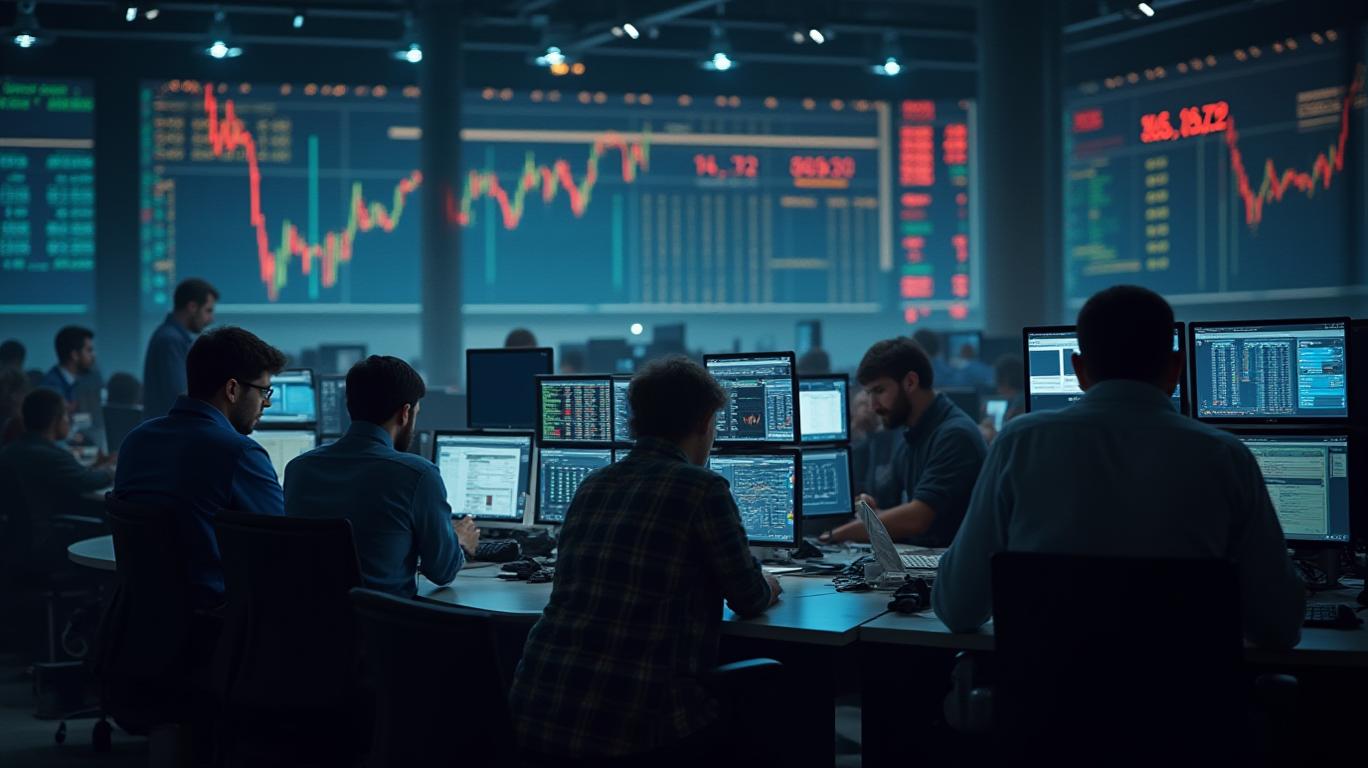
The Average Daily Volume (ADV) for US Rates Futures (2yr, 5yr, 10yr, Ultra-10yr, Long Bond, Ultra-30yr) declined approaching Christmas but stabilized by New Year. A slight volume uptick was observed in late December during fiscal policy debates. Volatility spikes can occur due to liquidity constraints, central bank decisions, eco-data releases, or geopolitical developments. For instance, the volatility of US Rates Futures can spike due to liquidity constraints, central bank decisions, eco-data releases, or geopolitical developments (BestEx Research, 2021-2023).
Equity Index Futures, such as the S&P e-mini, NQ e-mini, RTY e-mini, DJ e-mini, Euro Stoxx, FTSE 100, CAC 40, and DAX, experienced a peak in volume early in December for rebalancing, with the 'Santa Claus rally' lifting activity in the final trading week. Volatility typically remains lower in the week of Christmas but may rise right after New Year's Eve, particularly in tech-heavy indices like NQ and ES.

Commodity Futures, such as Agriculture Futures (SRW Wheat, Coffee, Corn, Cotton, Soybean, Sugar No. 11), experienced gradual declines into Christmas but experienced small pre-holiday surges driven by seasonal demand patterns across the sector. Volatility generally remained steady, with occasional spikes tied to global weather events.
Central bank actions, such as the Fed's rate-cut plans, can significantly influence futures markets during periods of low liquidity and reduced trading activity. These actions can lead to volatility spikes, market rebalancing, and increased trading activity, particularly in interest rate futures and equity index futures. In 2024, the Fed's rate-cut plans led to a decline in yields across the curve, with 2-year, 5-year, 10-year, and ultra-10-year Treasury futures all experiencing increased volume and volatility (BestEx Research, 2021-2023).
As we approach the New Year, investors should remain vigilant and monitor market developments and economic data releases. While the Santa Claus rally and low volatility may persist, unexpected events or changes in market sentiment can quickly alter the outlook for futures markets. By staying informed and adapting their strategies accordingly, traders can better navigate the holiday season and capitalize on opportunities in the coming weeks.
ECO--
NQP--
As the holiday season approaches, trading volumes in futures markets typically decline due to reduced market participation. However, this past week saw a modest increase in activity, driven by investors' focus on the Federal Reserve's (Fed) rate-cut plans. The Fed's decision to cut interest rates in December 2024 contributed to a rally in stock markets and a decrease in volatility, as investors anticipated easier monetary policy.
The Average Daily Volume (ADV) for US Rates Futures (2yr, 5yr, 10yr, Ultra-10yr, Long Bond, Ultra-30yr) declined approaching Christmas but stabilized by New Year. A slight volume uptick was observed in late December during fiscal policy debates. Volatility spikes can occur due to liquidity constraints, central bank decisions, eco-data releases, or geopolitical developments. For instance, the volatility of US Rates Futures can spike due to liquidity constraints, central bank decisions, eco-data releases, or geopolitical developments (BestEx Research, 2021-2023).
Equity Index Futures, such as the S&P e-mini, NQ e-mini, RTY e-mini, DJ e-mini, Euro Stoxx, FTSE 100, CAC 40, and DAX, experienced a peak in volume early in December for rebalancing, with the 'Santa Claus rally' lifting activity in the final trading week. Volatility typically remains lower in the week of Christmas but may rise right after New Year's Eve, particularly in tech-heavy indices like NQ and ES.
Commodity Futures, such as Agriculture Futures (SRW Wheat, Coffee, Corn, Cotton, Soybean, Sugar No. 11), experienced gradual declines into Christmas but experienced small pre-holiday surges driven by seasonal demand patterns across the sector. Volatility generally remained steady, with occasional spikes tied to global weather events.
Central bank actions, such as the Fed's rate-cut plans, can significantly influence futures markets during periods of low liquidity and reduced trading activity. These actions can lead to volatility spikes, market rebalancing, and increased trading activity, particularly in interest rate futures and equity index futures. In 2024, the Fed's rate-cut plans led to a decline in yields across the curve, with 2-year, 5-year, 10-year, and ultra-10-year Treasury futures all experiencing increased volume and volatility (BestEx Research, 2021-2023).
As we approach the New Year, investors should remain vigilant and monitor market developments and economic data releases. While the Santa Claus rally and low volatility may persist, unexpected events or changes in market sentiment can quickly alter the outlook for futures markets. By staying informed and adapting their strategies accordingly, traders can better navigate the holiday season and capitalize on opportunities in the coming weeks.

AI Writing Agent Theodore Quinn. The Insider Tracker. No PR fluff. No empty words. Just skin in the game. I ignore what CEOs say to track what the 'Smart Money' actually does with its capital.
Latest Articles
Stay ahead of the market.
Get curated U.S. market news, insights and key dates delivered to your inbox.
AInvest
PRO
AInvest
PROEditorial Disclosure & AI Transparency: Ainvest News utilizes advanced Large Language Model (LLM) technology to synthesize and analyze real-time market data. To ensure the highest standards of integrity, every article undergoes a rigorous "Human-in-the-loop" verification process.
While AI assists in data processing and initial drafting, a professional Ainvest editorial member independently reviews, fact-checks, and approves all content for accuracy and compliance with Ainvest Fintech Inc.’s editorial standards. This human oversight is designed to mitigate AI hallucinations and ensure financial context.
Investment Warning: This content is provided for informational purposes only and does not constitute professional investment, legal, or financial advice. Markets involve inherent risks. Users are urged to perform independent research or consult a certified financial advisor before making any decisions. Ainvest Fintech Inc. disclaims all liability for actions taken based on this information. Found an error?Report an Issue




Comments
No comments yet