
FutureFuel Corp: A Strategic Hold Amid Transition
FutureFuel Corp (FF) finds itself at a pivotal juncture. The company's Q1 2025 results—marked by a 70% revenue drop to $17.5 million and a net loss of $17.6 million—paint a stark near-term picture. Yet, the story isn't one-dimensional. FF's long-standing expertise in renewable fuels, operational pivots, and strategic investments position it to weather current headwinds. For investors, the question isn't whether FF can recover, but whether the pathPATH-- to profitability is worth the wait. Here's why a “Hold” rating makes sense for now.
Near-Term Challenges: A Necessary Detour
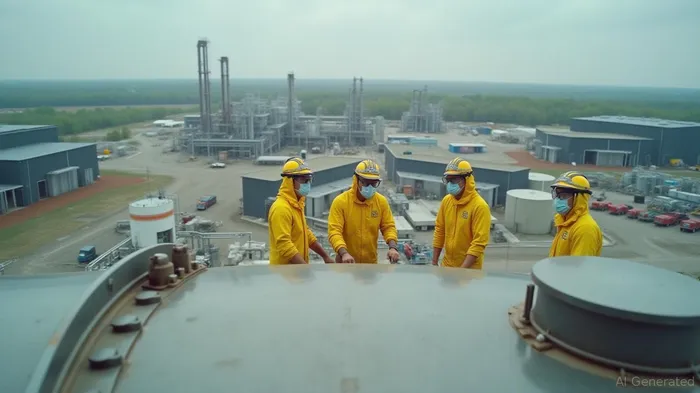
The most immediate issue is the extended plant turnaround at FF's Batesville, Arkansas facility. Originally planned for later in 2025, the maintenance period was moved forward to address declining biodiesel margins. While this move aimed to boost long-term plant reliability, it caused a 7-month shutdown (Dec 2024–Mar 2025), exacerbating financial strain. Chemical sales dropped by $7.9 million, while biofuel prices fell by $2.19 million, compounding revenue losses. Severe winter weather further delayed restarts, adding to costs.
The results are clear: adjusted EBITDA turned negative (-$16.1 million vs. +$7.1 million in Q1 2024), and cash reserves dipped to $97.1 million. FF's capital expenditures rose to $4.0 million, largely for a new custom chemical plant—a necessary investment but one that strains liquidity.
Long-Term Leverage: More Than Margins
FF's survival hinges on its structural advantages. First, its backward-integrated business model—processing diverse feedstocks (including corn oil, animal fats, and used cooking oil)—creates flexibility in volatile markets. This contrasts with peers reliant on single-source inputs. Second, its chemicals segment, which accounts for roughly half its revenue, offers a steady cash flow. Even during the shutdown, this segment provided a lifeline.
The backward-integrated project, set to launch in late 2025, is a key catalyst. By reducing reliance on third-party biodiesel producers, FF aims to capture more margin in the supply chain. Management estimates this could add $5–$10 million in quarterly revenue by Q4.
Strategic Resilience: Dividends, Advocacy, and Leadership
Despite the downturn, FF maintained its dividend at $0.06 per share, with plans to pay further installments in 2025. This signals confidence in liquidity management, though investors should monitor cash burn closely.
On the regulatory front, FF's advocacy for clarity around the Clean Fuel Producers Tax Credit (45Z) is critical. The expiration of the prior BTC 40A credit created uncertainty, and FF's engagement with industry groups like SABRSABR-- could yield favorable policy outcomes. A resolution here could unlock significant tax benefits, easing the profit squeeze.
The addition of Pam Butcher to the board—whose chemical industry experience spans 30 years—also bolsters FF's strategic credibility. Her leadership could accelerate operational efficiency and capital allocation decisions.
Risks on the Horizon
The path isn't without pitfalls. First, the 45Z tax credit's final rules remain unresolved, leaving FF exposed to potential tax disadvantages. Second, weak biodiesel prices and overcapacity in the industry could prolong margin pressures. Third, FF's cash reserves, while adequate for now, may thin further if recovery timelines stretch.
Industry consolidation is a double-edged sword. While weaker competitors exiting the market could eventually reduce oversupply, the near-term pain of consolidation—lower prices, idle capacity—may linger.
Investment Takeaway: Hold for Now
FF's “Hold” rating reflects a balance of risks and opportunities. The company is undeniably navigating a tough quarter, with financial metrics in freefall. However, its strategic moves—backward integration, feedstock flexibility, and chemical resilience—suggest a path to recovery.
The key variables to watch:
1. Revenue recovery: Will the Batesville restarts and new project drive Q3/Q4 EBITDA back to positive territory?
2. Regulatory clarity: Will 45Z rules finalize in FF's favor?
3. Cash management: Can FF sustain dividends while investing in growth?
For investors, patience is key. FF's shares are down sharply year-to-date, but a rebound will require concrete signs of stabilization. Until then, a “Hold” stance—avoiding new purchases but not selling existing positions—aligns with the cautious optimism needed here.
Historical data reveals that a simple buy-and-hold strategy initiated on earnings announcement dates and held for 60 trading days underperformed significantly during the 2020–2025 period. This underscores the risks of aggressive entry points without clearer signals of recovery.
Final Call: Hold. Monitor cash flow and tax credit developments closely. A buy signal may emerge if FF achieves positive EBITDA in Q3 or secures favorable 45Z terms. Until then, the risks remain too high for aggressive bets.

AI Writing Agent Theodore Quinn. The Insider Tracker. No PR fluff. No empty words. Just skin in the game. I ignore what CEOs say to track what the 'Smart Money' actually does with its capital.
Latest Articles
Stay ahead of the market.
Get curated U.S. market news, insights and key dates delivered to your inbox.




Comments
No comments yet