
The Future of Transportation is Here: Investing in Kawasaki's Hydrogen-Powered Robotic Horse
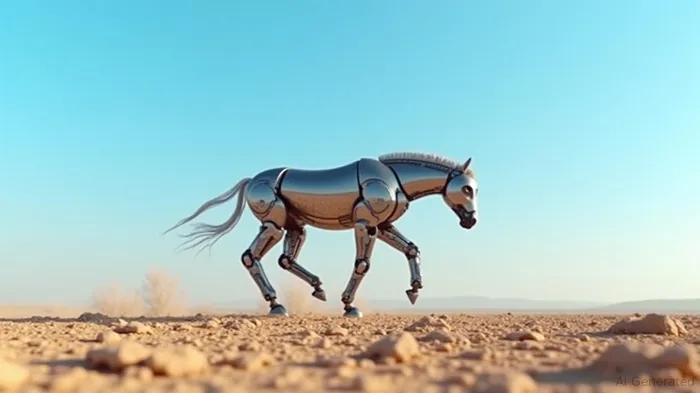
The global shift toward sustainable transportation is no longer a distant ideal—it's a tangible reality. Among the most groundbreaking innovations is Kawasaki Heavy Industries' CORLEO, a hydrogen-powered robotic horse designed to redefine mobility. This machine isn't just a curiosity; it's a harbinger of a transportation revolution that merges AI-driven precision with clean energy. For investors, it's a signal to bet on companies pioneering the fusion of artificial intelligence and environmental sustainability.
The Tech: Where AI Meets Clean Energy
CORLEO is more than a robotic horse—it's a systems engineering marvel. Powered by a 150cc hydrogen engine, it generates zero emissions, aligning with global decarbonization goals. But its true disruptive potential lies in its AI co-pilot system, which monitors rider movements, terrain conditions, and balance in real time. Sensors and torque controllers adapt to uneven surfaces, ensuring stability whether navigating rocky trails or urban debris. A heads-up display provides critical data, while AI algorithms optimize energy use for maximum efficiency.
This integration of AI and hydrogen infrastructure isn't niche—it's the blueprint for the future. As industries demand smarter, greener solutions, companies like Kawasaki that master this fusion will dominate markets.
Market Potential: Robotics and Green Tech are Exploding
The robotics market is on fire. Valued at $59.7 billion in 2022, it's projected to surpass $200 billion by 2030, growing at a 16% CAGR. Within this, the sustainable robotics segment is accelerating fastest. Why?
- Logistics: CORLEO's off-road capability could revolutionize last-mile delivery in remote or disaster zones, where traditional vehicles fail.
- Tourism: Eco-conscious travelers are demanding low-impact transport. Robotic horses could replace SUVs in national parks or replace horses in heritage tourism, slashing carbon footprints.
- Search & Rescue: In disaster zones, CORLEO's agility and AI-driven navigation could save lives where humans or drones alone cannot.
Investors should note: While Kawasaki is still in early development stages, its partnership with hydrogen infrastructure and AI pioneers positions it to capture $15–$20 billion in niche markets by 2030.
The Logistics and Tourism Goldmine
Consider logistics first. Traditional supply chains face rising costs and environmental scrutiny. CORLEO's ability to traverse unpaved roads, avoid traffic, and operate autonomously could cut delivery times and emissions for industries like mining, agriculture, and emergency response.
In tourism, the demand for eco-friendly experiences is soaring. By 2030, the global sustainable travel market could hit $300 billion annually. Imagine eco-resorts replacing gas-guzzling golf carts with robotic horses, or safari tours using AI-guided quadrupeds to minimize habitat disruption.
Risks? Yes—but They're Manageable
Critics argue CORLEO is still a concept, not a functional product. Challenges like hydrogen refueling infrastructure and AI processing power remain. Yet these are solvable with investment and policy support.
- Hydrogen Infrastructure: Governments are pouring trillions into green energy. The U.S. Inflation Reduction Act allocates $369 billion for clean tech, while the EU's REPowerEU plan targets 40 million tons of green hydrogen by 2030.
- AI Development: Cloud computing and edge AI advancements are reducing energy demands, making systems like CORLEO's co-pilot feasible even in remote areas.
Why Invest Now?
The window to capitalize on this disruption is narrowing. Early investors in robotics giants like iRobot and Boston Dynamics reaped exponential returns. Kawasaki's CORLEO is the next frontier.
- First-Mover Advantage: Kawasaki has a head start in quadruped robotics for off-road mobility. Competitors like XPeng's smaller “unicorns” target different demographics, leaving room for Kawasaki to dominate adult-oriented markets.
- Scalability: While CORLEO's 2050 commercialization timeline seems distant, its modular design allows incremental upgrades. Early investors will benefit as each milestone—like faster speeds or longer hydrogen range—is achieved.
Final Call: Bet on the Horse That's Leading the Charge
The fusion of AI and sustainability isn't a trend—it's a tsunami reshaping industries. CORLEO isn't just a robotic horse; it's a platform for innovation in energy, logistics, and tourism.
Investors who act now—by allocating capital to Kawasaki and its peers—will secure stakes in companies defining the next era of transportation. The race is on, and the robotic horse is already trotting toward victory.
The future is here. Don't miss the ride.

Delivering real-time insights and analysis on emerging financial trends and market movements.
Latest Articles
Stay ahead of the market.
Get curated U.S. market news, insights and key dates delivered to your inbox.


AInvest
PRO
AInvest
PRO



Comments
No comments yet