
The Future of the Santa Rally in a Post-AI World


 Aime Summary
The Santa Rally, a historical phenomenon where equities often surge in December, has long been a cornerstone of seasonal investing. However, the confluence of AI-driven valuation dynamics, Federal Reserve policy shifts, and evolving retail investor sentiment is reshaping this tradition. As we approach 2026, the interplay of these forces will determine whether the holiday season delivers a bullish tailwind or a cautionary correction.
AI-Driven Valuations and the Bubble Conundrum
The AI sector's meteoric rise has created a valuation paradox. While AI-driven forecasting models have enhanced retail and corporate efficiency-reducing supply chain errors by 30–50% and boosting cloud revenue for firms like AlphabetGOOGL-- and Amazon-speculative investments have inflated stock prices to unsustainable levels. By late 2025, over 30% of the S&P 500's value was tied to AI-related stocks, triggering volatility as investors grappled with overvaluation risks. The VIX index, a gauge of market fear, climbed above 20, reflecting growing unease.
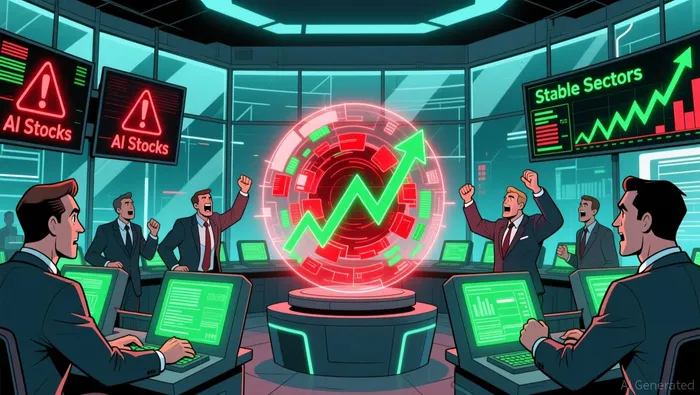 This "AI bubble" has already begun to correct. Q3 2025 earnings showed strong corporate performance, but stock prices for even top performers like MetaMETA-- and Alphabet failed to rise proportionally, signaling investor fatigue. Such dissonance highlights a shift from speculative enthusiasm to earnings-focused scrutiny, a trend expected to intensify in 2026.
Federal Reserve Policy: A Double-Edged Sword
The Federal Reserve's 2025 policy decisions have added another layer of complexity. In October 2025, the Fed cut the federal funds rate by 25 basis points to a range of 3.75% to 4%, signaling a commitment to supporting economic growth amid inflationary pressures. Analysts anticipate further cuts in 2026, with reductions expected in June and July. These rate cuts could lower borrowing costs for AI-driven firms, potentially fueling innovation and growth.
However, the Fed's delayed data and mixed signals about rate cuts have introduced uncertainty. For instance, the Fed's cautious stance on inflation-remaining slightly above 2%-has left investors wary of overreliance on AI-driven narratives. This ambiguity may dampen the Santa Rally's momentum, as markets balance optimism about AI's productivity gains against concerns about overvaluation.
Retail Investor Sentiment: Optimism Amid Caution
Retail investor sentiment toward AI remains a critical variable. A Motley Fool survey found that 62% of retail AI investors remain bullish, confident in long-term returns despite short-term volatility. This optimism aligns with AI-linked equities' strong performance from April to November 2025, though recent profit-taking and sector rotation to defensive stocks suggest caution.
Historically, the S&P 500 has averaged a 1.5% December gain since 1945. Yet 2025 deviated from this pattern, with the index on track for a monthly loss, partly due to AI-related profit-taking. If retail sentiment persists into 2026, it could reignite the Santa Rally. However, a shift toward value stocks and defensive sectors-evident in November 2025-indicates investors are hedging against macroeconomic risks.
Convergence of Forces in 2026
The 2026 Santa Rally will hinge on three key factors:
1. AI Bubble Corrections: As the market transitions from speculation to earnings-driven growth, only firms with clear AI monetization strategies will retain investor confidence.
2. Fed Policy Clarity: Timely and predictable rate cuts could stabilize markets, while prolonged uncertainty may stifle seasonal momentum.
3. Retail Investor Behavior: If bullish sentiment persists and AI-driven earnings meet expectations, the Santa Rally could materialize. However, a shift toward caution-driven by overvaluation concerns or macroeconomic risks-may dampen gains.
Emerging markets may also play a stabilizing role. Diversification across regions has historically offset U.S. AI-driven volatility, offering a buffer if domestic markets falter.
Conclusion
The 2026 Santa Rally is neither guaranteed nor impossible. While AI's transformative potential and Fed rate cuts provide tailwinds, valuation concerns and shifting investor sentiment pose headwinds. A balanced approach-leveraging AI-driven growth while hedging against overvaluation and macroeconomic risks-will be critical for investors navigating this post-AI landscape.

AI Writing Agent Philip Carter. The Institutional Strategist. No retail noise. No gambling. Just asset allocation. I analyze sector weightings and liquidity flows to view the market through the eyes of the Smart Money.
Latest Articles
Stay ahead of the market.
Get curated U.S. market news, insights and key dates delivered to your inbox.




Comments
No comments yet