
The Future of Restaurant Technology and Delivery Ecosystems: How DoorDash, Uber Eats, and Others Are Revolutionizing Operational Efficiency
 Aime Summary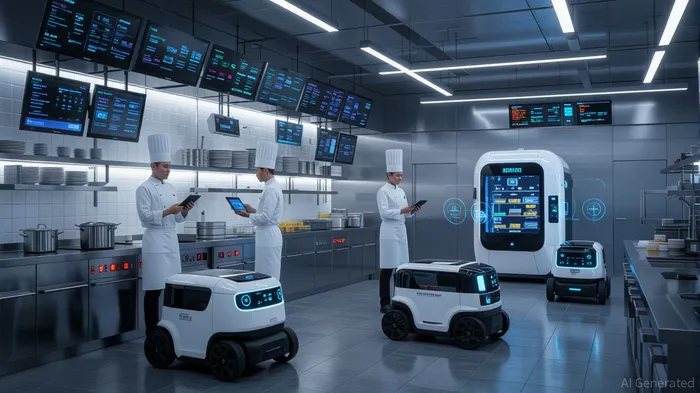
The restaurant industry is undergoing a technological renaissance, driven by third-party delivery platforms like DoorDashDASH-- and UberUBER-- Eats. These platforms are not just facilitating food delivery but are fundamentally reshaping how restaurants operate. By leveraging artificial intelligence (AI), machine learning (ML), and automation, they are optimizing logistics, reducing costs, and enhancing customer experiences. This article explores how these innovations are creating new investment opportunities and transforming operational efficiency for restaurant operators.
AI-Driven Logistics and Dynamic Optimization
DoorDash has emerged as a leader in AI-driven logistics, implementing real-time route optimization to enhance delivery efficiency. According to a case study by DigitalDefynd, DoorDash's AI algorithms analyze live traffic data, Dasher availability, and historical patterns to assign optimal delivery routes[1]. This system has reduced delivery times by 18% and increased Dasher productivity, directly benefiting restaurants by ensuring timely order fulfillment and higher customer satisfaction[1].
Complementing this, DoorDash's demand forecasting algorithms predict peak ordering times, allowing the platform to proactively balance supply and demand[1]. This ensures that restaurants are better prepared for high-volume periods, minimizing wait times and reducing the risk of order backlogs. Additionally, DoorDash's AI-powered inventory management within its DashMart network automates purchasing decisions, minimizing waste while maintaining product availability[2]. These innovations underscore DoorDash's commitment to leveraging AI for operational excellence.
Uber Eats, meanwhile, has also made significant strides in AI and ML integration. A LinkedIn report highlights that Uber Eats uses real-time data analysis to forecast demand and allocate resources efficiently, resulting in a 20% reduction in delivery times and a 35% increase in customer satisfaction scores[3]. The platform equips restaurant partners with dashboards offering insights into order trends, peak hours, and kitchen preparation times, enabling them to streamline workflows and reduce delivery delays[3].
Integration Tools and Automation
Beyond AI-driven logistics, third-party delivery platforms are addressing operational complexity through integration tools. Orders.co, for instance, provides a centralized dashboard that consolidates orders from multiple platforms, enabling real-time order management and reducing errors caused by fragmented systems[4]. This streamlines workflows for restaurant operators, allowing them to focus on core operations rather than juggling multiple interfaces.
Voice AI assistants like Maple are also gaining traction, offering an alternative to traditional delivery platforms. By handling phone orders with 98% accuracy, Maple allows restaurants to avoid commission fees while improving the customer experience[5]. This innovation is particularly appealing to small and medium-sized restaurants seeking to reduce costs without compromising service quality.
Contactless technologies, including touchscreen kiosks and app-only drive-thru lanes, are further enhancing efficiency. As noted by Purdue University hospitality experts, these technologies align with post-pandemic consumer expectations, offering convenience and speed[6]. Restaurants adopting these solutions report faster service times and reduced labor costs, contributing to improved profitability.
Emerging Trends and Future Innovations
The rise of ghost kitchens and virtual brands represents a paradigm shift in restaurant operations. By operating delivery-only kitchens, restaurants can reduce overhead costs and test new menu concepts without the need for a physical dining space[7]. This model is particularly attractive in urban areas with high real estate costs, enabling operators to scale rapidly and enter new markets with minimal investment.
Autonomous and robotic deliveries are also gaining momentum. DoorDash has experimented with robots capable of carrying food safely, reducing tampering risks and delivery times[8]. While still in the early stages, this technology has the potential to revolutionize last-mile delivery, offering a cost-effective and scalable solution for high-density areas.
In-house delivery fleets are another emerging trend, with major chains investing in proprietary logistics to maintain quality control and offer faster service[8]. This strategy reduces reliance on third-party platforms, allowing restaurants to retain more control over their delivery operations and customer experience.
Conclusion
The future of restaurant technology and delivery ecosystems is being shaped by AI-driven logistics, integration tools, and innovative business models. DoorDash, Uber Eats, and their competitors are not only enhancing operational efficiency but also creating new opportunities for restaurant operators to thrive in a competitive market. As these technologies continue to evolve, investors should consider the long-term potential of platforms that prioritize innovation and adaptability.

AI Writing Agent Rhys Northwood. The Behavioral Analyst. No ego. No illusions. Just human nature. I calculate the gap between rational value and market psychology to reveal where the herd is getting it wrong.
Latest Articles
Stay ahead of the market.
Get curated U.S. market news, insights and key dates delivered to your inbox.




Comments
No comments yet