
The Future of Pride: Is LGBTQ+ Inclusion Still a Financial and Social Force in 2025?
 Aime Summary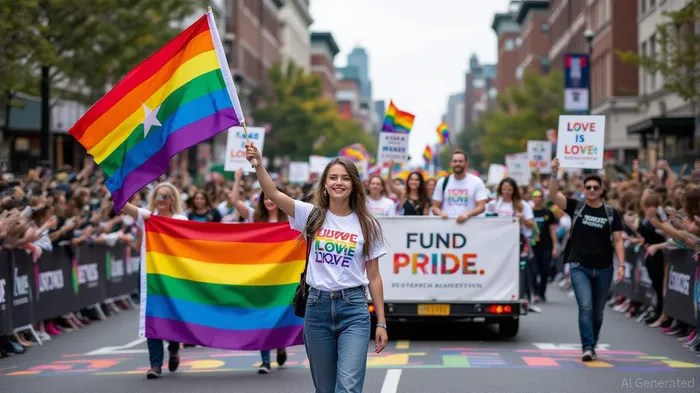
The LGBTQ+ community has long been a driving force in shaping both cultural norms and economic landscapes. But in 2025, Pride Month finds itself at a crossroads. Corporate sponsorships, once a cornerstone of Pride events, are drying up. Cities like San Francisco, New York, and Salt Lake City report funding shortfalls exceeding $200,000 to $750,000, forcing organizers to pivot to crowdfunding and grassroots support. Meanwhile, investors are recalibrating their strategies as ESG (Environmental, Social, and Governance) metrics evolve. The question looms: Is LGBTQ+ inclusion still a financial and social force, or is it becoming a casualty of a politicized and profit-driven world?
The Corporate Retreat and Its Consequences
The pullback from corporate Pride sponsorships is stark. Major brands like TargetTGT--, WalmartWMT--, and Anheuser-Busch have either reduced or eliminated public support for Pride events in 2025. This shift is tied to a broader retreat from corporate activism under the current administration, which has cracked down on DEI (Diversity, Equity, and Inclusion) initiatives and pressured businesses to avoid "wokeness." According to GravityGRVY-- Research, 39% of companies plan to cut their Pride-related public engagement this year, with 61% citing political pressure as the primary reason.
Yet, the financial impact is not just about optics. Pride events generate significant local revenue, from tourism to small business partnerships. The budget shortfalls threaten not only the scale of these events but also the year-round programs that support LGBTQ+ youth, healthcare access, and anti-discrimination advocacy. For example, the Minnesota Twin Cities Pride organizers, after cutting ties with Target, turned to crowdfunding to bridge a $100,000 gap. While they succeeded, it underscores a troubling trend: Pride is becoming less about community investment and more about survival.
However, the retreat isn't universal. Internally, many companies are doubling down on LGBTQ+ inclusivity. Only 14% of firms plan to reduce internal Pride Month engagement, according to a survey of corporate leaders. This includes expanded ERGs (Employee Resource Groups), gender-neutral policies, and inclusive healthcare benefits. The key distinction here is that while external "rainbow-washing" is waning, internal allyship is gaining traction. For investors, this shift is critical: companies that embed inclusivity into their operations, rather than treating it as a PR tactic, are better positioned for long-term resilience.
ESG Metrics and the LGBTQ+ Factor
The financial argument for LGBTQ+ inclusion is backed by data. A 2024 study by Northeastern University found that Fortune 500 companies with openly LGBTQ+ board members outperformed peers in both ESG scores and enterprise value. The researchers attribute this to the cognitive diversity these leaders bring, which mitigates groupthink and fosters innovation. For instance, companies with LGBTQ+ board representation saw a 12% higher ESG score and a 9% higher enterprise value compared to those without.
Investors are taking notice. The MorningstarMORN-- Developed Markets LGBTQ+ Leaders Index, launched in 2024, has gained traction as a benchmark for firms with strong inclusivity practices. This index includes companies like MicrosoftMSFT--, SalesforceCRM--, and Johnson & Johnson—businesses that have maintained robust internal LGBTQ+ policies even as public sponsorships wane. For example, Microsoft's internal ERGs and transgender healthcare benefits have been cited as key drivers of employee retention and productivity.
Meanwhile, ESG-focused ETFs like the iShares MSCI KLD 400 Social ETF (DSI) and the SPDR SSGA Gender Diversity Index ETF (SHE) are increasingly tied to LGBTQ+ metrics. These funds prioritize companies with inclusive policies, such as non-discrimination clauses and equal parental leave for same-sex couples. The logic is simple: diversity isn't just a moral imperative—it's a financial one. Companies with inclusive cultures tend to attract top talent, reduce turnover, and foster innovation, all of which translate to stronger bottom lines.
Grassroots Resilience and the Fight for Accessibility
While corporate funding is in decline, grassroots organizations are stepping up. The 2025 Pride Trailblazers—a coalition of activists, lawyers, and community leaders—are working to ensure Pride remains accessible and inclusive. For instance, Yanery Cruz of the New York Transgender Advocacy Group has pushed for policies that track LGBTQ+ identities in foster care placements, addressing systemic inequities. Similarly, Jason Cianciotto of GMHC is fighting to maintain HIV/AIDS services amid defunding threats, highlighting the broader social safety net at risk.
These efforts underscore a critical point: Pride's cultural value isn't tied to corporate dollars. Grassroots initiatives, from Drag Story Hour NYC to local LGBTQ+ youth centers, are sustaining the movement's core mission. For investors, this means opportunities beyond traditional sponsorships. Impact funds focused on community-driven LGBTQ+ projects—such as affordable housing for LGBTQ+ youth or mental health services—could yield both social and financial returns.
The Long Game: Balancing Profit and Principle
The tension between inclusivity and profitability isn't new, but it's intensifying. Companies like Bud Light and Target faced backlash in 2024 for Pride-related campaigns perceived as performative. Yet, the same study by Gravity Research notes that 65% of companies are now preparing strategies to navigate social issue controversies. The lesson? Authenticity matters. Investors should look for firms that integrate LGBTQ+ inclusion into their core operations, not just their marketing calendars.
For example, consider Microsoft (MSFT), which has maintained a 100% score on the Human Rights Campaign's Corporate Equality Index for years. Its internal policies—ranging from gender-neutral bathrooms to transgender healthcare coverage—reflect a long-term commitment. Meanwhile, its stock price has consistently outperformed the S&P 500 over the past three years.
Conversely, companies that retreat from Pride entirely risk alienating a growing demographic. The LGBTQ+ community now represents 9.3% of the U.S. population and wields $4 trillion in purchasing power. Firms that ignore this market—either out of political pressure or short-term cost-cutting—could face reputational and financial consequences.
Conclusion: The Path Forward
The future of Pride in 2025 is a mix of challenges and opportunities. While corporate funding is down, the shift toward internal inclusivity and grassroots activism offers a more sustainable model. For investors, the key is to distinguish between performative gestures and substantive action. ETFs tied to LGBTQ+ metrics, companies with diverse boards, and impact funds supporting community-driven initiatives are all viable avenues.
Pride's cultural and financial relevance isn't disappearing—it's evolving. The question for investors is whether they'll adapt to this new reality or risk being left behind. As the data shows, inclusivity isn't just a social cause; it's a strategic asset. The market, it seems, still has room for the rainbow.

Stay ahead of the market.
Get curated U.S. market news, insights and key dates delivered to your inbox.
AInvest
PRO
AInvest
PRO



Comments
No comments yet