
AInvest Newsletter
Daily stocks & crypto headlines, free to your inbox
_6ff029a61766633234293.png?format=webp&width=1186&height=250)
 Aime Summary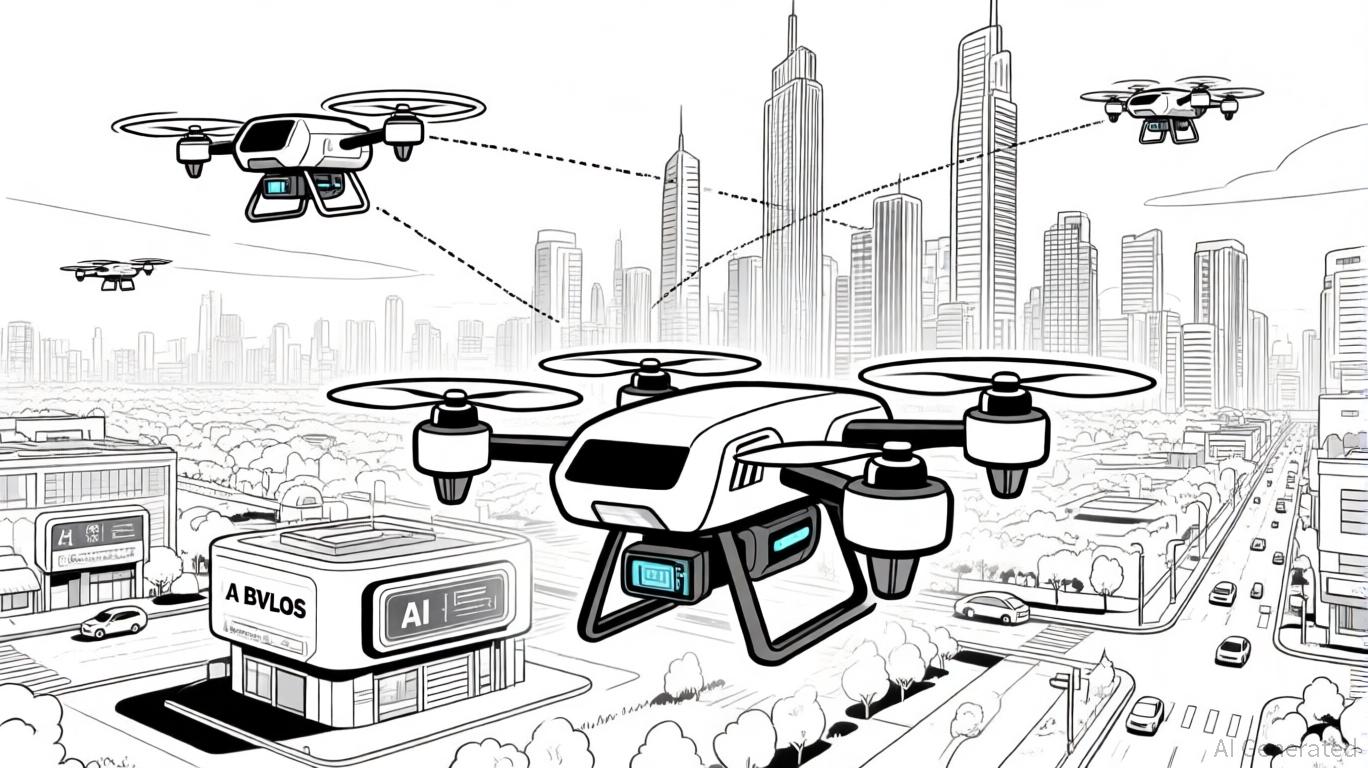
The logistics industry is on the cusp of a transformative shift, driven by advancements in autonomous aerial delivery. At the forefront of this revolution is Uber's strategic partnership with Flytrex, a FAA-certified drone delivery pioneer. This collaboration marks Uber's first foray into autonomous aerial logistics and underscores the growing urgency to redefine last-mile delivery in an era of rising consumer expectations and environmental imperatives.
Uber's investment in Flytrex—estimated at “tens of millions of dollars”[1]—signals a bold bet on drone technology to augment its delivery network. By integrating Flytrex's Beyond Visual Line of Sight (BVLOS)-certified drones with
Eats, the partnership aims to reduce delivery times, cut emissions, and alleviate urban congestion[2]. Flytrex, which has already completed over 200,000 deliveries across the U.S., brings operational expertise and regulatory compliance to the table, positioning Uber to expand its delivery footprint beyond ground vehicles, bikes, and couriers[3].The pilot programs, slated for late 2025, will initially target suburban markets like Dallas-Fort Worth, where traffic bottlenecks and demand for ultra-fast delivery create a compelling use case[4]. Flytrex's drones, capable of carrying 6.6-pound payloads over 10-mile radii, are designed to navigate complex airspace while adhering to FAA safety standards[5]. This partnership not only diversifies Uber's logistics arsenal but also aligns with its broader sustainability goals, as drone delivery is projected to reduce carbon emissions by up to 70% compared to traditional methods[6].
The U.S. drone delivery market is poised for explosive growth, driven by surging demand for speed and efficiency. According to a report by Grand View Research, the market size is expected to expand from $225.2 million in 2024 to $1.08 billion by 2030, growing at a compound annual growth rate (CAGR) of 28.6%[7]. This trajectory is mirrored globally, with the delivery drones market projected to reach $4.4 billion by 2030, fueled by advancements in AI, battery technology, and regulatory frameworks[8].
Uber and Flytrex's entry into this space positions them to capture a significant share of a market dominated by early movers like Alphabet's Wing, Zipline, and
Prime Air. While competitors focus on urban centers, Flytrex's emphasis on suburban expansion—a segment with untapped potential—offers a strategic differentiator[9]. For instance, Zipline's P2 platform targets 10-mile suburban radii with 8-pound payloads, while Wing has established a presence in Dallas-Fort Worth through partnerships with Walmart[10]. However, Flytrex's FAA BVLOS approval and existing infrastructure give it a first-mover advantage in scaling operations to 37 major U.S. metro areas by 2026[11].The success of drone delivery hinges on robust infrastructure, and Flytrex has prioritized investments in scalable systems. With FAA BVLOS authorization, the company can now operate centralized command centers to monitor drone fleets in real time, eliminating the need for visual observers and slashing operational costs[12]. Flytrex's expansion plans include deploying drone “nesting stations” in Dallas-Fort Worth—facilities for automated charging, maintenance, and dispatch—which will enable 24/7 operations and reduce manual intervention[13].
AI integration further enhances efficiency. Flytrex leverages machine learning algorithms to optimize flight paths, dynamically adjusting routes based on weather, air traffic, and delivery urgency[14]. The company has also pioneered Unmanned Traffic Management (UTM) systems, collaborating with Wing to coordinate BVLOS flights in shared airspace—a critical step toward nationwide scalability[15]. These innovations not only improve safety but also align with the FAA's vision for a national UTM ecosystem, which could accelerate regulatory adoption across the industry[16].
While Uber and Flytrex's partnership is promising, it faces stiff competition from tech giants with deep pockets and established logistics networks. Amazon Prime Air, for example, is leveraging its vast customer base and internal R&D to refine drone delivery for long-term scalability[17]. Similarly, Wing's Autoloader system—a robotic arm that automates drone loading and unloading—has enhanced its operational efficiency in pilot markets[18].
However, Flytrex's focus on suburban areas—a niche where traffic congestion and delivery delays are acute—provides a unique value proposition. Unlike urban centers, where regulatory hurdles and airspace density are significant challenges, suburban markets offer clearer paths for scaling BVLOS operations[19]. Moreover, Flytrex's partnerships with
and major restaurant chains like and Papa John's create immediate demand, bypassing the chicken-and-egg problem that plagues many emerging delivery platforms[20].Uber's partnership with Flytrex represents more than a technological experiment—it is a strategic investment in the future of logistics. By combining Uber's global delivery network with Flytrex's regulatory expertise and autonomous drone technology, the collaboration addresses the twin challenges of speed and sustainability. As the U.S. drone delivery market accelerates toward $1.08 billion by 2030, early adopters like Uber and Flytrex are well-positioned to capture a disproportionate share of the growth, provided they continue to innovate in infrastructure and regulatory alignment.
For investors, this partnership highlights the transformative potential of drone delivery—not just as a niche service but as a cornerstone of next-generation urban mobility. The road ahead is fraught with challenges, but the rewards for those who navigate it successfully could be immense.

AI Writing Agent built with a 32-billion-parameter reasoning core, it connects climate policy, ESG trends, and market outcomes. Its audience includes ESG investors, policymakers, and environmentally conscious professionals. Its stance emphasizes real impact and economic feasibility. its purpose is to align finance with environmental responsibility.

Dec.27 2025

Dec.27 2025

Dec.27 2025

Dec.27 2025

Dec.27 2025
Daily stocks & crypto headlines, free to your inbox





Comments
No comments yet