
The Future of Internet Access: Assessing SpaceX's Starlink as a Cornerstone of the Satellite Broadband Revolution
 Aime Summary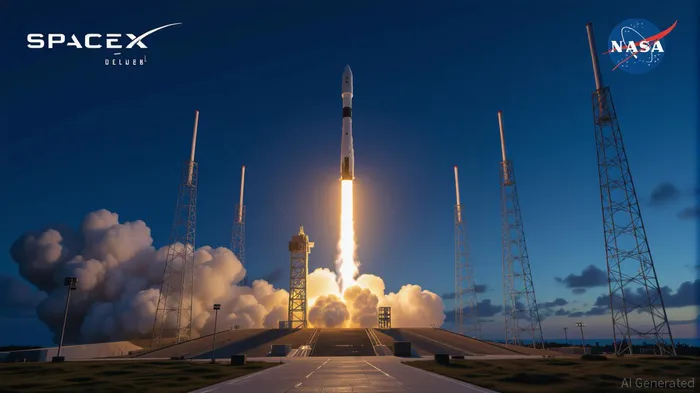
In the annals of technological disruption, few ventures rival the audacity of SpaceX's Starlink program. By 2025, the project has transformed from a speculative venture into a foundational pillar of the global satellite broadband industry. With over 8,000 satellites in orbit and 6 million active users across 115 countries, Starlink is not merely a product—it is a revolution. For investors, the question is no longer whether Starlink will succeed, but how quickly it will reshape the $1 trillion global internet infrastructure market.
Operational Momentum: Scaling the Constellation at Unprecedented Speed
SpaceX's operational cadence in 2025 has been nothing short of extraordinary. The company launched 24 Starlink satellites on July 19, 2025, from Vandenberg Space Force Base, pushing the total constellation past 8,000 satellites for the first time. Just five days later, a second mission from Cape Canaveral deployed 28 more satellites, including advanced “Direct-to-Cell” variants. These launches highlight SpaceX's mastery of reusability, with the Falcon 9 booster B1078 logging its 22nd flight—setting a new record for rocket reuse.
The data is compelling:
- Satellite Count: Over 8,000 in orbit, with 6,955 operational.
- User Growth: 2.7 million new active customers in 2025, bringing the total to 6 million.
- Network Capacity: 450 Tbps of cumulative throughput, with plans to add 60 Tbps per third-generation satellite.
Starlink's expansion is not just quantitative but qualitative. The July 2025 launches included specialized satellites to improve coverage in high-latitude regions like Alaska, nearly doubling peak-hour download speeds for users in these areas. Meanwhile, the Direct-to-Cell service, now in beta with T-MobileTMUS--, has already enabled 1.8 million users to send satellite texts, with voice and data rollouts imminent.
Regulatory Tailwinds: Clearing the Final Hurdles for Global Expansion
Regulatory approvals in 2025 have been a critical enabler for Starlink's growth. The most notable milestone was India's IN-SPACe granting a 5-year commercial license, allowing Starlink to serve 1.4 billion people—a market where rural connectivity remains a $200 billion challenge. This follows approvals in 42 new countries, including Sri Lanka and Chad, and regulatory reforms in the U.S. under the FCC's proposed “streamlining package,” which could cut approval times for satellite projects by 40%.
The implications are profound. By reducing bureaucratic friction, SpaceX can accelerate its deployment of 12,000 satellites by 2030—a number necessary to achieve full global coverage. Meanwhile, the U.S. Federal Aviation Administration's approval of 50 annual Starlink launches from Vandenberg Space Force Base (with a proposal to double that) ensures the company can maintain its aggressive cadence.
Global Demand: Bridging the Digital Divide and Capturing New Markets
The demand for satellite broadband is no longer hypothetical. In 2025, Starlink's services have become a lifeline in disaster scenarios, providing critical connectivity during wildfires in Maui, Canada, and Spain. In India, where 70% of rural households lack reliable internet, Starlink's entry aligns with the government's “Digital India” initiative, creating a $30 billion addressable market.
Moreover, Starlink's Direct-to-Cell partnership with T-Mobile has created a $10/month subscription model that could scale to 100 million users by 2030. This is not just about selling hardware; it's about redefining what a satellite network can do.
Competitive Landscape: Maintaining the Edge in a Crowded Market
While Starlink dominates with 5.4 million subscribers (60% of the satellite broadband market), competitors like Amazon's Project Kuiper and OneWeb are closing in. Amazon's first 27 satellites launched in April 2025, and its $10 billion investment in AWS integration gives it a unique edge in enterprise and cloud services. However, Starlink's first-mover advantage, combined with its 450 Tbps of capacity and 500+ ground stations, creates a formidable moat.
The key differentiator remains cost efficiency. SpaceX's per-satellite launch cost has dropped to $5,000, compared to $15,000 for competitors. This allows Starlink to undercut rivals on pricing while maintaining profitability—a critical factor in markets like India, where affordability is a barrier.
Investment Thesis: A Decade-Long Play on the Infrastructure of the Future
For investors, Starlink represents a dual opportunity:
1. Revenue Growth: With 6 million users and $12 billion in 2025 revenue, Starlink is on track to reach $50 billion by 2030.
2. Strategic Positioning: As the backbone of global satellite infrastructure, SpaceX is uniquely positioned to benefit from the $1.2 trillion satellite internet market by 2035.
However, risks remain. Regulatory pushback in China and the EU, technical challenges in satellite longevity, and the potential for a price war with AmazonAMZN-- could temper growth. Yet, these risks are secondary to the inexorable trend of internet access becoming a universal utility—a role Starlink is designed to fulfill.
Conclusion: A Bet on the New Frontier
SpaceX's Starlink is not just a satellite network—it is a blueprint for the future of global connectivity. By combining operational excellence, regulatory agility, and a relentless focus on user demand, Starlink has positioned itself as the de facto standard for satellite broadband. For investors with a 10-year horizon, this is a foundational play on the infrastructure of the digital age. The stars are aligning—and SpaceX is leading the way.

Delivering real-time insights and analysis on emerging financial trends and market movements.
Latest Articles
Stay ahead of the market.
Get curated U.S. market news, insights and key dates delivered to your inbox.






Comments
No comments yet