
The Future of Global Health is Now: Why Philanthropy is Driving the Next Wave of Innovation
The Bill & Melinda Gates Foundation is redefining the boundaries of philanthropy, committing $200 billion by 2045 to revolutionize global health and technology. This unprecedented pledge isn't just about charity—it's a strategic investment in innovations that will reshape industries, save millions of lives, and unlock staggering economic opportunities. For investors, the message is clear: act now or risk missing the next tech-driven healthcare revolution.
The New Era of Philanthropy-Driven Innovation
The Foundation's $200 billion commitment—a doubling of its previous pace—marks a seismic shift in global health financing. By accelerating timelines and leveraging cutting-edge technology, it aims to end preventable maternal and child deaths, eliminate infectious diseases, and lift millions out of poverty. Its 2045 sunset date adds urgency, signaling a focus on scalable, high-impact solutions that will outlive the Foundation itself.
But this isn't just about money. It's about technology as a force multiplier. From drones delivering vaccines to AI-powered diagnostics, the Gates Foundation is backing innovations that could redefine healthcare access and efficiency worldwide.
Drones Delivering Lifesaving Supplies: A $200B Investment in Logistics
The Foundation's drone initiative is a masterclass in solving logistical bottlenecks. In Ghana and Rwanda, companies like Zipline and Swoop Aero use zero-emission drones to deliver vaccines, blood plasma, and IV fluids to remote regions. Since 2018, these efforts have boosted immunization rates by 21%, proving drones can bridge gaps in healthcare infrastructure.
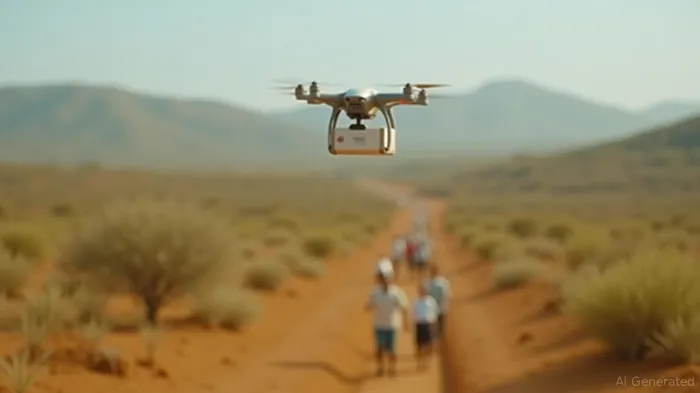
While Zipline remains private, publicly traded drone logistics firms are already capitalizing on this trend. AeroVironment (AVAV), a leader in drone systems, is expanding into medical supply delivery. Its stock has surged as governments and NGOs adopt autonomous logistics for critical missions.
AI and Health Tech: From Bed Nets to Ultrasound Scanners
The Foundation's AI investments are equally transformative. At CES 2025, it showcased an AI-enabled bed net that detects and repels mosquitoes with 90% accuracy, a breakthrough in malaria prevention. Meanwhile, portable AI ultrasound scanners—costing just $100—are revolutionizing prenatal care in low-income regions, identifying risks that once went undetected.
These innovations are part of a broader shift toward precision public health, where data and AI optimize resource allocation. Companies like NVIDIA (NVDA), whose AI chips power medical imaging tools, are beneficiaries of this trend.
Tackling Global Diseases: From Malaria to HPV
The Foundation's focus on disease eradication is paying dividends. A Cameroonian scientist's cost-effective malaria solution has slashed childhood cases by nearly 50%, while its one-dose HPV vaccine—a collaboration with Gavi—could prevent 110 million cervical cancer cases. These breakthroughs are being commercialized by biotech firms like Moderna (MRNA), which is scaling mRNA-based vaccines.
Critics and the Case for Urgency
Skeptics argue the Foundation's influence risks sidelining local health systems. Yet its track record—saving 82 million lives since 2000—speaks for itself. By prioritizing local partnerships and public-private models, it ensures sustainability. The $200 billion commitment isn't charity; it's a high-risk, high-reward bet on innovation that will reward early investors.
Investment Opportunities: Where to Deploy Capital Now
- Drone Logistics: AeroVironment (AVAV), Drone Delivery Canada (DDC), or drone ETFs like IRBO (iShares Robotics & Automation ETF).
- AI in Healthcare: NVIDIA (NVDA), iRhythm Technologies (IRTC), or Roche (RHHBY) for diagnostics.
- Biotech and Vaccines: Moderna (MRNA), Gilead Sciences (GILD), or BioNTech (BNTX).
- Global Health Infrastructure: Invest in firms building cold-chain logistics or telemedicine platforms.
Conclusion: The Clock is Ticking
The Gates Foundation's $200 billion timeline is a clarion call: innovation in global health is no longer a distant dream—it's here now. For investors, this is a once-in-a-generation opportunity to back technologies that will save lives and generate returns. Delays could mean missing the next wave of disruptors.
The question isn't whether to invest—it's how fast you can act.
The future of health is being written today. Will you be part of it?

Delivering real-time insights and analysis on emerging financial trends and market movements.
Latest Articles
Stay ahead of the market.
Get curated U.S. market news, insights and key dates delivered to your inbox.






Comments
No comments yet