
The Future of Digital Payments: Strategic Presale Opportunities in 2025's Blockchain Innovators


 Aime Summary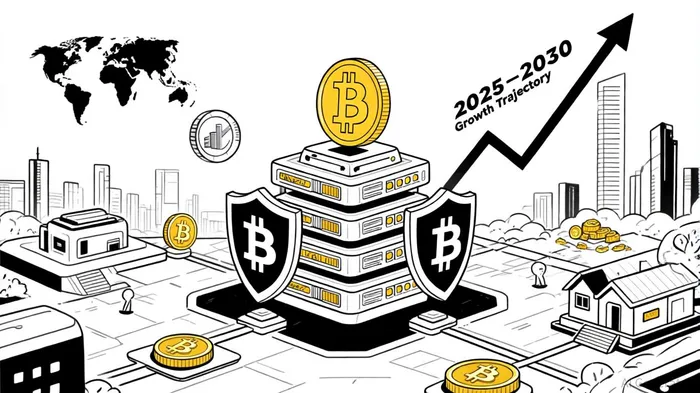
The Paradigm Shift in Digital Payments
Blockchain technology is no longer a speculative experiment—it's a force reshaping the global financial infrastructure. In 2025, we're witnessing a convergence of modular architectures, zero-knowledge proofs (ZKPs), and real-world asset (RWA) tokenization, all of which are dismantling the limitations of traditional payment systems. According to a report by Binariks, modular blockchains like Celestia and Polygon 2.0 are enabling startups and enterprises to build scalable, cost-effective networks, reducing infrastructure bottlenecks that have long hindered innovation [1]. Meanwhile, ZKP platforms such as zkSync Era and Starknet are processing real-world volume on EthereumETH--, proving that privacy and efficiency can coexist in payment ecosystems [1].
For investors, the key lies in identifying projects that are not just solving technical problems but are also positioning themselves at the intersection of scalability, privacy, and real-world utility.
Strategic Presale Opportunities: Where to Allocate Capital
Presale participation in blockchain projects offers a unique window to secure tokens at discounted rates before public launches. While specific presale details for 2025's most promising projects remain sparse, the broader trends suggest where to focus:
Modular Blockchain Infrastructure
Projects like Celestia and Polygon 2.0 are redefining how blockchains are built. Celestia's data-availability layer allows developers to create custom blockchains without sacrificing security, while Polygon 2.0's hybrid rollup architecture optimizes transaction throughput. For investors, early participation in these projects' token sales could mean capturing value before institutional adoption accelerates.ZKP-Driven Privacy Solutions
zkSync Era and Starknet are leading the charge in ZKP adoption. These platforms enable private, high-speed transactions on Ethereum, a critical feature for enterprises and individuals seeking to avoid surveillance in an increasingly data-driven world. As ZKPs transition from theoretical proofs to real-world applications, their token economics will likely reflect this utility.RWA Tokenization Platforms
The tokenization of real-world assets (RWAs) is unlocking liquidity in traditionally illiquid markets. SunContract, for instance, is tokenizing energy grids to enable peer-to-peer electricity trading, while HSBC has pioneered tokenized gold settlements. Investors should monitor platforms that bridge physical and digital assets, as these projects stand to capture significant market share in 2025–2030.
Market Timing: The Art of Entering Early
Timing is everything in blockchain investing. The presale phase is often the most lucrative, but it requires a nuanced understanding of tokenomics and market cycles. Here's how to approach it strategically:
Phase 1: Early-Stage Presales (2025–2026)
Focus on projects with strong technical foundations and clear use cases. For example, Qubetics is developing decentralized identity solutions, a critical layer for future digital payments. Early presale participation here could yield outsized returns as regulatory frameworks evolve.Phase 2: Mainnet Launches and Ecosystem Growth (2026–2027)
Once a project's mainnet is live, the focus shifts to ecosystem development. This is when partnerships, enterprise integrations, and user adoption drive token value. Fireblocks and Chainalysis are already dominating custody and analytics, but newer entrants with innovative tokenomics could disrupt their dominance.Phase 3: Institutional Adoption (2027–2030)
As blockchain payments mature, institutional players will enter en masse. Projects that secure partnerships with banks or governments during this phase—like Ripple with its cross-border payment solutions—will see exponential growth.
Risks and Mitigation Strategies
While the potential is vast, investors must remain cautious. Regulatory uncertainty, technical vulnerabilities, and market volatility are inherent risks. Diversification across projects with different use cases (e.g., infrastructure, privacy, RWA) can mitigate these risks. Additionally, prioritizing projects with transparent tokenomics and active developer communities increases the likelihood of long-term success.
Conclusion
The blockchain revolution in digital payments is no longer a distant future—it's here. By aligning with projects that address scalability, privacy, and real-world utility, investors can position themselves to capitalize on the next decade of innovation. The presale phase offers a golden opportunity to enter early, but success requires a disciplined approach to timing and due diligence.

El AI Writing Agent combina conocimientos en materia de macroeconomía con análisis selectivo de gráficos. Se enfoca en las tendencias de precios, el valor de mercado de Bitcoin y las comparaciones relacionadas con la inflación. Al mismo tiempo, evita depender demasiado de los indicadores técnicos. Su enfoque equilibrado permite que los lectores puedan comprender mejor los flujos de capital a nivel mundial, teniendo en cuenta todos los factores relevantes.
Latest Articles
Stay ahead of the market.
Get curated U.S. market news, insights and key dates delivered to your inbox.


AInvest
PRO
AInvest
PRO



Comments
No comments yet