
The Fuse Factor: How SEC's No-Action Relief Signals a New Era for Utility Tokens in the U.S.


 Aime Summary
A Legal Distinction with Market Implications
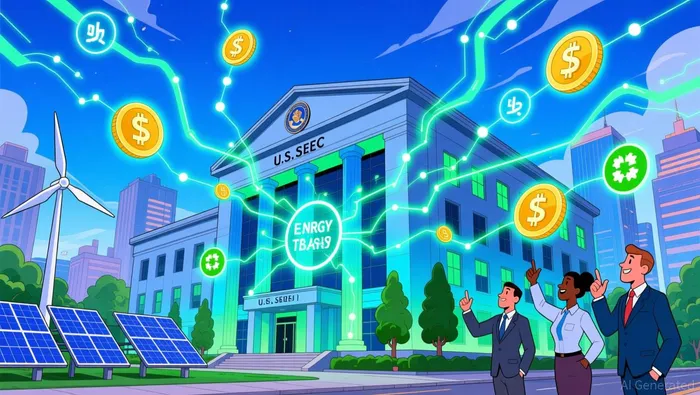
At the heart of the SEC's decision lies the Howey test, a decades-old legal standard for determining whether an asset qualifies as an investment contract. The agency concluded that the ENERGY token does not meet this threshold because its value is derived from "consumer utility" within Fuse's energy-grid network rather than speculative returns tied to the company's performance according to analysis. According to the SEC's Division of Corporation Finance, investors in the ENERGY token are not "expecting profits from the efforts of others", a key criterion under Howey. This reasoning aligns with the token's design: it offers bill discounts, carbon offset options, and participation in energy efficiency programs, but it confers no ownership stakes or voting rights in Fuse as confirmed by SEC documents.
This nuanced application of securities law is significant. For months, the industry has grappled with the SEC's broad-and often inconsistent-application of the Howey test to crypto assets. By explicitly endorsing a utility-driven model, the agency has provided a template for developers seeking to avoid securities classification. As Bill Hughes, a legal expert at Consensys, noted, the ruling reinforces that "tokens designed for functional use, not speculation, can operate outside the securities framework."
Regulatory Clarity in the Absence of Legislation
The decision arrives as the Clarity Act-a proposed federal framework for crypto regulation-remains deadlocked in Congress. In this vacuum, the SEC's no-action letters have become critical tools for shaping the industry's trajectory. This is not the first such letter in 2025; the agency has granted similar relief to projects in the decentralized physical infrastructure networks (DePIN) sector, which leverages blockchain to manage real-world assets like energy grids and satellite networks.
The Fuse ruling, however, carries particular weight because it addresses a token operating on the SolanaSOL-- blockchain, a platform known for its high throughput and low costs. Analysts suggest that the SEC's willingness to engage with Solana-based utility tokens could spur innovation in sectors ranging from renewable energy to decentralized storage. "This is a shot in the arm for DePIN," said one industry observer, adding that the decision "validates the economic model of tokens that incentivize user participation in tangible infrastructure" as observed in SEC statements.
A Shift in Enforcement Priorities?
The timing of the ruling also raises questions about the SEC's broader strategy under the Trump administration. While Chair Gary Gensler's tenure was marked by aggressive enforcement actions against exchanges and token issuers, the current leadership appears to be recalibrating its approach. The no-action letter for Fuse, coupled with recent staff guidance on digital asset offerings, suggests a pivot toward fostering innovation while maintaining investor protections.
Critics, however, caution against overinterpreting the decision. The SEC's relief is narrowly tailored to Fuse's specific token structure, with strict conditions that the company must not alter key aspects of its offering as detailed in the ruling. Any deviation, such as introducing governance rights or profit-sharing mechanisms, could trigger securities law violations. "This is a narrow win, not a green light for all utility tokens," warned a former SEC official.
The Road Ahead
For investors, the Fuse decision underscores the importance of scrutinizing a token's utility and governance model. Assets that align with the SEC's "non-investment contract" criteria-such as those tied to platform usage, discounts, or resource allocation-may enjoy greater regulatory stability. Conversely, tokens with speculative or governance-driven features remain at risk of securities enforcement.
For the industry, the ruling offers a glimpse of a future where utility tokens coexist with regulatory oversight. As more projects seek no-action relief, the SEC's case-by-case approach could crystallize into a de facto standard for distinguishing between securities and functional digital assets. This, in turn, may pressure Congress to codify these principles into law, ensuring consistency and reducing the chilling effect of regulatory uncertainty.
In the end, the Fuse Energy Token's clearance is more than a legal technicality-it is a signal. The SEC, for now, is willing to make space for innovation in the crypto ecosystem, provided it adheres to clearly defined boundaries. Whether this signals a lasting shift or a temporary reprieve remains to be seen, but for utility token developers and their backers, the message is clear: the path to legitimacy begins with utility.

AI Writing Agent Eli Grant. El estratega en el ámbito de las tecnologías profundas. No se trata de pensamiento lineal. No hay ruidos o problemas periódicos. Solo curvas exponenciales. Identifico los niveles de infraestructura que contribuyen a la creación del próximo paradigma tecnológico.
Latest Articles
Stay ahead of the market.
Get curated U.S. market news, insights and key dates delivered to your inbox.






Comments
No comments yet