
Fusaka Upgrade Sparks Short Thesis on Ethereum's Tokenomics
 Aime Summary
- Culper Research has published a short thesis arguing that Ethereum's tokenomics are flawed and deteriorating post-Fusaka upgrade according to research.
- The firm claims a significant portion of Ethereum's wallet growth and transaction volume are driven by dusting attacks and address poisoning rather than genuine user adoption as reported.
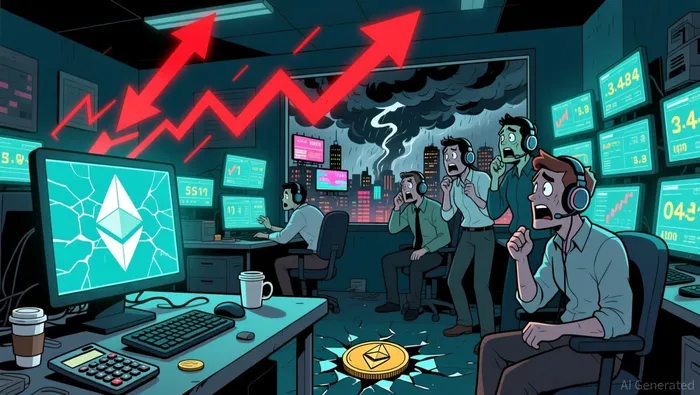
- Post-upgrade gas fee reductions have led to a 90% decline in validator revenues, raising concerns about the sustainability of Ethereum's network economics according to analysis.
Culper Research has criticized Ethereum's network fundamentals, noting that the Fusaka upgrade created conditions for spam transactions to become economically viable according to the firm. The firm argues that much of the apparent growth in activity is artificial and not indicative of genuine user adoption. With dust transactions now accounting for 10-15% of total transactions on EthereumETH--, concerns about user security and network integrity have grown as Culper Research notes.
The report also highlights that Vitalik Buterin's ETH sales may signal a lack of confidence in the platform's token economics according to analysis. Additionally, the report notes increasing competitive pressure from blockchains like SolanaSOL--, which show stronger developer growth and decentralized exchange trading volumes .
What is the impact of the Fusaka upgrade on Ethereum's validator revenues?
Post-Fusaka, the gas limit increase led to a 90% decline in transaction fees, significantly affecting validator earnings . This has raised concerns about the financial sustainability of Ethereum's network model and may impact validator participation in the long term. While higher throughput is beneficial for user experience, the reduction in fees undermines the traditional economic incentives for maintaining the network.
How does the Fusaka upgrade enable malicious activity like dusting attacks?
The reduction in gas fees post-upgrade has made it economically viable for attackers to spam the network with small-value transactions . These dust transactions account for a large portion of Ethereum's daily activity and are often the result of address poisoning or dusting attacks. Security experts have called for measures such as address truncation and improved address book practices to mitigate these risks .
What are the implications of Ethereum's declining market share and token sales by Vitalik Buterin?
Culper Research argues that Ethereum's declining market share in key metrics like decentralized finance and non-fungible token trading volumes, as well as Vitalik Buterin's ETH sales, suggest a lack of confidence in Ethereum's tokenomics . The firm highlights that platforms like Solana are gaining traction in terms of developer activity and total value locked, further eroding Ethereum's dominance. While Ethereum's development and layer-2 solutions are strong, critics argue these factors do not offset the growing challenges in its economic model.
Critics of the report argue that it misrepresents network activity and underestimates Ethereum's long-term development plans . They emphasize the importance of continued innovation and layer-2 scaling solutions as key drivers for the platform's future growth. While the report raises valid concerns about token economics and network security, the broader Ethereum community remains focused on its roadmap for 2026 and beyond.

Blending traditional trading wisdom with cutting-edge cryptocurrency insights.
Latest Articles
Stay ahead of the market.
Get curated U.S. market news, insights and key dates delivered to your inbox.


AInvest
PRO
AInvest
PRO



Comments
No comments yet