
Fusaka Upgrade Reduces Ethereum Fees, Sparks Surge in Address Poisoning Scams
 Aime Summary
The Fusaka upgrade in December 2025 slashed Ethereum's gas fees, enabling a surge in address poisoning attacks.
Attackers send tiny, near-zero-value transfers to mimic legitimate transactions, tricking users into sending funds to fake addresses.
These scams are particularly effective for stablecoins used in high-volume trading.
The Fusaka upgrade in December 2025 significantly reduced Ethereum's gas fees, making it cheaper for users to conduct transactions on the network. The reduction in costs, however, had unintended consequences, including a sharp increase in address poisoning attacks. These attacks involve sending low-value transactions to mimic legitimate transfers, often leading users to send funds to malicious addresses.
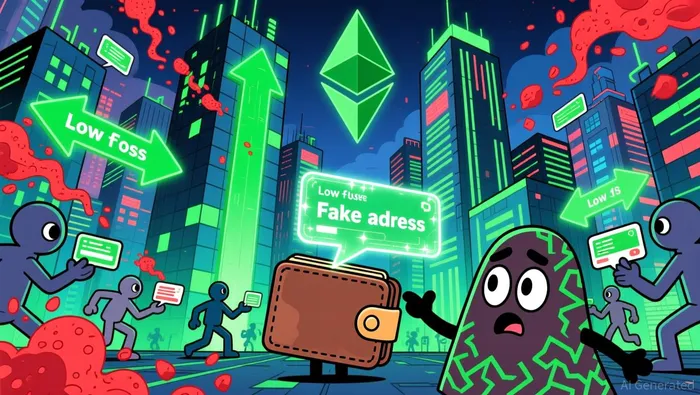
Address poisoning attacks have surged in frequency since the upgrade, with malicious USDT dust transfers under $0.01 increasing by 612% in the 90 days following the upgrade. Similar trends were observed with USDC and ETH, with attack volumes rising by 473% and 470%, respectively. The low cost of these attacks has distorted network metrics, making it harder to distinguish between genuine activity and malicious behavior.
Security experts recommend that users always verify full destination addresses and use tools like ENS and Etherscan to mitigate these risks. The surge in such attacks has raised broader concerns about Ethereum's evolving tokenomics and network security incentives.
How Are Address Poisoning Attacks Executed?
Address poisoning attacks typically involve sending tiny amounts of cryptocurrency, such as $0.01 or less, to a user's wallet to create the illusion of a legitimate transaction. This manipulation can trick users into believing that a destination address is trustworthy, leading them to send larger sums of money to malicious actors.
The low cost of transactions following the Fusaka upgrade has made it easier for attackers to execute these schemes at scale. The reduced cost of spam and low-value transactions has led to an influx of malicious activity, including fake transaction histories and wallet confusion. This type of attack is particularly effective for stablecoins like USDT, USDC, and ETHETH--, which are often used in high-volume trading and everyday transactions.
What Are the Implications for Ethereum's Future?
The Fusaka upgrade was intended to improve Ethereum's scalability and reduce transaction costs. However, the unintended consequences have sparked broader discussions about the network's evolving role as both a secure settlement layer and a scalable infrastructure for decentralized applications. The surge in address poisoning attacks highlights the importance of maintaining strong security incentives.
Ethereum's broader structural challenges have also come to the forefront, particularly around the balance between decentralization, security, and scalability. The EthereumENS-- Foundation is now prioritizing post-quantum security research and exploring the network's potential as a trust layer for AI and decentralized systems.
The upcoming Glamsterdam upgrade will likely test Ethereum's ability to address these challenges and maintain its role as a secure, decentralized settlement layer. The network must continue to evolve its security protocols and economic model to ensure that low transaction costs do not come at the expense of network integrity.
As Ethereum transitions from Pectra to the Fusaka hard fork, it has made notable improvements in staking efficiency. These enhancements support institutional participants and align with the growing demand for a robust settlement layer in the expanding digital asset market.
Despite these improvements, the rise in address poisoning attacks underscores the need for continued vigilance and education among users. As the network continues to scale, it will be crucial to ensure that security remains a top priority.

Blending traditional trading wisdom with cutting-edge cryptocurrency insights.
Latest Articles
Stay ahead of the market.
Get curated U.S. market news, insights and key dates delivered to your inbox.


AInvest
PRO
AInvest
PRO



Comments
No comments yet