
Fusaka Upgrade Drives Ethereum Transaction Surge While Fee Revenue Remains Suppressed
 Aime Summary
- The EthereumETH-- network recorded a record 18.7 million transactions in a single week, driven by network upgrades Pectra and Fusaka that improved layer-1 scalability.
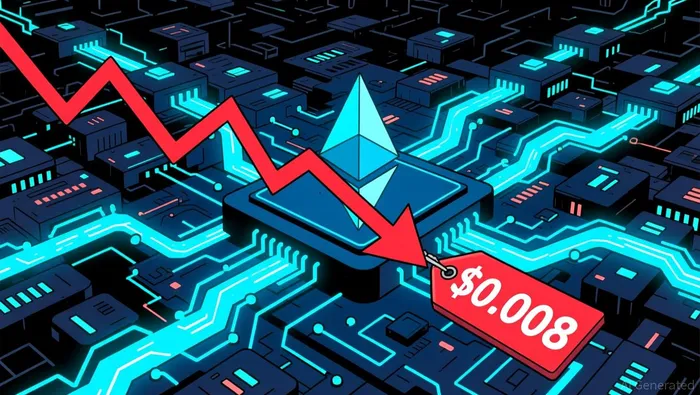
- Median transaction costs on the base layer fell to an all-time low of $0.008, reflecting the intense competition for block space and the efficiency of recent protocol updates .
- Despite the historic surge in network activity, Ethereum (ETH) price remains suppressed below $2,400 due to low fee revenue generation and the migration of economic activity to layer-2 solutions .
The activation of the Fusaka upgrade in 2025, alongside the Pectra upgrade, has fundamentally altered the economics of the Ethereum base layer. These protocol improvements were designed to enhance scalability and reduce transaction costs, and the recent data confirms their immediate impact on network usage. Stablecoin transactions and increased staking participation have emerged as the primary drivers of this activity boom, pushing weekly transaction counts to unprecedented levels .
However, the surge in volume has not translated into proportional value accrual for ETH holders. The median transaction cost dropping to $0.008 significantly reduces the effectiveness of the EIP-1559 fee burn mechanism. This mechanism relies on substantial fee revenue to permanently remove ETH from circulation, creating deflationary pressure. With costs under a penny, the burn rate is negligible, meaning high usage no longer guarantees a supply contraction .
A critical factor suppressing ETH value is the migration of economic activity to layer-2 solutions. While these networks settle on Ethereum, they do not produce the same fee burn effects as base layer transactions. Much of the stablecoin volume that contributes to the 18.7 million transaction record occurs on these secondary layers or utilizes low-cost base layer slots that generate minimal revenue. Consequently, the base layer sees high activity without the corresponding economic impact that historically supported higher valuations .
Why Are Ethereum Fees Cratering Despite Record Activity?
The disconnect between record transaction volumes and ultra-low fees highlights a structural shift in how the Ethereum network is utilized. The Fusaka and Pectra upgrades optimized the network for throughput, making it exceptionally cheap to execute transactions. This efficiency is a double-edged sword for investors. While it benefits users by reducing costs, it diminishes the yield generated by the network for validators and ETH stakers.
Stablecoin usage is a major component of this low-fee environment. These tokens are designed for efficient transfers and often operate on the fringes of the base layer's capacity, utilizing the cheapest available slots. As stablecoin adoption grows, it contributes heavily to the transaction count but contributes minimally to the fee market. This trend suggests that future growth in transaction volume may continue to decouple from fee revenue growth .
How Does Layer-2 Migration Affect ETH Deflationary Mechanics?
The migration of activity to layer-2 solutions further complicates the deflationary narrative for Ethereum. Although layer-2s settle data on the main chain, the fees paid for this settlement are often absorbed by the layer-2 operators or paid in tokens other than ETH. This reduces the amount of ETH burned through the EIP-1559 mechanism.
As a result, ETH has traded below $2,400 as of April 2026, failing to capture the upside of its own network growth. The ultra-low fees on the base layer compound this issue, making it difficult for the burn mechanism to trigger during periods of high usage. Investors are now grappling with a network that is busier than ever but less profitable for its native asset .
The current market dynamic suggests that the Fusaka upgrade has successfully solved scalability issues but has inadvertently weakened the fee market. Unless layer-2 settlement costs increase or base layer demand shifts toward high-fee applications, the deflationary pressure on ETH is likely to remain limited. This structural challenge poses a significant headwind for price appreciation, regardless of the record-breaking transaction counts .

Blending traditional trading wisdom with cutting-edge cryptocurrency insights.
Latest Articles
Stay ahead of the market.
Get curated U.S. market news, insights and key dates delivered to your inbox.


AInvest
PRO
AInvest
PRO




Comments
No comments yet