
Fusaka Upgrade Breaks 21000 Gas Rule As Ethereum Faces Technical Overbought Signals
 Aime Summary
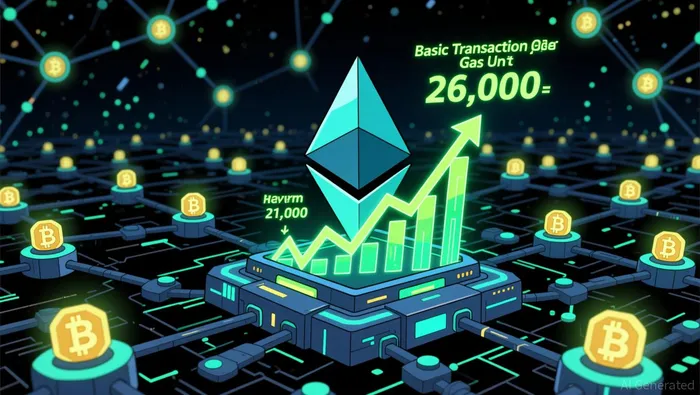
- The upcoming Fusaka hard fork will increase the intrinsic gas cost for a basic ETH transfer from 21,000 to 26,000 to accommodate the new EthereumENS-- Object Format.
- This structural change breaks a constant established since the network's launch in 2015 and requires immediate updates to wallet and dapp logic.
- Ethereum is currently in an overbought state with an RSI at 79, suggesting potential consolidation rather than an immediate trend reversal.
- Key support levels for Ethereum are identified at $2,431 and the EMA cluster around $2,128 to $2,172.
- Bitmine Immersion Technologies has expanded its Ethereum treasury holdings to 5.85 million tokens, highlighting institutional accumulation strategies.
The Ethereum network is preparing for a significant technical deviation with the upcoming Fusaka hard fork, scheduled for late 2026. This upgrade introduces a fundamental change to the network's economic structure by increasing the intrinsic gas cost for a standard ETH transfer. The cost will rise from the long-standing 21,000 gas limit to 26,000 gas units. This adjustment is driven by the implementation of the Ethereum Object Format, a new bytecode format designed to enhance smart contract efficiency and security. Core developers argue that the additional gas is necessary to account for the computational overhead of processing EOF-format transactions. It also aims to mitigate potential denial-of-service vectors that could arise from the new architecture. This change breaks a constant that has governed basic transfers since the network's launch in 2015. The increase is minimal in absolute cost but represents a major structural break for the ecosystem.
The immediate implication of this change is the potential for widespread transaction failures if infrastructure is not updated. Most wallets, decentralized applications, and exchanges currently hardcode the 21,000 gas limit to estimate fees and validate transactions. If these tools do not update their estimation logic to reflect the new 26,000 gas requirement, users may experience incorrect balance calculations or failed transactions. Developers of wallet infrastructure, block explorers, and dapps are advised to review their codebases for hardcoded gas values immediately. The upgrade follows the Pectra upgrade and is currently scheduled for late 2026, pending successful testnet deployments. While the impact on simple transfers is small, the structural break requires proactive adaptation to ensure network compatibility. This transition highlights the increasing complexity of maintaining legacy systems in a rapidly evolving blockchain environment.
Ethereum is currently exhibiting strong bullish structures but faces overbought technical signals that suggest a potential pause. The asset's price advance is underpinned by a cluster of exponential moving averages between $1,975 and $2,140, alongside horizontal support at $2,431. This support level reinforces the recent breakout and provides a cushion for price action. However, momentum indicators suggest the asset is overbought, with the 14-day Relative Strength Index at 79 and the Stochastic oscillator at 89. These stretched conditions hint at a likely slowdown or consolidation phase rather than an immediate trend reversal. Analysts suggest that if bulls extend the rally further into overbought territory, a pause is likely at higher resistance levels.
On the downside, initial support is positioned at $2,431. A deeper pullback would encounter medium-term EMAs and horizontal levels at $2,172, $2,140, and $2,128. Significant structural support emerges around the $1,986 to $1,961 range. On the upside, ETH faces its next resistance barrier at $2,678, followed by a higher level at $2,865. The SuperTrend line and clustered moving averages form a broader demand zone below the current spot price. This technical landscape suggests that new long positions might be better timed on dips toward these structural floors. The market is closely watching these levels for confirmation of either a continuation or a correction.
Institutional interest in Ethereum continues to grow, as evidenced by Bitmine ImmersionBMNR-- Technologies expanding its treasury holdings. The company has announced that its Ethereum holdings have reached 5.85 million tokens, contributing to a total crypto and cash portfolio valued at $14.9 billion. This accumulation strategy includes specific targets for staking and treasury expansion, reflecting a broader trend of corporate adoption. However, the company also highlights several key risk factors and operational dependencies. Management notes reliance on third-party pricing sources and the potential for material fluctuations in asset values. Operational risks include network failures, slashing events during staking, and cybersecurity breaches.
The company also faces risks related to the accuracy of projected staking yields, which assume full staking at scale. Regulatory developments, including the GENIUS Act and actions by the SEC and CFTC, pose significant uncertainty for the company's staking activities. Additionally, the company discloses exposure to early-stage blockchain investments and dependencies on key personnel. The forward-looking statements emphasize that historical ETH price movements and staking yields are not indicative of future performance. Macroeconomic factors and crypto market cycle unpredictability remain primary drivers of variance. This highlights the dual nature of institutional crypto exposure, combining significant upside potential with substantial operational and regulatory risks.
The convergence of technical upgrades and market momentum defines the current Ethereum landscape. The Fusaka upgrade represents a critical infrastructure update that requires immediate attention from ecosystem participants. Simultaneously, the overbought technical conditions suggest that investors should exercise caution regarding entry points. Institutional accumulation by entities like Bitmine indicates long-term confidence in the asset's fundamentals. However, the associated risks regarding regulatory changes and operational vulnerabilities cannot be overlooked. The market is likely to remain volatile as it navigates these technical and macroeconomic factors. Investors must stay informed about both the protocol-level changes and the broader market dynamics to manage their exposure effectively.
The upcoming Fusaka hard fork is a testament to the ongoing evolution of the Ethereum protocol. As the network adopts new standards like the Ethereum Object Format, it must balance innovation with stability. The increase in gas costs for standard transfers is a small but symbolic change that underscores the complexity of blockchain development. Meanwhile, the technical indicators suggest that the current rally may face resistance in the near term. The support levels identified provide a framework for understanding potential price movements. Institutional players continue to build their positions, adding another layer of complexity to the market. The interplay between technical upgrades, market sentiment, and institutional activity will likely dictate the near-term trajectory of Ethereum.
Staying updated on these developments is crucial for all participants in the digital asset space. The need to update wallet and dapp logic for the Fusaka upgrade is a reminder of the responsibilities that come with blockchain participation. Technical analysis provides valuable insights but should be used in conjunction with fundamental understanding. The risks associated with institutional holdings highlight the importance of due diligence. As the ecosystem matures, the distinction between speculative trading and strategic investment becomes increasingly blurred. The coming months will likely reveal how these various factors interact to shape the future of Ethereum.
The Fusaka upgrade marks a new chapter in Ethereum's history, breaking with past conventions to embrace new efficiencies. This transition requires careful navigation by developers and users alike. The current market conditions add another dimension to this narrative, with overbought signals suggesting a period of consolidation. Institutional interest remains strong, driven by the potential for long-term value creation. However, the risks associated with regulatory uncertainty and operational vulnerabilities remain significant. The market is at a critical juncture, where technical and fundamental factors will converge to determine the next phase of price action. Participants must remain vigilant and adaptable to navigate this dynamic environment.

Blending traditional trading wisdom with cutting-edge cryptocurrency insights.
Latest Articles
Stay ahead of the market.
Get curated U.S. market news, insights and key dates delivered to your inbox.


AInvest
PRO
AInvest
PRO




Comments
No comments yet