
The Furniture Industry's Crossroads: Consolidation, Labor Shifts, and the Path to Profit
The furniture industry is undergoing a seismic shift as consolidation reshapes its landscape. MillerKnoll's recent closure of its Muskegon plant—impacting 250 workers—symbolizes a broader trend of strategic relocations aimed at cutting costs and boosting efficiency. For investors, this transition presents both risks and opportunities. While workforce displacement poses challenges, sectors like logistics, tech-enabled furniture, and upskilling initiatives are emerging as key beneficiaries. Here's how to navigate this evolving terrain.
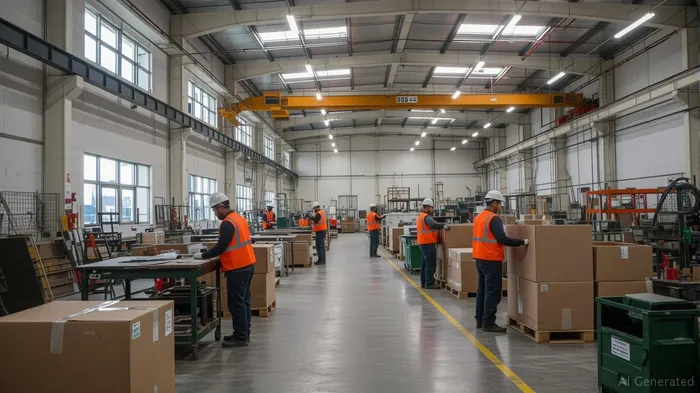
The MillerKnollMLKN-- Closure: A Microcosm of Industry Shifts
MillerKnoll's decision to close its Michigan plant and consolidate operations into two facilities in Spring Lake, Michigan, and one in Pennsylvania highlights the industry's push toward operational streamlining. While the company claims most Muskegon workers can transfer to Spring Lake, concerns linger over commute costs (an extra hour's drive for many) and long-term job security. Financially, the firm's net sales grew 8.2% year-over-year to $961.8 million by late 2025, yet remain below pre-2022 levels. Rising tariffs and commodity costs have further strained margins, underscoring the urgency of consolidation.
The closure also amplifies regional economic fears. Muskegon, having lost three factories in recent years, faces stagnant local demand. For investors, this signals a broader risk: manufacturing hubs dependent on single employers may see prolonged joblessness, impacting consumer spending and local real estate.
Workforce Displacement: Risks and Reallocation
The immediate risk lies in workforce displacement. The furniture sector's aging labor force—over 55-year-olds now double their proportion from 20 years ago—has created a “brain drain” as retirees exit without passing institutional knowledge. Meanwhile, younger workers often lack interest in traditional manufacturing roles. This mismatch is exacerbated by the complexity of modern production, where productivity gaps between high- and low-skilled workers can reach 800% in high-complexity roles.
For investors, this creates two pathways:
1. Upskilling Partnerships: Companies like Ivy Tech Community College, which offers Industry 4.0 certifications in smart manufacturing, are critical. Their collaboration with firms like StarPlus Energy (training EV battery technicians) could mirror future partnerships in furniture tech.
2. Geographic Reallocation: Workers in regions like Muskegon may migrate to growth hubs such as East Greenville, Pennsylvania, or Spring Lake, Michigan. Investors should monitor housing markets in these areas for undervalued opportunities.
Sectors Poised to Profit: Logistics, Tech, and Training
1. Logistics: The Unsung Growth Engine
The furniture logistics market is booming, projected to grow from $108.66 billion in 2024 to $115.91 billion in 2025. Key players like Savino Del Bene (specializing in fragile-item transport) and DB Schenker (global multimodal networks) are well-positioned to capitalize. Their expertise in white-glove delivery, reverse logistics, and cross-border trade aligns with manufacturers' needs for efficient post-consolidation supply chains.
2. Tech-Enabled Furniture: The Future of Design and Demand
Firms integrating AI, IoT, and sustainability into furniture—such as Herman Miller's AI-driven ergonomic chairs or IKEA's voice-controlled smart pieces—are gaining an edge. These companies leverage modular designs and eco-friendly materials to meet rising consumer demand for customization and environmental responsibility.
Investors should watch for firms investing in R&D, such as Steelcase's Media:scape systems (for hybrid workspaces), which blend physical and digital collaboration tools.
3. Upskilling Infrastructure: A Long-Term Play
Platforms like CredLens, which provide transparent credential data to employers, could redefine talent acquisition. Meanwhile, companies like Logistics Plus (post-2023 acquisition of Jan Krediet) exemplify how mergers can expand logistics capabilities while upskilling workforces.
Risks to Avoid
- Geopolitical Logjams: Tariffs and trade wars could disrupt logistics companies reliant on global supply chains.
- Overhyped Tech: AI-driven furniture may underdeliver if consumer demand for high-tech features wanes.
- Sustainability Costs: Compliance with regulations like the EU Deforestation Regulation (EUDR) could strain smaller manufacturers' margins.
Investment Strategy: Diversify, Prioritize Agility
Investors should adopt a three-pronged approach:
1. Logistics Leaders: Target firms like Savino Del Bene (focus on Europe) or J.B. Hunt (specializing in U.S. freight).
2. Tech-Forward Furniture Brands: Consider Herman Miller (MFL) or SteelcaseSCS-- (SCC) for their innovation pipelines.
3. Upskilling Ecosystems: Look to education platforms (e.g., CredLens) or companies partnering with community colleges for workforce training.
Conclusion
Manufacturing consolidation in furniture is a double-edged sword: it risks destabilizing regional economies but opens doors to high-growth sectors. Investors who focus on logistics efficiency, tech-driven innovation, and workforce retraining will find fertile ground. The key is to avoid overexposure to single firms or regions and instead build portfolios that capitalize on the industry's evolving needs. As MillerKnoll's closure shows, adaptability—not nostalgia—is the path to profit.
Stay informed, stay agile.

Stay ahead of the market.
Get curated U.S. market news, insights and key dates delivered to your inbox.
AInvest
PRO
AInvest
PRO



Comments
No comments yet