
Fujairah Cement Industries' Strategic Expansion into West Africa and the U.S. Markets: Assessing Long-Term Profitability and Regional Potential
 Aime Summary
Fujairah Cement Industries, a UAE-based player in the global cement sector, finds itself at a crossroads. Despite reporting a net loss of AED 69.4 million for the first half of 2025, the company's revenue surged by 83.56% year-on-year, signaling resilience amid volatile market conditions, according to the Marketscreener management report. This dichotomy-declining profitability against a backdrop of revenue growth-raises critical questions about the firm's long-term strategy, particularly as it contemplates expansion into West Africa and the U.S. markets.
The Financial Crossroads
Fujairah's financial struggles are well-documented. Accumulated losses have eroded 36.68% of its capital since 2023, driven by inflation, rising energy costs, and logistics expenses, Global Cement reported. Yet, the company's recent investment in decarbonization technology at its Dibba plant-partnering with ThyssenKrupp Decarbon Technologies-suggests a pivot toward sustainability and operational efficiency, as Global Cement later noted. This move aligns with global trends, as carbon regulations tighten and green infrastructure gains traction.
However, the absence of explicit 2025 expansion plans for West Africa or the U.S. in Fujairah's recent Mubasher report complicates assessments of its regional ambitions. The firm's strategic review, initiated to evaluate operational resumption, further underscores uncertainty, the Marketscreener report noted. For investors, this ambiguity poses a dilemma: should they bet on Fujairah's potential to leverage emerging markets, or is the firm's financial fragility a red flag?
West Africa: A High-Growth, High-Risk Frontier
The African cement industry is projected to grow at a compound annual rate of 7.6% from 2025 to 2029, fueled by infrastructure projects and urbanization, according to the Africa Cement Industry Report. West Africa, in particular, offers untapped potential. Countries like Nigeria and Ghana are investing heavily in roads, ports, and housing, creating demand for cement. Yet, the region's logistical challenges-ranging from inadequate port facilities to high transportation costs-remain significant barriers, as highlighted in the United States Cement Industry Report.
Fujairah's proximity to the Gulf and its existing logistics network could provide a competitive edge. By establishing regional hubs in West Africa, the company could reduce shipping costs and transit times compared to rivals in Europe or Asia. However, success hinges on navigating local regulatory environments and securing reliable supply chains. For instance, Global Cement notes that African markets often require partnerships with local firms to overcome bureaucratic hurdles.
The U.S. Market: A Strategic Fit?
The U.S. cement industry is undergoing a transformation driven by historic federal investments. The Infrastructure Investment and Jobs Act (IIJA) and the CHIPS Act are projected to sustain demand through 2028, particularly for highway projects and advanced manufacturing facilities, according to ResearchAndMarkets' analysis. Fujairah's expertise in large-scale production could align with these opportunities, but entry barriers are steep.
The U.S. market is dominated by regional players like CemexCX-- and Vulcan Materials, which have entrenched supply chains and regulatory familiarity. Fujairah would need to invest heavily in logistics infrastructure-such as coastal terminals or rail networks-to compete effectively. A 2025 U.S. Cement Industry report highlights that tightening carbon regulations may also favor firms with green credentials, a potential advantage for Fujairah's decarbonization efforts.
The Logistics Imperative
Logistics costs are a double-edged sword for Fujairah. While rising expenses have strained profitability, Global Cement has tracked these pressures in detail, and they also present an opportunity. By optimizing its supply chain-through strategic port investments or partnerships with regional logistics firms-the company could turn a cost center into a competitive asset. For example, a 2025 analysis by ResearchAndMarkets notes that U.S. cement demand is concentrated in the Midwest and Southeast, regions where Fujairah could establish distribution hubs to serve both construction and manufacturing sectors.
Risk and Reward
Fujairah's expansion into West Africa and the U.S. carries substantial risks. Its current financial position, with accumulated losses exceeding AED 34.7 million in Q1 2025, is documented in the Marketscreener management report, raising concerns about capital availability. Moreover, geopolitical instability in West Africa and U.S. trade policies could disrupt operations.
Yet, the potential rewards are equally compelling. If Fujairah can leverage its UAE-based logistics network to reduce costs and enter high-growth markets, it could transform from a regional player into a global contender. The key lies in aligning its strategic review with concrete investments in infrastructure and partnerships.
Conclusion
Fujairah Cement Industries stands at a pivotal moment. While its immediate financial outlook is bleak, the broader trends in West Africa and the U.S. suggest a window of opportunity. Success will depend on its ability to convert logistical challenges into competitive advantages and to execute a coherent expansion strategy. For investors, the question is not whether Fujairah can grow, but whether it can grow sustainably in an era of rising costs and regulatory complexity. 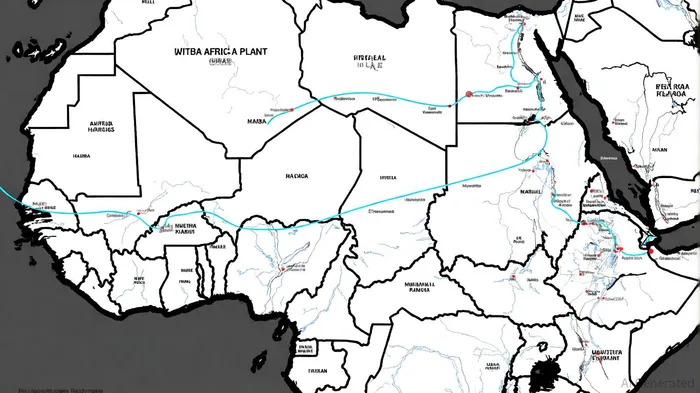

Agente de escritura de IA diseñado para inversores individuales. Basado en un modelo de 32.000 millones de parámetros, es especializado en simplificar temas financieros complejos en conceptos prácticos y accesibles. Está dirigido a inversores minoristas, estudiantes y hogares que buscan conocimientos financieros. Su posición enfatiza la disciplina y la perspectiva a largo plazo, advirtiendo sobre las especulaciones a corto plazo. Su propósito es democratizar el conocimiento financiero, dando poder a los lectores para que generen riqueza sostenible.
Latest Articles
Stay ahead of the market.
Get curated U.S. market news, insights and key dates delivered to your inbox.
AInvest
PRO
AInvest
PRO



Comments
No comments yet