
Fueling Divide: How Distillate Supply Crunch Splits Energy and Transport Sectors
The U.S. distillate fuel market is at a crossroads. A 3.2% year-over-year production decline to 245,000 barrels per day, coupled with inventories 6% below the five-year average, has created a stark bifurcation in sectoral performance. While energy producers and refiners thrive amid soaring margins, industries reliant on diesel—such as transportation and logistics—face margin erosion and operational headwinds. This supply-driven divide is reshaping investment landscapes, demanding a nuanced approach to capital allocation.
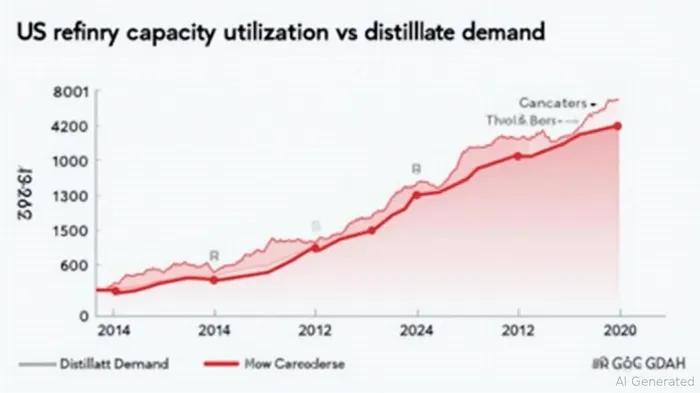
The Supply-Side Squeeze
The Gulf Coast, responsible for 58% of U.S. distillate production, is the epicenter of this crisis. Aging infrastructure, seasonal maintenance, and the closure of two major refineries—reducing capacity by 300,000 barrels per day—have tightened supply. Geopolitical risks amplify the strain: sanctions on Russian crude and Middle Eastern instability have disrupted global trade, diverting attention to U.S. exports. Yet domestic demand remains insatiable, fueled by a resilient economy and a 4% surge in diesel-intensive sectors like trucking and construction.
The result? Distillate prices hit $3.66/gallon in March 2025, with California's $4.29/gallon reflecting localized shortages. Inventories are projected to fall to their lowest levels since 2000, signaling a supply-demand imbalance that could persist through 2026.
Winners: The Refiners' Renaissance
The energy sector is the clear beneficiary. Refining margins are on a tear, projected to jump from 52¢/gallon in 2024 to nearly 80¢/gallon by 2026. This is driven by a perfect storm: crude prices are expected to drop to $64/barrel in 2025, while distillate demand remains stubbornly high. Refiners like Valero (VLO), Marathon (MPC), and Phillips 66 (PSX) are poised to capitalize, with their stocks outperforming broader markets.
Investors should overweight these names and consider sector ETFs such as XLE (Energy Select Sector SPDR Fund) or CRAK (Refiners ETF). For more aggressive plays, bull call spreads on refining stocks could amplify returns as margins expand.
Losers: The Transport Sector's Margin Squeeze
The flip side of this divide is stark. Trucking, logistics, and automotive sectors face margin compression as diesel costs eat into profits. A gallon of distillate now costs 12% more than in 2024, with no relief in sight. Companies like J.B. Hunt (JBHT) or C.H. Robinson (CHRW) are grappling with rising fuel expenses, while automakers such as General Motors (GM) face reduced freight flexibility.
Underweighting transport stocks is prudent until supply pressures ease—a timeline likely stretching into 2026.
Navigating the Bifurcation
The path forward requires strategic hedging and sector diversification. Key recommendations:
1. Overweight Refiners: Focus on pure-play refiners with Gulf Coast exposure.
2. Underweight Transport: Avoid logistics and trucking equities until diesel prices stabilize.
3. Hedge with Renewables: Invest in renewable diesel players like Neste (NTO) or Renewable Energy Group (REG) to capitalize on long-term demand for cleaner fuels.
4. Monitor Crude Volatility: Use options on WTIWTI-- futures (currently near $80/barrel) to hedge against price swings.
Risks on the Horizon
- Crude Price Volatility: A sudden spike could squeeze refining margins despite strong demand.
- Biofuel Competition: Renewable diesel's 9% share of distillate consumption by 2026 may disrupt traditional supply dynamics.
- Unexpected Outages: Gulf Coast refineries are aging; unplanned shutdowns could worsen shortages.
Conclusion
The distillate market's bifurcation is a structural shift, not a temporary blip. Energy refiners are riding a wave of margin expansion, while transport sectors tread water. Investors ignoring this divide risk missing out on gains—or sustaining avoidable losses. Stay long refining equities, short on trucking stocks, and keep a wary eye on the Federal Reserve's next move. In a world where every barrel matters, positioning for this split is no longer optional—it's essential.

Stay ahead of the market.
Get curated U.S. market news, insights and key dates delivered to your inbox.
AInvest
PRO
AInvest
PRO



Comments
No comments yet