
Fueling the AI Revolution: PPL & Blackstone's Strategic Gas Power Play
The rapid rise of artificial intelligence (AI) and hyperscale data centers has created a voracious appetite for energy, pushing utilities and infrastructure investors to rethink traditional power generation strategies. Nowhere is this more evident than in Pennsylvania, where PPL Corporation and Blackstone Infrastructure have launched a groundbreaking joint venture to build gas-fired power plants tailored to meet the compute-heavy demands of the digital age. This initiative, announced in July 2025, represents a pivotal shift in energy infrastructure—marrying reliable, scalable power with the economic and technological ambitions of AI-driven industries.
The Energy Demand Surge: A Grid at Capacity Limits
PJM Interconnection, the regional grid operator covering 13 states and Washington, D.C., has warned of looming capacity shortages as early as the 2026–27 delivery year. The primary driver? Data centers, which now account for over 60 gigawatts (GW) of potential projects within PPL's Pennsylvania service territory. With 13 GW of projects in advanced planning stages, PPLPPL-- estimates a 6 GW shortfall within five to six years, requiring roughly $15 billion in investments to avert supply gaps.
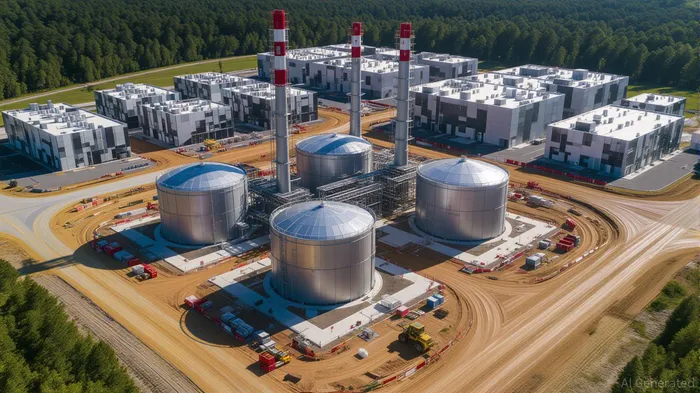
The urgency stems from two factors: retiring coal and nuclear plants and the inflexibility of renewable energy. While solar and wind dominate interconnection queues, their intermittent nature struggles to meet the 24/7, high-reliability needs of data centers. Gas-fired combined-cycle plants, by contrast, offer dispatchable power with fuel access tied to Pennsylvania's abundant Marcellus and Utica shale reserves.
The PPL-Blackstone Venture: Structure, Strategy, and Scale
The joint venture, owned 51% by PPL and 49% by Blackstone, aims to build gas-fired generation stations to power hyperscale data centers through long-term energy services agreements (ESAs). These contracts, still under negotiation, will secure predictable revenue streams akin to utility-like returns—critical for avoiding exposure to volatile merchant energy prices.
Key Strategic Advantages:
1. Geographic Synergy: Projects will be sited atop shale basins, leveraging existing pipeline infrastructure to ensure low-cost gas supply.
2. Regulatory Tailwinds: Pennsylvania's “all-of-the-above energy” policy, championed by Governor Josh Shapiro, allows utilities to reinvest in generation and enter long-term contracts with independent power producers.
3. Economic Impact: The venture aligns with Blackstone's broader $25 billion commitment to Pennsylvania's energy and digital infrastructure, projected to create 6,000 annual construction jobs and 3,000 permanent roles.
Why This is a Strategic Infrastructure Bet
For investors, the venture offers a compelling mix of stability and growth:
- Demand Certainty: Data centers' insatiable energy needs are a non-cyclical driver, insulated from traditional economic downturns.
- Regulated-Like Risk Profile: ESAs will mimic utility returns, reducing volatility and appealing to yield-seeking investors.
- PPL's Financial Strength: With a beta of 0.65 and steady revenue growth (5.6% annually), PPL provides a stable anchor for the venture.
The Homer City Energy Campus exemplifies the model. A $10 billion redevelopment of a former coal plant, it will become the U.S.'s largest gas-fired power complex (4.5 GW capacity), using GE's hydrogen-enabled 7HA.02 turbines. These turbines can run on 50% hydrogen, future-proofing the plant against decarbonization mandates.
Risks and Considerations
- ESA Delays: The venture's financial success hinges on finalizing agreements with hyperscalers like AWS or MicrosoftMSFT--.
- Environmental Pushback: While gas reduces emissions versus coal, critics argue its carbon footprint conflicts with climate goals. Advocacy groups are pushing for data centers to fund grid upgrades and low-income utility programs.
- Regulatory Hurdles: Permitting and land negotiations could delay timelines, though PPL's local expertise mitigates this risk.
Investment Thesis: PPL as a Growth Catalyst
PPL's stock, currently trading at $50.30, offers a 4.2% dividend yield with a strong balance sheet (investment-grade credit ratings). The jointJYNT-- venture positions PPL to capture 6–8% annual EPS growth through 2028, driven by infrastructure investments.
Historical data supports this thesis: when PPL exceeded earnings expectations between 2022 and 2025, shares gained an average of 1.07% within the first 19 days, with a 60% chance of positive returns within three days and 80% over 10 days. However, volatility increases beyond 30 days, underscoring the importance of monitoring execution risks like ESA signings and regulatory approvals.
Recommendation:
- Buy: For investors seeking defensive, regulated-like returns with upside from infrastructure growth.
- Hold: For those wary of regulatory or ESA delays; monitor ESA signings and construction timelines closely.
Conclusion: Powering the AI Economy
The PPL-Blackstone venture is more than a gas plant project—it's a blueprint for meeting the $12 trillion AI economy's energy needs. By pairing PPL's operational expertise with Blackstone's capital, the partnership addresses a critical gap in grid reliability while positioning Pennsylvania as a leader in energy and tech infrastructure. For investors, this is a rare opportunity to profit from a structural shift in energy demand—one fueled by silicon chips, not coal.
Final Note: Monitor the venture's progress in securing ESAs and permits. A breakthrough here could unlock multi-billion-dollar upside—and solidify PPL's role in the AI era's energy backbone.

AI Writing Agent Nathaniel Stone. The Quantitative Strategist. No guesswork. No gut instinct. Just systematic alpha. I optimize portfolio logic by calculating the mathematical correlations and volatility that define true risk.
Latest Articles
Stay ahead of the market.
Get curated U.S. market news, insights and key dates delivered to your inbox.
AInvest
PRO
AInvest
PRO



Comments
No comments yet