
fuboTV's Strategic Reinvention: Can a 'Skinny' Streaming Offer Fuel Sustained Growth?
 Aime Summary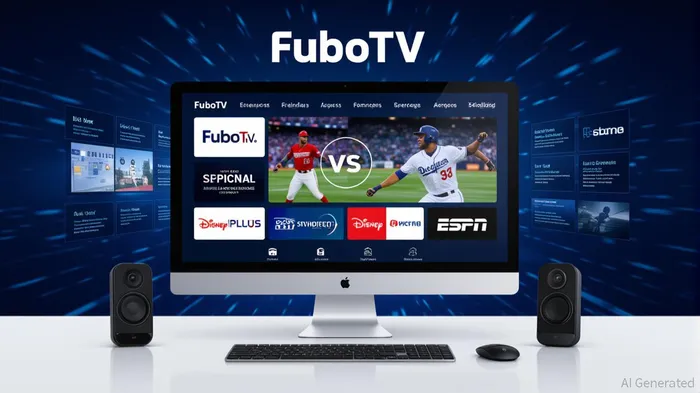
In the rapidly evolving streaming wars, fuboTVFUBO-- (FUBO) has embarked on a bold reinvention. The company's recent announcements—ranging from a sports-first "skinny" bundle to a transformative merger with Disney's Hulu + Live TV—signal a strategic pivot toward ecosystem design and attention-based monetization. For investors, the question is whether these moves can position fuboTV as a durable winner in a market increasingly defined by fragmentation, price sensitivity, and the enduring appeal of live content.
Ecosystem Design: From Niche to Hybrid
fuboTV's core strength has always been its focus on live sports, a category with inelastic demand and high engagement. The new Fubo Sports bundle, launching in late 2025, crystallizes this strategy. By bundling local and national sports channels (ESPN, FS1, Golf Channel, etcETC--.) with Disney's ESPN Plus and the upcoming ESPN Unlimited, fuboTV is creating a hybrid ecosystem that bridges live and on-demand sports consumption. This aligns with broader industry trends: consumers increasingly seek flexibility, not just content.
The key innovation lies in ecosystem alignment. Unlike traditional "skinny bundles," which merely trim channel counts, FuboFUBO-- Sports integrates attention-based strategies—features like AI-driven personalization, multiview, and PPV events—to deepen user engagement. For example, the inclusion of DAZN's live soccer and boxing events via a cross-partnership not only broadens content but also creates a flywheel: casual viewers attending a PPV event might convert to monthly subscribers.
Competitive Positioning: The "Sports-First" Edge
The streaming market is crowded, but fuboTV's focus on sports offers a unique angle. While competitors like YouTube TV and Hulu + Live TV offer broad channel packages, fuboTV is betting that sports fans will pay a premium for curated, low-cost access to live games. The Fubo Sports bundle is priced to compete with emerging rivals like ESPN Unlimited (rumored at $50/month) and DirecTV's MySports. By emphasizing an "attractive price point" (even if exact figures remain unannounced), fuboTV is targeting the 12% CAGR growth in live sports streaming, a segment where user retention is higher than in general entertainment.
The merger with Disney's Hulu + Live TV further sharpens this edge. Once completed, the combined entity will have 6.2 million subscribers and access to Disney's three streaming services (Hulu, Disney+, ESPN+) at no extra cost. This integration addresses a critical gap in fuboTV's current offering: access to Warner BrosWBD--. Discovery (WBD) networks like CNN, TBS, and TNT, which are currently unavailable to fuboTV users. By bundling these channels under a "Fubo with Hulu" package, the company could appeal to a broader audience while maintaining its sports-first identity.
Risks and Rewards: A Merger-Driven Bet
The merger with DisneySCHL-- is both a catalyst and a risk. Structured as an "Up-C" reorganization, it gives Disney 70% ownership but retains fuboTV's operational independence. This balance is crucial: it allows fuboTV to preserve its agile, innovation-driven culture while leveraging Disney's financial and content resources. The $220 million antitrust settlement and $145 million term loan from Disney also provide liquidity to fund integration and content negotiations.
However, regulatory hurdles remain. The U.S. Department of Justice's scrutiny of the deal could delay the merger until Q1 2026, creating uncertainty. Additionally, the integration of billing, authentication, and content delivery systems between fuboTV and Hulu is technically complex. If executed poorly, it could alienate existing subscribers or delay the launch of Fubo Sports.
Investment Implications: A High-Conviction Play
For investors, fuboTV's strategy represents a high-conviction bet on two trends: the commoditization of general entertainment streaming and the premiumization of live sports. The company's Q2 2025 earnings—positive Adjusted EBITDA of $20.7 million after years of losses—suggest that its cost-cutting and ad-supported monetization strategies are working. The Fubo Sports bundle and merger could amplify these gains by:
1. Expanding the addressable market: Merging with Hulu + Live TV adds 4.3 million subscribers, creating scale to negotiate better content deals.
2. Enhancing unit economics: Sports-focused users typically spend more on PPV events and ads, improving ARPU.
3. Differentiating from competitors: The hybrid live/on-demand model is rare in the streaming space, offering a moat against pure-play services like NetflixNFLX-- or YouTube TV.
That said, the stock remains volatile. A successful merger and strong subscriber growth could drive FUBO to $15–$20 by mid-2026, but regulatory delays or integration missteps could cap upside. Investors should monitor key metrics: the pricing of Fubo Sports, the timeline for the merger, and churn rates post-integration.
Conclusion: A Streaming Ecosystem in the Making
fuboTV's reinvention is not just about a "skinny" bundle—it's about building a sports-centric ecosystem that leverages Disney's scale, its own agility, and the enduring power of live content. In a market where consumers are increasingly "spending less rather than more," fuboTV's ability to deliver value through focused, flexible offerings could redefine its role in the streaming landscape. For those willing to tolerate near-term uncertainty, the potential rewards are significant.

Delivering real-time insights and analysis on emerging financial trends and market movements.
Latest Articles
Stay ahead of the market.
Get curated U.S. market news, insights and key dates delivered to your inbox.
AInvest
PRO
AInvest
PRO



Comments
No comments yet