
FTNT Shares Plummet 2.12% Amid $470M Volume Surge to 261st in U.S. Volume Rankings as Securities Fraud Lawsuit Alarms Investors
 Aime Summary
Market Snapshot
Fortinet (NASDAQ: FTNT) closed 2025-11-20 with a 2.12% decline in share price, despite a 41.38% surge in trading volume to $0.47 billion, ranking it 261st in volume among U.S.-listed equities. The stock’s volume spike suggests heightened investor activity, potentially driven by news-related volatility. However, the price drop indicates a bearish sentiment shift, contrasting with the robust trading activity. The firm’s market capitalization and broader sector dynamics were not explicitly cited, but the volume surge underscores immediate attention from traders and legal stakeholders.
Key Drivers
The stock’s decline and elevated volume correlate with a pending class-action lawsuit alleging securities fraud by FortinetFTNT-- executives between November 2024 and August 2025. Multiple law firms, including Levi & Korsinsky and the Gross Law Firm, have notified investors of the case, which claims that management misrepresented the profitability of the company’s product refresh cycle. According to the lawsuits, defendants overstated the financial potential of the refresh program, which relied on older products comprising a “small percentage” of Fortinet’s business. This misrepresentation allegedly created an artificial inflation in stock price, misleading investors about long-term revenue prospects.
A second critical factor centers on the company’s failure to disclose accurate data regarding upgradable FortiGate firewalls. The lawsuits allege that Fortinet executives lacked a clear understanding of the total units eligible for upgrades, yet publicly projected a two-year timeline for the refresh cycle to gain momentum. In reality, the firm allegedly accelerated the process, completing roughly half of the refresh within months by mid-2025. This discrepancy between stated timelines and actual execution raises questions about corporate transparency and operational management, further eroding investor trust.
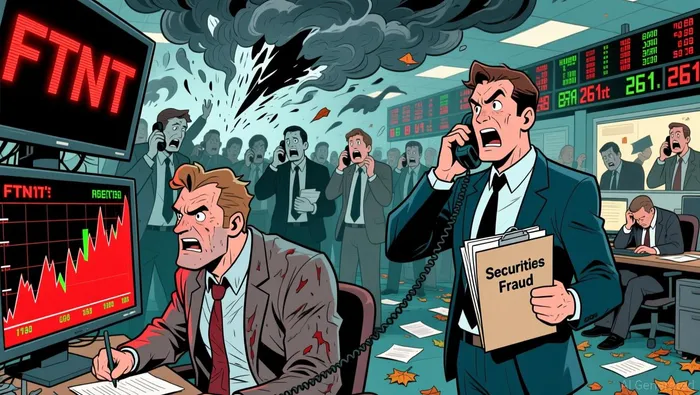
The legal actions also highlight a pattern of repeated allegations across multiple law firm filings. While the core claims remain consistent, the involvement of multiple firms—each emphasizing the same class period (November 8, 2024–August 6, 2025) and lead plaintiff deadline (November 21, 2025)—amplifies the perceived severity of the misconduct. Investors are now navigating a dual challenge: the immediate financial impact of the stock’s decline and the potential for protracted litigation, which could further weigh on market confidence.
The timing of the lawsuit deadline (November 21, 2025) coincides with the stock’s recent volatility, suggesting that investor decisions may be influenced by the urgency to participate in the class action. While the lawsuits do not yet specify quantifiable financial damages, the reputational and legal risks could deter institutional buying, exacerbating the downward pressure on FTNT. Additionally, the lawsuits’ focus on governance failures—such as misaligned expectations and opaque internal assessments—highlights broader concerns about leadership credibility, which often resonate beyond short-term price movements.
In sum, Fortinet’s 2.12% drop reflects a confluence of legal, operational, and governance-related headwinds. The lawsuits not only challenge the accuracy of management’s public statements but also expose systemic issues in how the company communicated its strategic initiatives. As the lead plaintiff deadline approaches, the market’s reaction will likely hinge on whether investors perceive the allegations as isolated missteps or indicative of deeper structural vulnerabilities in the firm’s business model.

Stay ahead of the market.
Get curated U.S. market news, insights and key dates delivered to your inbox.
AInvest
PRO
AInvest
PRO



Comments
No comments yet