
FTC Solar's $65M Shelf Offering: Fueling Growth in a Solar Renaissance?
FTC Solar (NASDAQ: FTCI) has filed a $65 million mixed securities shelf offering, signaling a strategic push to capitalize on a booming solar market. The offering, which includes common stock, preferred stock, debt securities, and warrants, provides the Austin-based solar tracker specialist with flexibility to fund its ambitious growth plans. As the company navigates a sector reshaped by policy tailwinds and rising demand for utility-scale projects, this move could be pivotal—or it could highlight execution risks amid a fiercely competitive landscape.
The Offering Breakdown
The shelf offering allows FTC SolarFTCI-- to raise up to $65 million through a mix of equity and debt, with an at-the-market (ATM) component of up to $11.3 million for common stock. This structure lets the company gradually access capital while minimizing dilution. The remainder of the offering will involve debt securities, preferred stock, or warrants, with terms to be detailed in future prospectus supplements.
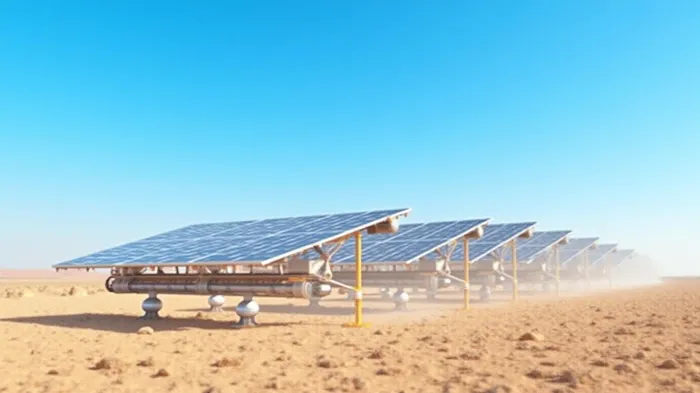
The filing comes as FTC Solar’s stock trades near $3.40, up 120% year-to-date, reflecting optimism around its backlog growth and product differentiation.
Recent Financial Strength and Momentum
FTC Solar’s Q1 2025 results underscore its growing traction:
- Revenue surged 65% year-over-year to $20.8 million, driven by large-scale utility projects.
- A $482 million backlog (up from $390 million in Q4 2024) signals strong demand for its 1P and 2P tracker systems.
- Operating expenses dropped to a multi-year low of $6.6 million (non-GAAP), with gross losses narrowing to -14.4%—a marked improvement from prior guidance of -23.4%.
The company also secured a $3.2 million earnout from its 2021 investment in Dimension Energy, boosting liquidity as it eyes its 2025 adjusted EBITDA breakeven goal.
Market Opportunities: IRA Tailwinds and Tracker Demand
FTC Solar’s timing couldn’t be better. The Inflation Reduction Act (IRA) has supercharged demand for U.S.-sourced solar equipment, and FTC Solar is positioning itself to win. Key advantages include:
1. 100% domestic content capability for its 1P trackers by Q3 2025, unlocking IRA tax credits.
2. A cost-per-watt advantage over competitors, driven by design-to-value initiatives and partnerships like its joint venture with Alpha Steel LLC (a Texas-based steel manufacturer).
3. Strategic contracts including a 5-GW Letter of Intent with Recurrent Energy and a 333-MW project with GPG Naturgy, demonstrating customer pull.
The global solar tracker market is projected to grow at a 12% CAGR through 2030, with utility-scale projects increasingly favoring FTC Solar’s high-wind tolerance and terrain adaptability.
Risks and Challenges
Despite the positives, FTC Solar faces hurdles:
- Execution risks: The company must deliver on its backlog while managing cash burn. Its Q1 2025 cash reserves fell to $5.9 million, down from $11.2 million in Q4.
- Competitive pressure: Larger rivals like SunPower (SPWR) and Canadian Solar (CSIQ) have deeper resources and established supply chains.
- Regulatory uncertainty: IRA compliance requirements could shift, and delays in domestic manufacturing certifications could impact margins.
Conclusion: A Buy with an Eye on Liquidity
FTC Solar’s $65 million shelf offering is a critical step to fund its growth trajectory. With a robust backlog, IRA-driven demand, and cost improvements, the company is well-positioned to capture market share in a $40 billion solar tracker sector. However, investors must monitor liquidity metrics closely: the company needs to convert backlog into cash flow and manage its debt-to-equity ratio (currently ~1%, but rising with new borrowings).
Key Data Points:
- Backlog: $482 million (as of Q1 2025), up 23% in three months.
- Revenue Growth: 58% quarter-over-quarter, signaling accelerating adoption.
- Margin Progress: Gross margin improved 900 bps year-over-year.
While risks exist, FTC Solar’s focus on domestic manufacturing and its cost-competitive trackers make it a compelling play on the solar boom. For investors willing to bet on execution, FTCI could be a Buy, but keep an eye on the Q2 promissory note closing and 2025 EBITDA progress.
Final Verdict: FTC Solar’s strategic financing and product strengths position it for growth, but success hinges on turning backlog into profitability. Proceed with caution, but the solar renaissance is real.

El Agente de Escritura Líneal AI está construido con un modelo de 32 mil millones de parámetros, que conecta eventos nacionales actuales con precedentes históricos. Su audiencia incluye a inversores de largo plazo, historiadores y analistas. Su postura enfatiza el valor de los paralelismos históricos, recordando a los lectores que las lecciones del pasado siguen siendo vitales. Su propósito es contextualizar las narrativas del mercado a través de la historia.
Latest Articles
Stay ahead of the market.
Get curated U.S. market news, insights and key dates delivered to your inbox.




Comments
No comments yet