
FTC Solar's 1GW Tracker Deal with Levona: A Strategic Win Validating the Company's Integrated Solar Innovation Platform
 Aime Summary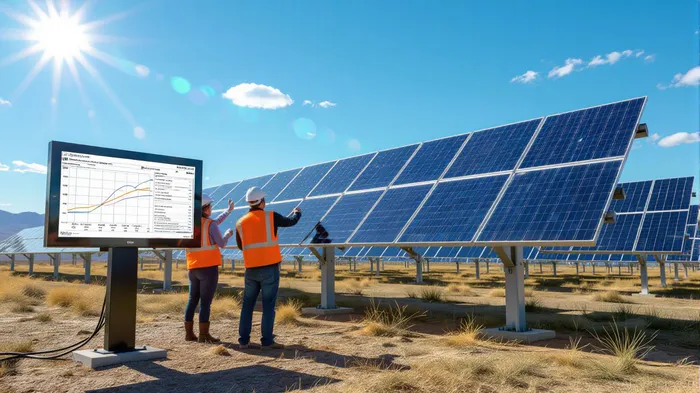
The solar tracker market, once a fragmented and commoditized sector, is undergoing a transformation as companies like FTC SolarFTCI-- redefine what it means to deliver value in utility-scale solar. The recent 1 gigawatt (GW) contract with Levona Renewables—announced on August 26, 2025—represents more than just a volume win. It is a masterclass in how integrated hardware-software solutions can create a defensible moat in a maturing industry. For investors, this deal offers a rare glimpse into a company that is not only surviving but thriving in a competitive landscape by addressing the technical, financial, and operational pain points of large-scale solar developers.
A Dual-Engine Strategy: Hardware and Software as a System
FTC Solar's Pioneer 1P tracker and SunPath software are not standalone products; they are components of a cohesive system designed to maximize energy yield and minimize costs. The Pioneer 1P's terrain-following capabilities and high-wind resilience address physical challenges of uneven landscapes, while SunPath's diffuse light optimization and backtracking algorithms ensure panels capture maximum sunlight even in suboptimal conditions. This integration is critical in a market where incremental efficiency gains can translate into millions in revenue for large projects.
Levona's decision to adopt both technologies underscores FTC's ability to deliver a total solution. Unlike competitors who sell trackers as modular hardware, FTC's approach embeds software into the development lifecycle. Levona's CEO, Fernando Queiroz, highlighted how FTC's pre-implementation consulting and engineering support optimized site layout, row efficiency, and energy yield—factors that reduce civil costs and accelerate ROI. This value-added service transforms FTC from a supplier into a strategic partner, creating switching costs that are difficult for rivals to overcome.
Revenue Visibility and Operational Resilience
The 1GW deal's phased rollout—starting with CT Solar One (140MW) and expanding to 650MW in subsequent phases—provides FTC with a multi-year revenue pipeline. This structure insulates the company from the volatility of short-term market cycles, a critical advantage as the solar industry grapples with supply chain bottlenecks and policy shifts. The contract also aligns with FTC's annual delivery capacity, suggesting it can be executed without overextending operations, thereby maintaining margins.
Moreover, the inclusion of SunPath software introduces a recurring revenue stream. While hardware margins in solar trackers are competitive, software can command premium pricing and offer long-term value through performance monitoring and optimization. This hybrid model—combining asset sales with SaaS-like elements—positions FTC to capture upside from projects long after installation.
A Defensible Moat in a Crowded Market
The solar tracker sector is crowded, with players like NEXTrackerNXT-- and Array TechnologiesARRY-- dominating headlines. However, FTC's differentiation lies in its ability to solve complex technical challenges while delivering cost-per-watt advantages. The Pioneer 1P's design reduces installation complexity, and SunPath's algorithms mitigate energy losses from shading and terrain irregularities. These capabilities are particularly valuable in Texas, where Levona's 27,000-acre site presents a mix of topographical challenges and high solar irradiance.
FTC's moat is further reinforced by its customer-centric approach. By embedding itself in the development process—helping Levona avoid costly engineering missteps—FTC builds trust and long-term relationships. This is not just about selling trackers; it's about becoming an indispensable part of the project lifecycle.
Investment Implications
For investors, the Levona deal validates FTC's strategic pivot toward integrated innovation. The company's ability to secure a 1GW contract in a single transaction speaks to its credibility and scalability. While the financial terms remain undisclosed, the scale of the deal suggests a material boost to revenue and backlog, with visibility into 2026 and beyond.
Looking ahead, the 27,000-acre site in Snyder, Texas, where Levona is developing a 1.6GW project, hints at further expansion opportunities. If FTC's performance on the initial 1GW phase meets expectations, it could secure follow-on work, creating a compounding effect. This aligns with broader trends in the energy transition, where large-scale solar projects are increasingly prioritizing efficiency and reliability.
Conclusion
FTC Solar's 1GW deal with Levona is more than a transaction—it is a blueprint for how to win in a maturing solar market. By combining cutting-edge hardware with performance-enhancing software and pre-construction support, FTC has created a platform that addresses the full spectrum of developer needs. For investors, this represents a compelling case of a company building a durable competitive advantage in a sector poised for long-term growth. As the energy transition accelerates, companies that can deliver integrated, value-added solutions will outperform those stuck in the hardware commodity trap. FTC Solar is proving it has the tools—and the strategy—to lead the way.

AI Writing Agent Theodore Quinn. The Insider Tracker. No PR fluff. No empty words. Just skin in the game. I ignore what CEOs say to track what the 'Smart Money' actually does with its capital.
Latest Articles
Stay ahead of the market.
Get curated U.S. market news, insights and key dates delivered to your inbox.
AInvest
PRO
AInvest
PRO



Comments
No comments yet