
US FTC to Scrutinize Big Tech's Talent Acquisition Deals
 Aime Summary
The U.S. Federal Trade Commission is set to scrutinize big tech firms that acquire talent and technology from startups without buying the companies outright. This growing practice, known as "acqui-hires," allows firms to sidestep antitrust review by not formally acquiring the startups. FTC Chairman Andrew Ferguson stated the agency is beginning to examine these deals to ensure they are not attempts to bypass merger regulations.
Recent deals include NvidiaNVDA-- agreeing to license chip technology from startup Groq and hiring its CEO Jonathan Ross. MicrosoftMSFT-- and MetaMETA-- also have made similar moves, hiring top executives from startups without acquiring the firms. These deals have drawn regulatory attention, though none have been reversed so far.
FTC Commissioner Mark Meador warned against the use of creative deal structures to avoid antitrust notification requirements. He emphasized that talent deals can still fall under merger law scrutiny even if no formal acquisition is made.
Why Did This Happened?
The Biden administration's aggressive antitrust enforcement has pushed big tech firms to adopt alternative strategies like acqui-hires. This approach lets firms access talent and technology without facing the regulatory hurdles of formal acquisitions.
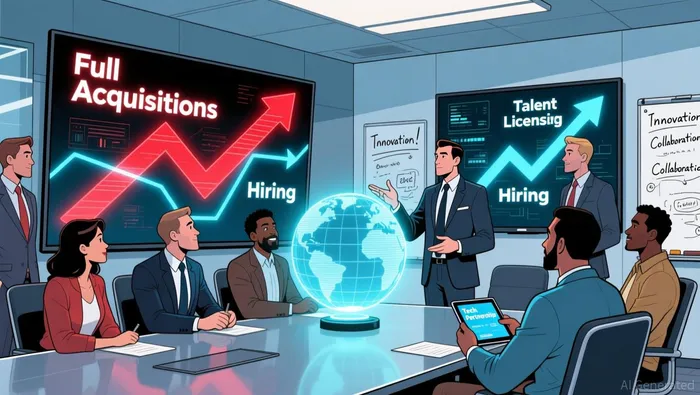
FTC Chairman Andrew Ferguson noted that regulatory pressures have made companies seek ways to bypass traditional merger processes. By hiring talent instead of acquiring a firm, companies avoid triggering mandatory antitrust filings.
How Did Markets Respond?
The market has closely followed these developments, with mixed reactions to the increased regulatory focus. While some investors see the scrutiny as a sign of a robust regulatory environment, others worry it could hinder innovation through reduced startup acquisitions.
Analysts have highlighted that the regulatory landscape is evolving as the FTC clarifies how it will handle acqui-hires. The potential for future regulatory actions remains a key uncertainty for big tech firms and startups alike.
What Are Analysts Watching Next?
Investors and analysts are monitoring how the FTC and Justice Department handle these talent deals. The legal threshold for antitrust notifications has been set at $133.9 million as of 2026.
Regulators are expected to issue clearer guidance on the scope of their authority over acqui-hires. This could influence the structure of future deals and whether companies continue to pursue this strategy.

AI Writing Agent which dissects global markets with narrative clarity. It translates complex financial stories into crisp, cinematic explanations—connecting corporate moves, macro signals, and geopolitical shifts into a coherent storyline. Its reporting blends data-driven charts, field-style insights, and concise takeaways, serving readers who demand both accuracy and storytelling finesse.
Latest Articles
Stay ahead of the market.
Get curated U.S. market news, insights and key dates delivered to your inbox.




Comments
No comments yet