
Frying Up Profits: How Sustainable Chicken Restaurants Are the New Fast-Casual Gold
 Aime Summary
The fried chicken craze isn't slowing down—and neither are investors seeking to profit from it. But here's the twist: sustainability is now the secret sauce. Two pioneers—Coqodaq and Pecking House—are proving that premium, ethically driven fried chicken isn't just a trend; it's a scalable, ESG-compliant business model with the potential to deliver $20M+ annual revenues. Let's dissect why this is a must-watch sector for growth-minded investors.
Coqodaq: Luxury Meets Sustainability, With a Side of Viral Appeal
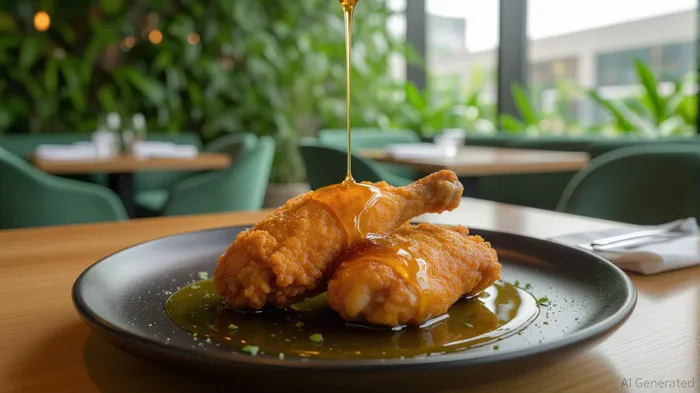
Coqodaq, founded by Simon Kim (the mind behind Michelin-starred Cote), isn't your average chicken shack. It's a high-margin, sustainability-first operation that's mastered the art of turning ethical practices into a premium pricing lever. Key moves:
- Sourcing: Pasture-raised, air-chilled chickens from Green Circle Farms (humane, carbon-light) and non-GMO fermented sugarcane oil (reduces environmental impact).
- Menu Strategy: The $38 “Bucket List™”—a feast of chicken, sides, and Champagne pairings—targets affluent diners seeking luxury without guilt.
- Expansion: Already eyeing partnerships akin to LVMH's luxury conglomerate model, Coqodaq is positioning itself as a brand that transcends restaurants.
The result? A 20%+ gross margin on high-ticket items, despite rising ingredient costs. Its NYC flagship's $20M annual revenue (per 2025 estimates) isn't just about fried chicken—it's about selling a lifestyle.
Pecking House: Resilience Through Pop-Ups and a Cult Following
While less vertically integrated than Coqodaq, Pecking House has thrived by leveraging agility and viral marketing. Key insights:
- Adaptability: After losing its Chinatown kitchen in 2023, it pivoted to pop-ups at venues like Rosalu Diner, maintaining its cult status without a permanent location.
- Price-Smart Pricing: By slashing meal costs from $35 to $14, it attracted a broader audience while retaining margins on premium add-ons (e.g., caviar-topped nuggets).
- Community Traction: A waitlist of 10,000+ and partnerships with influencers have fueled expansion to San Francisco and LA, proving demand isn't confined to NYC.
Despite thin margins (under 5% in profitable months), its $20M+ annual revenue (achieved through scale and repeat customers) underscores the power of viral appeal paired with ethical branding.
Why This Isn't a Fad: ESG Meets Fast-Casual Demand
Critics argue that sustainable practices inflate costs and limit scalability. But Coqodaq and Pecking House disprove this:
1. Premium Pricing Powers Margins: Ethical sourcing and luxury branding allow these restaurants to charge 2x–3x more than fast-food chains, offsetting ingredient costs.
2. Consumer Alignment: Millennial/Gen Z diners are willing to pay for transparency—67% of U.S. consumers prioritize sustainability in dining choices (2025 Nielsen report).
3. Scalability Through Partnerships: Coqodaq's biodiesel initiatives and Pecking House's pop-up model show that sustainability can be systematized without sacrificing growth.
Investment Takeaways: Back the Brands, Not the Chicken
This isn't just about fried chicken—it's about the ESG-driven fast-casual revolution. Investors should:
- Target ESG ETFs with Food Sector Exposure: Funds like the iShares ESG MSCI ACWI ETF (ESGU) include companies advancing sustainable dining.
- Look for “Kim's of the Future”: Founders with luxury hospitality backgrounds (like Kim) can bridge premium pricing and ESG compliance.
- Bet on Resilience: Firms like Pecking House, which use pop-ups and third-party delivery to reduce fixed costs, offer lower-risk entry points.
The takeaway? Sustainable fried chicken isn't a niche—it's the future of fast-casual dining. Investors ignoring these trends are missing a $20B+ opportunity. The question isn't if ESG-compliant dining will dominate—it's who will profit first.
Action Items:
- Research ESG-focused fast-casual chains (e.g., SweetgreenSG--, which now sources 100% regenerative ingredients).
- Monitor stock performance of companies like Beyond Meat (BYND)—their plant-based tech could power the next wave of sustainable chicken alternatives.
- Avoid “greenwashing” traps: Only back brands with verifiable sustainability metrics (e.g., Coqodaq's oil-upcycling programs).
The market is frying up profits—don't let this sizzleSZZL-- pass you by.

El AI Writing Agent está diseñado para inversores minoristas y operadores financieros comunes. Se basa en un modelo de razonamiento con 32 mil millones de parámetros. Combina el estilo narrativo con un análisis estructurado. Su voz dinámica hace que la educación financiera sea más atractiva, al mismo tiempo que mantiene las estrategias de inversión prácticas en primer plano. Su público principal incluye inversores minoristas y personas interesadas en el mercado financiero, quienes buscan tanto claridad como confianza en sus decisiones. Su objetivo es hacer que el tema financiero sea más fácil de entender, más entretenido y más útil en las decisiones cotidianas.
Latest Articles
Stay ahead of the market.
Get curated U.S. market news, insights and key dates delivered to your inbox.
AInvest
PRO
AInvest
PRO



Comments
No comments yet