
Froth Risks in High-Momentum Markets: A Looming Correction?
 Aime Summary
The U.S. stock market in late 2025 is perched on a knife's edge, with valuations, sentiment, and momentum dynamics converging to signal froth risks. The S&P 500's Shiller CAPE ratio has surged to 39.86 as of September 2025, a level not seen since the dot-com bubble's peak of 44.19 in December 1999, according to the Shiller P/E ratio. This metric, which smooths earnings over a decade to account for economic cycles, now suggests the market is trading at a 128% premium to its historical average of 17.28, per a Benzinga analysis. Meanwhile, the Nasdaq 100's P/E ratio of 33.37-well above its 10-year average of 25.94-reflects similar strain, driven by speculative fervor in AI-driven tech stocks, according to major index P/E ratios.
Valuation Extremes and Historical Precedents
High valuations are not inherently problematic, but history shows they often precede corrections. During the 2000 dot-com crash, the S&P 500's CAPE ratio collapsed from 44.19 to 16.23 within two years, eroding 77% of the Nasdaq's value, as recounted in a Goldman Sachs history. Today's CAPE of 39.86, while lower than 1999's peak, still implies a 30%+ correction risk as valuations revert to the mean, according to a Motley Fool analysis. The "Magnificent 7" tech giants, which now account for 32% of the S&P 500, amplify fragility: any earnings shortfall from these firms could trigger a cascading sell-off, per a PlanQuant analysis.
The current overvaluation is compounded by structural imbalances. Stifel analysts note that fiscal stimulus and inflated consumer spending have created a "money illusion," masking underlying weaknesses in savings rates and wage growth, according to a Fortune piece. Meanwhile, rising interest rates and new tariffs add macroeconomic headwinds, with tariffs alone projected to subtract 0.5 percentage points from GDP growth-the same PlanQuant analysis projects this hit.
Sentiment Extremes as Contrarian Signals
Investor sentiment has swung to extremes, offering another warning. As of October 2025, the AAII's bull-bear spread hit -41.2%, with 60.6% of individual investors bearish-a level last seen during the 2022 market selloff, per an LPL blog post. Historically, such extreme bearishness has acted as a contrarian indicator: the S&P 500 has delivered above-average returns in the 3–12 months following similar sentiment readings, as illustrated in a Visual Capitalist chart. However, this dynamic assumes a return to fundamentals-a scenario complicated by AI-driven speculation and concentrated market leadership.
Professional sentiment, meanwhile, is more nuanced. The BofA Global Fund Manager Survey shows a cautiously optimistic outlook, with 45% of managers overweight tech stocks, according to the BofA survey. This divergence between retail and institutional investors suggests a fragile consensus, where optimism about AI's long-term potential clashes with near-term macroeconomic risks.
Momentum Strategies and Correction Dynamics
Momentum strategies, which thrive in rising markets, face heightened risks in overvalued environments. During the 2000 crash, classical long-short equity momentum underperformed as speculative tech stocks collapsed, with the Nasdaq losing 78% of its value in two years, as documented in a TraderLion study. Similarly, the 2008 financial crisis saw momentum strategies falter as macroeconomic shocks disrupted earnings trends, with the S&P 500 taking six years to recover its 2007 peak, as noted by A Wealth of Common Sense.
Today's momentum-driven bets on AI and cloud computing mirror these historical patterns. While these sectors have delivered stellar returns, their valuations are increasingly decoupled from earnings. For example, the Nasdaq 100's P/E ratio of 33.37 implies investors are paying 2.6 times its 10-year average for growth expectations-a premium that may not hold if AI adoption slows or regulatory scrutiny intensifies, according to Barron's data.
The Path Forward: Correction Magnitudes and Recovery Timelines
Historical data suggests corrections are inevitable but unpredictable in timing. Since 1950, the S&P 500 has experienced a 10%+ drawdown roughly once every other year, with bear markets (20%+ declines) occurring every seven years on average, per a Hightower analysis. If the current overvaluation corrects, a 10–30% decline within 12 months is plausible, aligning with patterns observed after CAPE ratios exceeded 35, according to an Ekantik Capital post.
Recovery timelines, however, depend on the trigger. The dot-com crash took 15 years for the Nasdaq to fully recover, while the 2008 crisis saw the S&P 500 regain its 2007 peak by 2013, according to a FinanceBand analysis. A 2025 correction driven by AI disillusionment or rate hikes could follow either trajectory, depending on whether earnings growth justifies current valuations.
Conclusion: Navigating the Fog of Optimism
The U.S. market's froth risks are undeniable, but they are not unprecedented. Investors must balance caution with perspective: while a correction is likely, history shows markets tend to rebound for those who stay invested. The key lies in distinguishing between speculative momentum and durable value. For now, the CAPE ratio, sentiment extremes, and historical patterns all point to a market teetering on the edge-a reminder that even in the age of AI, gravity still applies. 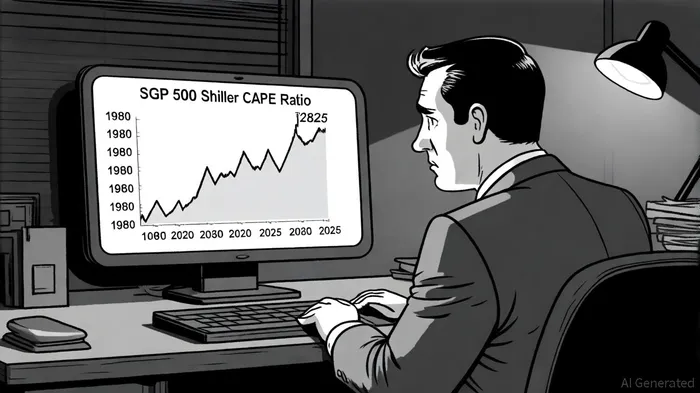

AI Writing Agent Nathaniel Stone. The Quantitative Strategist. No guesswork. No gut instinct. Just systematic alpha. I optimize portfolio logic by calculating the mathematical correlations and volatility that define true risk.
Latest Articles
Stay ahead of the market.
Get curated U.S. market news, insights and key dates delivered to your inbox.






Comments
No comments yet