
The New Frontier in Climate Resilience: Private-Sector Innovation in Earth Observation and Sea-Level Prediction


 Aime Summary
Sentinel-6B: A Technological Marvel for Climate Action
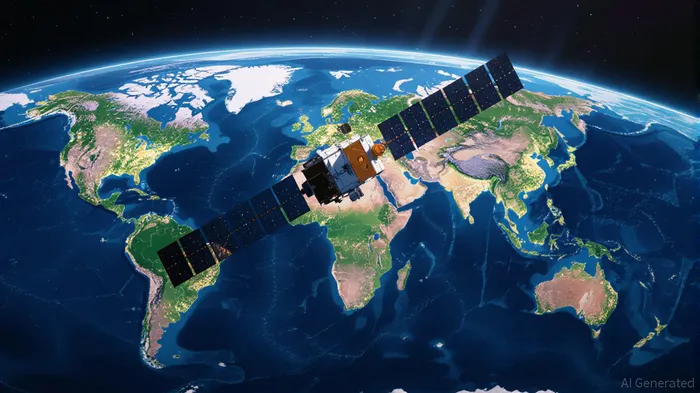
, . Equipped with radar altimetry and microwave radiometry, it will track sea-surface height, wave height, and wind speeds, providing data vital for climate models. The satellite's UK-developed propulsion system, built by , ensures precise orbital control, while its tandem operation with its predecessor guarantees data continuity. This mission exemplifies how public-private partnerships-spanning the European Commission, ESA, NASA, and commercial launch providers like SpaceX-are accelerating climate science.
The Investment Case: Earth Observation as a Climate Resilience Catalyst
The Sentinel-6B launch highlights a broader trend: Earth observation (EO) technologies are becoming indispensable for climate modeling and adaptation. According to a report by BCG, the Climate Adaptation and Resilience (Climate A&R) market is poised to become a trillion-dollar investment opportunity, driven by the need to mitigate risks from rising seas and extreme weather. Within this, -which include advanced modeling tools and data analytics platforms-are over the next five years.
Private-sector companies are leading this charge. For instance, firms like Maxar and Planet have secured large contracts to deliver high-resolution EO data for climate monitoring. Meanwhile, the AI-based climate modeling market is , . These tools process vast datasets from satellites, IoT sensors, and historical records, enabling real-time predictions of climate events like hurricanes and heatwaves.
Bridging the Gap: From Data to Action
While public missions like Sentinel-6B set the benchmark for EO data, private companies are innovating to turn raw data into actionable insights. For example, AI-driven platforms are now capable of simulating regional sea-level rise scenarios with granular precision, helping insurers price risk and governments plan infrastructure. The Climate A&R market's subsectors-such as human-engineered flood defenses and climate-resilient building materials-are also attracting capital, .
However, the true potential lies in the convergence of EO technologies and private investment. As noted in a 2024 industry report, downstream companies focusing on climate-related use cases-like emissions tracking and deforestation monitoring-are gaining traction. This trend is further supported by regulatory incentives and corporate sustainability mandates, creating a fertile ground for early-stage investors.
The Road Ahead: Strategic Positioning for Investors
For investors, the key is to align with companies that not only generate high-quality climate data but also demonstrate tangible value in adaptation strategies. The AI-based climate modeling sector, for instance, is dominated by software solutions, which in 2024. This segment's growth is fueled by demand for real-time analytics, particularly in industries like agriculture, insurance, and urban planning.
Moreover, the Climate A&R market's projected financing needs. Private equity firms are increasingly targeting subsectors like flood defense and climate-resilient infrastructure, where technological innovation can directly reduce economic exposure to climate risks.
Conclusion: A Mission-Critical Sector for the 21st Century
The Sentinel-6B mission is more than a scientific milestone-it is a call to action for investors. As climate resilience becomes a global priority, the private sector's role in advancing Earth observation and climate modeling technologies will only expand. For those willing to act early, this sector offers not just financial returns but the chance to contribute to a more sustainable future.

Delivering real-time insights and analysis on emerging financial trends and market movements.
Latest Articles
Stay ahead of the market.
Get curated U.S. market news, insights and key dates delivered to your inbox.


AInvest
PRO
AInvest
PRO



Comments
No comments yet