
Front-End Treasuries: A Safe Haven Amid U.S.-China Trade Turbulence
The escalating U.S.-China trade war, marked by tariff hikes, retaliatory measures, and supply chain disruptions, has injected unprecedented volatility into global markets. Yet within this chaos lies an underappreciated opportunity: short-term U.S. Treasuries, particularly 3-month T-bills, are emerging as a tactical haven for investors seeking yield and liquidity amid geopolitical strain. This article dissects the dynamics driving this opportunity and outlines a strategy to capitalize on it.
Trade Deficits and Treasury Issuance: A Feedback Loop
The U.S.-China trade imbalance has reached historic proportions, with the annual deficit averaging $287 billion between 2023–2025 (see Figure 1). This imbalance has created a structural demand for dollar liquidity, as China's central bank (PBOC) and other Asian central banks accumulate U.S. dollar reserves to stabilize their currencies.
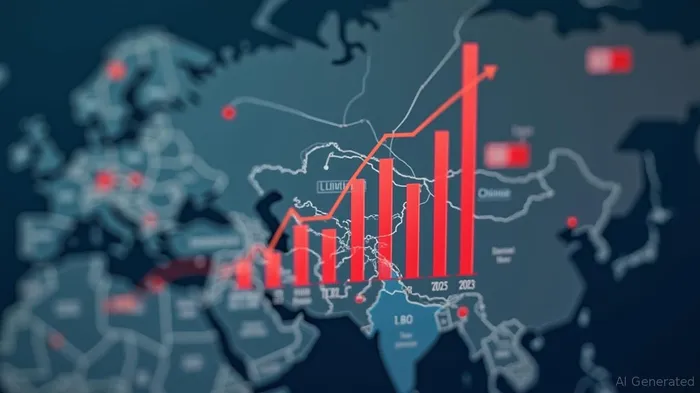
The data reveals a critical link: rising trade deficits correlate with increased Treasury issuance. To fund deficits and finance debt, the U.S. Treasury must issue more short-term bills, creating a supply-demand imbalance that boosts yields. For instance, in Q3 2023—the peak of the trade deficit—3-month T-bill yields rose to 5.2%, a 15-year high, as demand outstripped supply.
Why Short-Term Treasuries Excel in Geopolitical Storms
Lower Duration Risk:
Short-term Treasuries (e.g., 3-month T-bills) have minimal sensitivity to interest rate fluctuations. Unlike 10-year bonds, their prices remain stable even if the Fed hikes rates, making them ideal for volatile environments.Liquidity Buffer:
Geopolitical tensions often trigger "flight-to-safety" flows, but this has traditionally favored long-dated Treasuries. However, recent data shows a shift:- Yield Advantage: 3-month T-bills now offer 2.5%–3% in yield, compared to 1.8% for 10-year Treasuries.
China's Playbook: Beijing's Treasury holdings (averaging $770 billion in 2025) are concentrated in maturities under 5 years, per custodial data. This suggests a preference for liquidity over long-term yields.
Tariff-Induced Volatility:
Trump-era tariffs (peaking at 145% on Chinese goods) and China's retaliatory measures (e.g., rare earth embargos) have created uncertainty for equities and corporate bonds. In contrast, Treasuries remain a risk-off staple, with short-term maturities offering faster reinvestment options as market conditions evolve.
The Case for Tactical Allocation
Investors should consider a 5–10% allocation to 3-month T-bills as a hedge against trade-related volatility. Key catalysts include:
Supply Dynamics:
The Treasury's 2025 issuance plan includes $2 trillion in short-term bills, up 15% from 2023. This oversupply could pressure yields higher, rewarding holders.Geopolitical Triggers:
- Tariff Escalation Risks: Both nations face pressure to raise tariffs further ahead of U.S. midterms and China's leadership reshuffle.
Dollar Liquidity Crunch: China's dwindling forex reserves (down to $2.05 trillion in 2025) may force it to liquidate Treasuries, but its focus on short-term maturities minimizes market disruption.
Historical Precedent:
During the 2018–2019 trade war, 3-month T-bill yields spiked +120 bps amid heightened uncertainty, outperforming equities by +8%.
Risks and Mitigation
- Fed Rate Cuts: If the Fed pivots to easing, long Treasuries could rally, compressing short-term yields. Mitigate this by pairing short Treasuries with inflation-protected bonds (TIPS).
- China's “Shadow Holdings”: Beijing's true Treasury exposure may be obscured by custodial accounts. Monitor TIC data for sudden shifts in Luxembourg or Belgium's holdings.
Conclusion: Anchoring Portfolios in Uncertain Waters
The U.S.-China trade war is a protracted saga with no quick resolution. For investors, short-term Treasuries offer a rare blend of yield, liquidity, and geopolitical insulation. By allocating to 3-month T-bills now, portfolios can weather trade volatility while positioning for a potential Treasury yield sweet spot.
Actionable Strategy:
- Buy-and-Hold: Purchase 3-month T-bills through TreasuryDirect.gov or ETFs like SHY (iShares Short Treasury Bond ETF).
- Ladder Maturities: Combine 3-month and 6-month bills to balance yield and flexibility.
- Monitor Tariff Talks: Reduce exposure if trade negotiations produce a meaningful truce (e.g., tariff rollbacks), but remain cautious—trust remains scarce.
In a world where trade wars redefine market norms, short-term Treasuries are the ultimate low-risk anchor for turbulent seas.
Data Sources: U.S. Census Bureau Trade Reports, BEA International Transactions Accounts, U.S. Treasury TIC Data, Federal Reserve Economic Database (FRED).

Stay ahead of the market.
Get curated U.S. market news, insights and key dates delivered to your inbox.






Comments
No comments yet