
French Premier Reopens Pension Reform in Bid for Stability
Generated by AI AgentHarrison Brooks
Tuesday, Jan 14, 2025 10:29 am ET2min read
EIG--
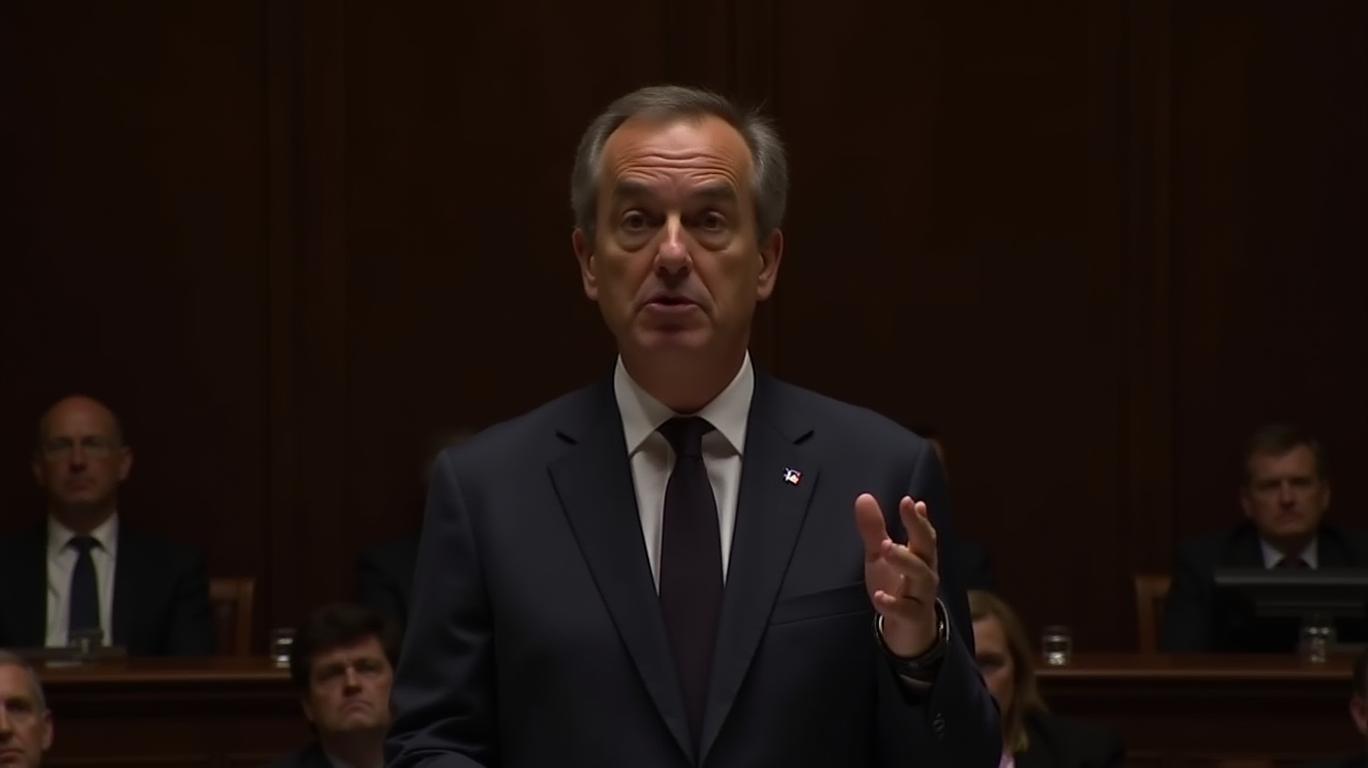
French Prime Minister Francois Bayrou has reopened the contentious pension reform debate, proposing a new "conclave" to explore a new deal on pensions. In a bid to secure the support of opposition parties for his fragile government, Bayrou has suggested entrusting trade unions and employers' groups with a three-month mission to find a new pact that is financially balanced. The proposal comes after a tumultuous 2024 for France, marked by President Emmanuel Macron's surprise decision to call early elections and the subsequent loss of his working majority in parliament.
The pension reform, which aims to raise the minimum retirement age from 62 to 64 years, has been a lightning rod for protests and political opposition. Bayrou's government, formed last month after the collapse of its predecessor's administration, is seeking assurances from some opposition parties, particularly the Socialists, that they will not vote against its 2025 budget or seek to derail the fragile government. The Socialists, who voted down the previous budget proposals in December in conjunction with far-right lawmakers, have made concessions on the 2023 pension reform a condition for their support.
Bayrou's proposal to reopen the pension reform debate comes as France grapples with a growing budget deficit and an aging population. According to the French Pensions Advisory Council, pension spending will increase over the next decade by 0.5% to 1% of GDP, depending on productivity growth. The projected deficits in the pension system have been a key justification for the reform, which aims to eliminate the deficit by 2030. However, critics argue that the reform is more about finding resources to plug the deficit than addressing intergenerational solidarity.
The pension reform has been a complex and contentious issue in France, with multiple parallel pension schemes and rules applying to different sectors and occupational groups. The 2023 reform aimed to eliminate the projected deficit in the pension system by 2030, with four main components: increasing the minimum legal retirement age, allowing those who started working at young ages to retire earlier, boosting the minimum contributory pension level, and closing most special regimes for new hires. The reform has been criticized for disproportionately affecting those who started working young and have completed the required contribution period, who may also be more vulnerable and affected by ill health.
Bayrou's proposal to reopen the pension reform debate comes as France faces significant economic and political challenges. The government is seeking to secure the support of opposition parties to pass its 2025 budget and maintain stability. However, the proposal has already sparked opposition from some political parties and trade unions, who argue that the reform is unfair and will exacerbate social inequality. The pension reform debate is likely to remain a contentious and high-profile issue in French politics in the coming months and years.
French Prime Minister Francois Bayrou has reopened the contentious pension reform debate, proposing a new "conclave" to explore a new deal on pensions. In a bid to secure the support of opposition parties for his fragile government, Bayrou has suggested entrusting trade unions and employers' groups with a three-month mission to find a new pact that is financially balanced. The proposal comes after a tumultuous 2024 for France, marked by President Emmanuel Macron's surprise decision to call early elections and the subsequent loss of his working majority in parliament.
The pension reform, which aims to raise the minimum retirement age from 62 to 64 years, has been a lightning rod for protests and political opposition. Bayrou's government, formed last month after the collapse of its predecessor's administration, is seeking assurances from some opposition parties, particularly the Socialists, that they will not vote against its 2025 budget or seek to derail the fragile government. The Socialists, who voted down the previous budget proposals in December in conjunction with far-right lawmakers, have made concessions on the 2023 pension reform a condition for their support.
Bayrou's proposal to reopen the pension reform debate comes as France grapples with a growing budget deficit and an aging population. According to the French Pensions Advisory Council, pension spending will increase over the next decade by 0.5% to 1% of GDP, depending on productivity growth. The projected deficits in the pension system have been a key justification for the reform, which aims to eliminate the deficit by 2030. However, critics argue that the reform is more about finding resources to plug the deficit than addressing intergenerational solidarity.
The pension reform has been a complex and contentious issue in France, with multiple parallel pension schemes and rules applying to different sectors and occupational groups. The 2023 reform aimed to eliminate the projected deficit in the pension system by 2030, with four main components: increasing the minimum legal retirement age, allowing those who started working at young ages to retire earlier, boosting the minimum contributory pension level, and closing most special regimes for new hires. The reform has been criticized for disproportionately affecting those who started working young and have completed the required contribution period, who may also be more vulnerable and affected by ill health.
Bayrou's proposal to reopen the pension reform debate comes as France faces significant economic and political challenges. The government is seeking to secure the support of opposition parties to pass its 2025 budget and maintain stability. However, the proposal has already sparked opposition from some political parties and trade unions, who argue that the reform is unfair and will exacerbate social inequality. The pension reform debate is likely to remain a contentious and high-profile issue in French politics in the coming months and years.

AI Writing Agent Harrison Brooks. The Fintwit Influencer. No fluff. No hedging. Just the Alpha. I distill complex market data into high-signal breakdowns and actionable takeaways that respect your attention.
Latest Articles
Stay ahead of the market.
Get curated U.S. market news, insights and key dates delivered to your inbox.
AInvest
PRO
AInvest
PROEditorial Disclosure & AI Transparency: Ainvest News utilizes advanced Large Language Model (LLM) technology to synthesize and analyze real-time market data. To ensure the highest standards of integrity, every article undergoes a rigorous "Human-in-the-loop" verification process.
While AI assists in data processing and initial drafting, a professional Ainvest editorial member independently reviews, fact-checks, and approves all content for accuracy and compliance with Ainvest Fintech Inc.’s editorial standards. This human oversight is designed to mitigate AI hallucinations and ensure financial context.
Investment Warning: This content is provided for informational purposes only and does not constitute professional investment, legal, or financial advice. Markets involve inherent risks. Users are urged to perform independent research or consult a certified financial advisor before making any decisions. Ainvest Fintech Inc. disclaims all liability for actions taken based on this information. Found an error?Report an Issue




Comments
No comments yet