
French Industry Misses Forecasts, Defying Eurozone Stagnation
 Aime Summary
- France's industrial sector861072-- recorded a 0.1% month-over-month increase in production, signaling a modest recovery after a -0.1% contraction in the previous month.
- The actual print missed the consensus forecast of 0.3%, indicating that underlying manufacturing momentum remains fragile and subject to volatile swings.
- Investors are monitoring the data to assess the durability of the eurozone's industrial861072-- base, which has been weighed down by weak external demand and high energy costs.
- The mixed results underscore a bifurcated economic landscape where domestic services outpace manufacturing, complicating the European Central Bank's inflation outlook.
French industrial production posted a slight expansion in the latest reading, defying a broader narrative of manufacturing stagnation across the eurozone. While the 0.1% month-over-month gain represents a turnaround from the previous month's contraction, it fell short of the 0.3% growth anticipated by economists. This discrepancy highlights the persistent headwinds facing the industrial sector, particularly in energy-intensive sub-sectors. For macro-aware investors, the data reinforces the view that France's economic recovery is uneven, with the industrial engine struggling to gain traction despite stable domestic demand.
What Does French Industrial Production Reveal About Economic Momentum?
Industrial production is a high-frequency gauge of the health of a country's manufacturing and utility861079-- sectors, making it a critical indicator for assessing short-term economic momentum. In France, the sector's performance is often scrutinized for its sensitivity to global trade dynamics and energy prices. The 0.1% increase in the latest release suggests that while the worst of the recent contraction may have passed, the recovery is far from robust. The failure to meet the 0.3% forecast implies that structural challenges, such as high production costs and weak export demand from key partners, continue to weigh on capacity utilization.
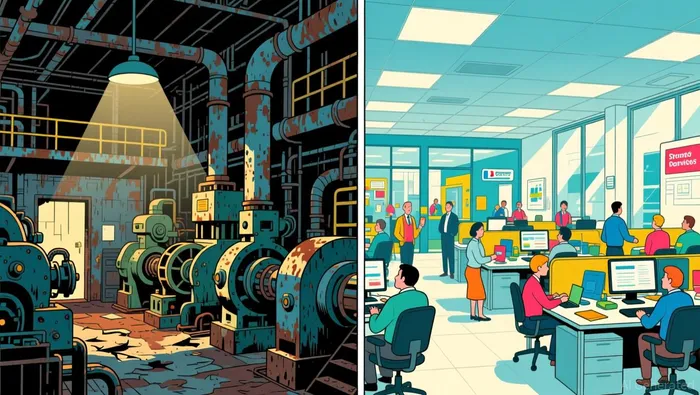
Historically, industrial production in France has shown a tendency to be volatile, often swinging between growth and contraction in response to external shocks. The recent data fits this pattern, as the modest gain follows a period of stagnation. Investors should note that a single month of positive growth is rarely indicative of a sustained trend. Instead, it is often interpreted as a temporary stabilization rather than a fundamental shift in the industrial landscape. The divergence between the actual and forecasted figures also suggests that analysts may be underestimating the persistent drag on manufacturing activity, or that the underlying data is subject to significant revision in subsequent releases.
Why Are Investors Watching Manufacturing Data in the Current Macro Environment?
The manufacturing sector's performance is a key barometer for broader economic health, particularly in an export-oriented economy like France's. Weak industrial output can signal a slowdown in global trade, a lack of business confidence, or the impact of tight monetary policy on capital expenditure. In the current macro environment, where the European Central Bank is navigating the delicate balance between controlling inflation and supporting growth, industrial data provides crucial insights into the transmission of policy rates to the real economy.
Furthermore, the manufacturing sector's struggles have implications for the European Central Bank's policy trajectory. If industrial production remains sluggish, it may indicate that economic activity is cooling faster than anticipated, potentially reducing upward pressure on wages and prices. However, the resilience of the services sector, which has been a bright spot in the French economy, complicates this picture. The divergence between manufacturing and services suggests that inflation may remain sticky in certain areas, even as industrial activity weakens. This bifurcation makes it difficult for policymakers to calibrate their response, as they must weigh the benefits of further rate cuts against the risk of reigniting inflation in the services sector.
Investors are also paying close attention to the labor market's reaction to these industrial trends. Despite the challenges in manufacturing, France has maintained a relatively low unemployment rate, supported by government support measures and strong demand in the services sector. This labor market resilience provides a buffer against a deeper economic downturn, but it also means that wage growth may continue to outpace productivity gains in certain industries861072--. This dynamic could keep core inflation elevated, limiting the European Central Bank's ability to ease monetary policy aggressively. As such, the industrial production data serves as a critical piece of the puzzle, helping investors gauge the relative strength of different sectors and the likely path of interest rates in the eurozone.
Looking ahead, market participants will focus on subsequent data releases to confirm whether the 0.1% gain is a one-off rebound or the beginning of a sustained recovery. Key indicators to watch include new orders, capacity utilization, and business confidence surveys, which can provide earlier signals of future industrial activity. Additionally, investors will monitor developments in energy prices and global trade tensions, which are likely to continue influencing the manufacturing sector's performance in the coming months.

Stay ahead of the market.
Get curated U.S. market news, insights and key dates delivered to your inbox.


AInvest
PRO
AInvest
PRO




Comments
No comments yet