
French Car Sales Bounce 12.7% — But Is It a Fluke?
 Aime Summary
What the Data Shows: A Sharp Turnaround in French Car Registration
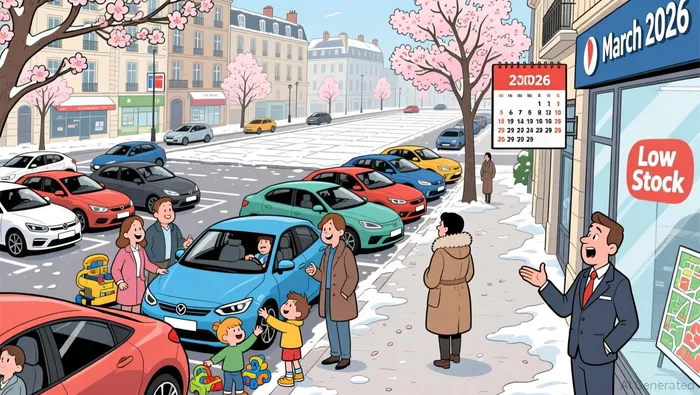
The French car registration data for March 2026 reveals a dramatic turnaround, rising 12.7% month-over-month after a sharp contraction of -38.0% in February (according to the data). This jump marks a notable deviation from the previous trend and suggests some level of pent-up demand or policy-related support. While the data is non-seasonally adjusted, the magnitude of the change is hard to ignore. In a market that has struggled with supply chain disruptions and weak demand, this rebound could be a sign of stabilization, though it should be viewed with caution. The absence of a forecast in this release also highlights the unpredictability of the market.
What This Means for the Auto Market and Broader Economic Recovery
Car registration is a key proxy for both consumer confidence and industrial production in the automotive sector. A rise in registrations often correlates with improved economic activity, as individuals and businesses are more willing to invest in large-ticket items like vehicles when economic conditions are stable. For France, which has a robust automotive industry, this data could signal a potential stabilization in domestic consumption and manufacturing output (as reported). It may also indicate that government stimulus measures, such as incentives for electric vehicle purchases or tax breaks for car dealers, are starting to show an effect.
Investors should also consider the global context. France's automotive industry is deeply integrated into international supply chains and faces competition from both European and Asian producers. With global car production still recovering from the recent disruptions, a rebound in French registration could suggest broader market resilience in the Eurozone. However, the long-term outlook for the sector depends on the global transition to electric vehicles and the pace of innovation, especially from Asian competitors.
What to Watch Next: Policy Signals and Global Auto Market Trends
While the March 2026 data is encouraging, investors should not overreact to a single data point. It is important to observe whether this increase is part of a broader trend or merely a short-term fluctuation. Rolling averages and comparisons with past annual trends will provide better insights. In the near term, investors should monitor policy developments such as new incentives for EV adoption, changes in import tariffs, or potential supply chain support measures from the French government.
From a global perspective, the broader auto market is shifting toward electric vehicles and autonomous technologies, which could reshape demand patterns. For example, China's automotive companies are rapidly expanding their presence in global markets with competitive pricing and innovation. In this evolving landscape, France's ability to adapt its automotive industry will be a critical factor in sustaining the momentum seen in March 2026.

Stay ahead of the market.
Get curated U.S. market news, insights and key dates delivered to your inbox.


AInvest
PRO
AInvest
PRO



Comments
No comments yet